
WHEN TRAVEL FEELS HUMAN: WHAT I LEARNED FROM TRAVELLING TO A LESSER-KNOWN VILLAGE
WHEN TRAVEL FEELS HUMAN: WHAT I LEARNED FROM TRAVELLING TO A LESSER-KNOWN VILLAGE
Each time I return to Bali, the island reveals a different side of itself, often in soft and unspoken ways. It offers only what you’re ready to receive, and asks you to carry it forward in your own way.
In Bangli, I experienced travel at its most human. Through small gestures and everyday interactions, I witnessed the humility woven into daily life, and the quiet exchange that happens when you step beyond the familiar. It reminded me that travelling to lesser-known villages doesn’t just change how you see a place — it changes how you move through the world.
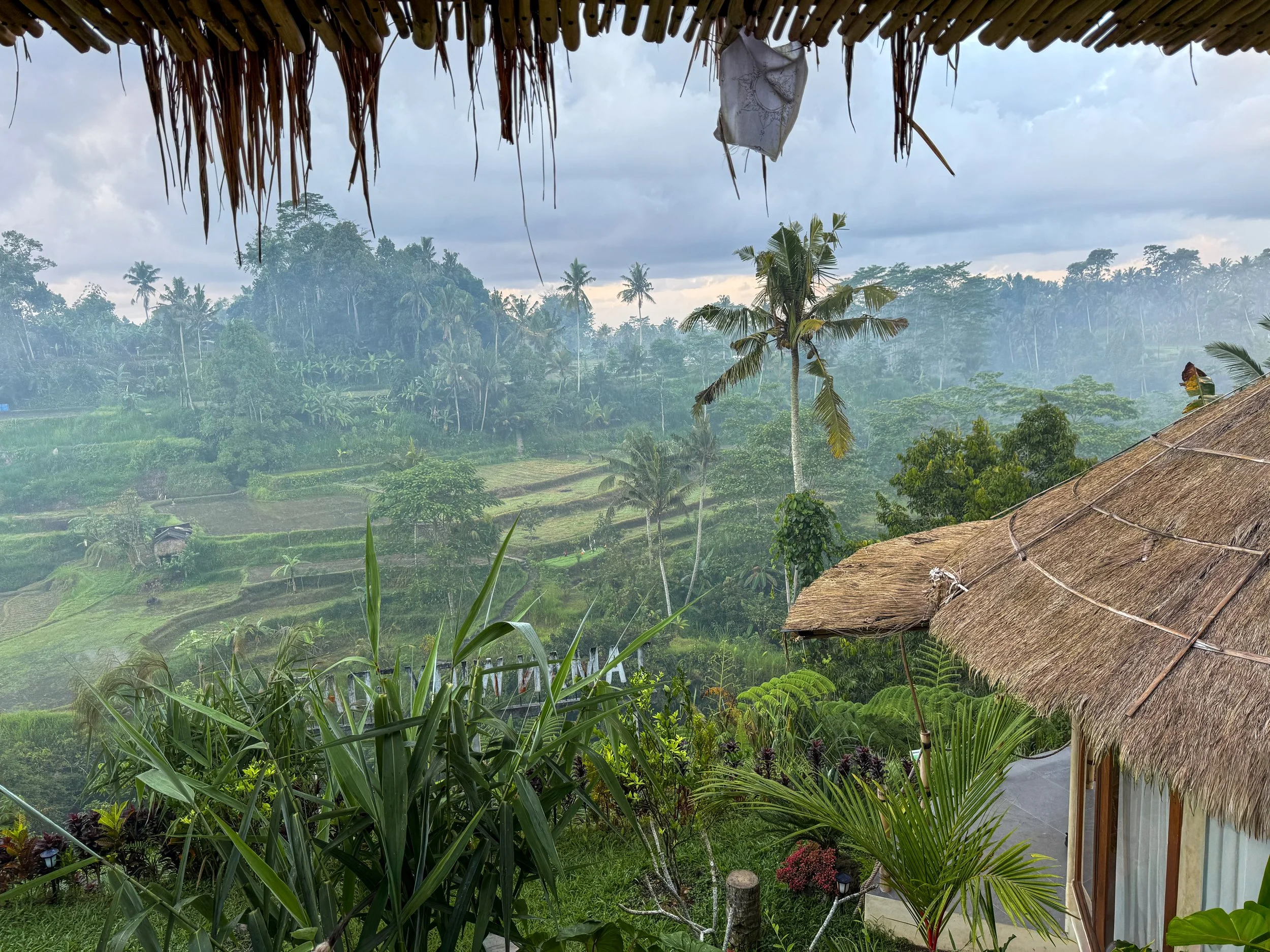
A SOLO ROAD TRIP EAST
On this trip to Indonesia, I set an intention to explore Bali more deeply, travelling to places I hadn’t visited before. With that in mind, I took myself on a five-day solo date through the island’s east.
You can read about my next stop — Amed.
A quiet coastal village known for its black sand beaches and slow island rhythm. You can read about my time there in my Amed travel guide.
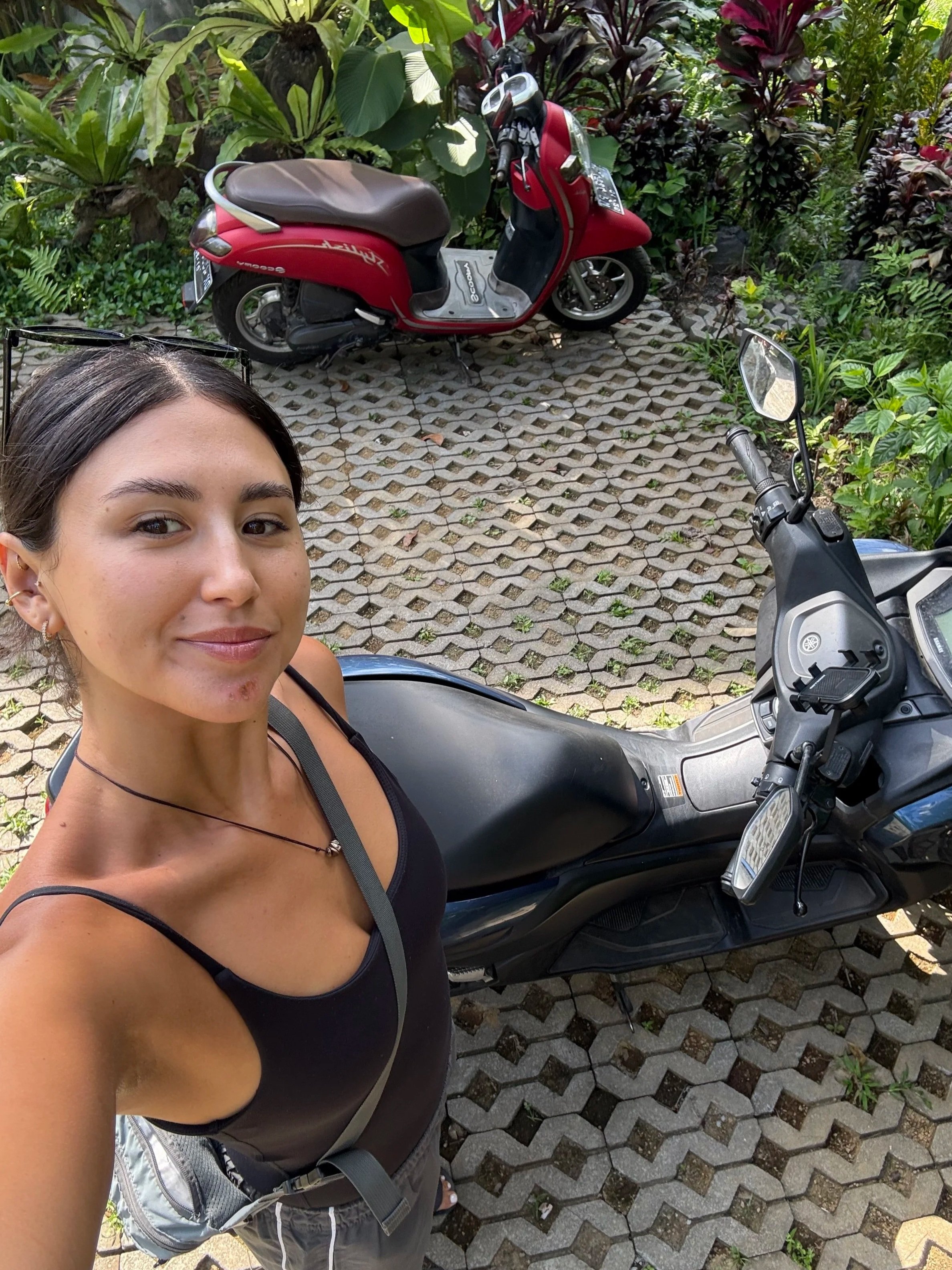
IT ALL STARTED WITH AN AIR BNB BOOKING
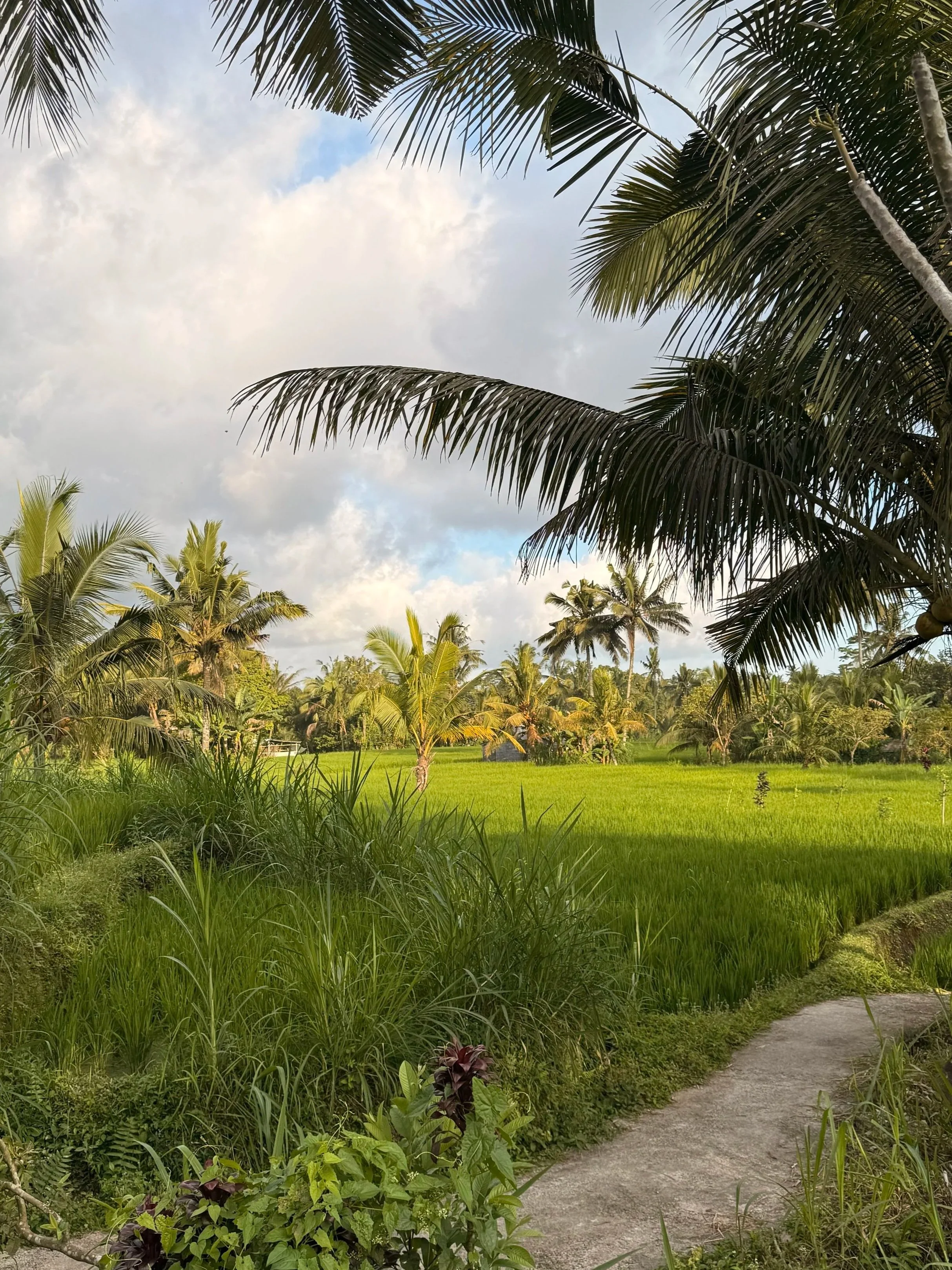
I’d planned to spend a couple of nights in Sidemen, a village known for its layered rice fields and slower rhythm of life. But the place I envisioned — waking up surrounded by rice fields — wasn’t aligning with my last-minute plans, so I widened my search.
That’s when I found an eco-lodge tucked away in Bangli, a neighbouring village twenty minutes from Sidemen. It felt like the perfect find — or maybe it found me.
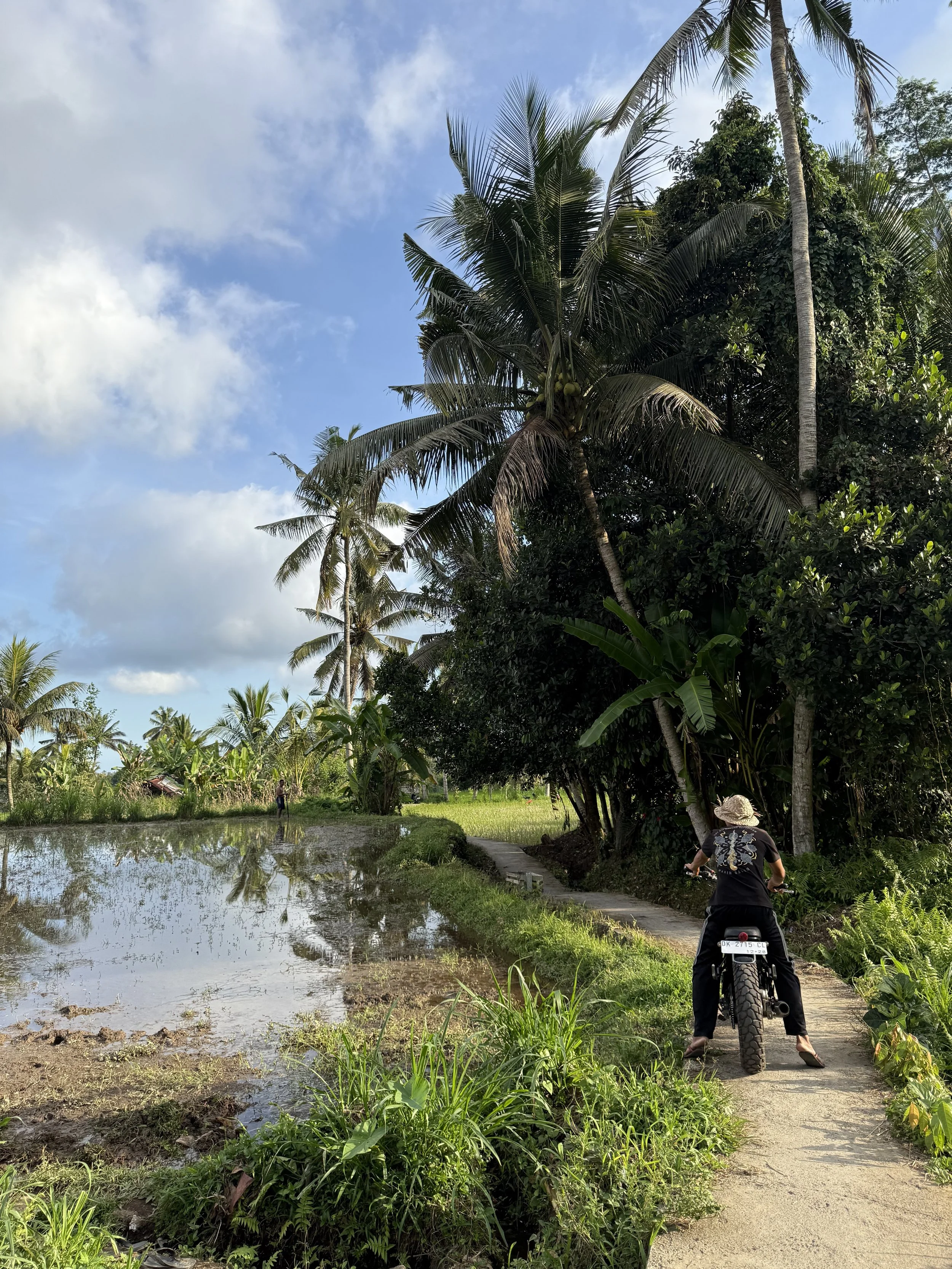
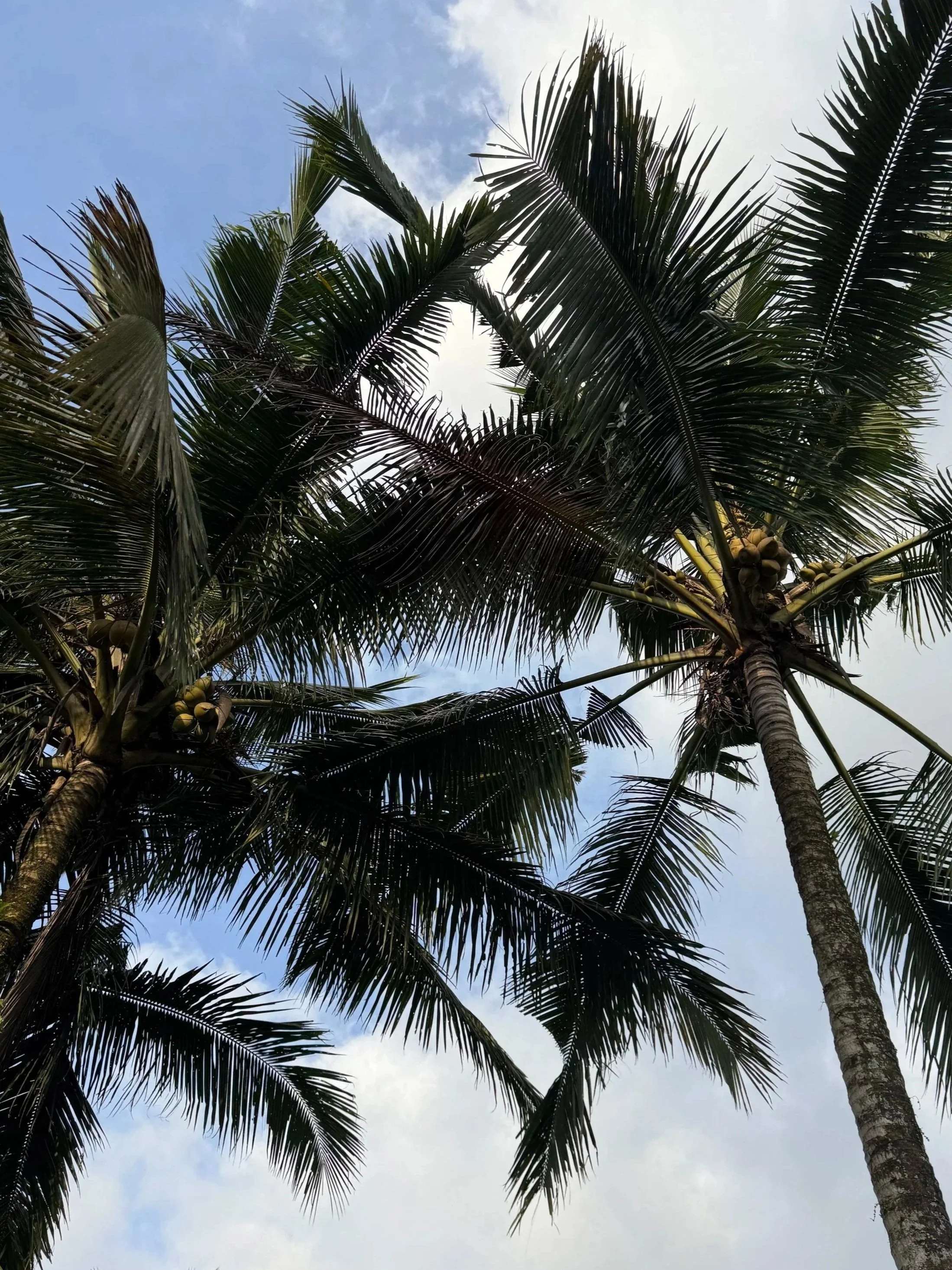
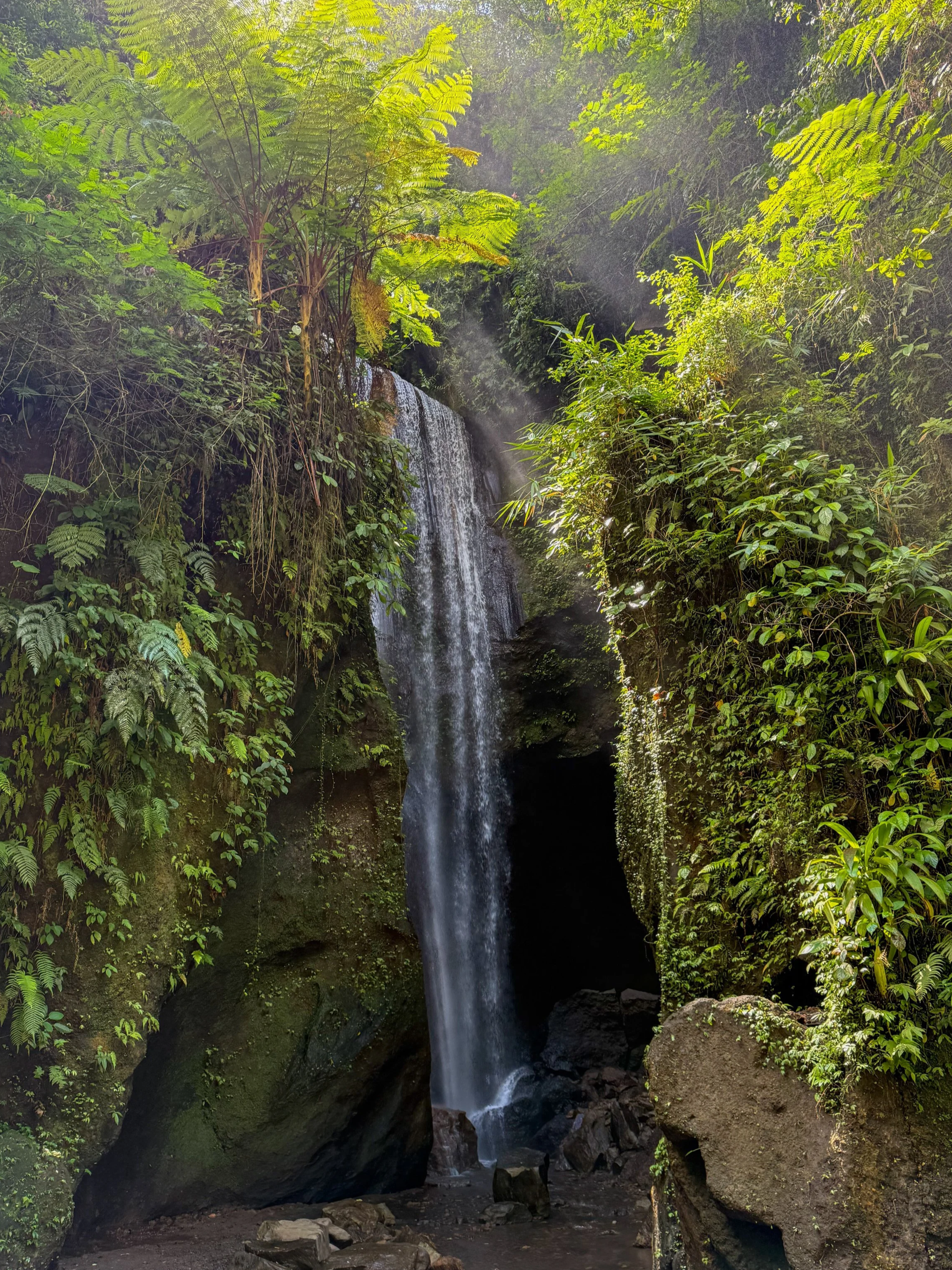
Driving from Ubud to Bangli, it was grounding to see the land still held in this way. With every return to Bali, you notice the change as more land is surrendered to development. But here, the landscape felt untouched by time.
BEING WELCOMED INTO A VILLAGE
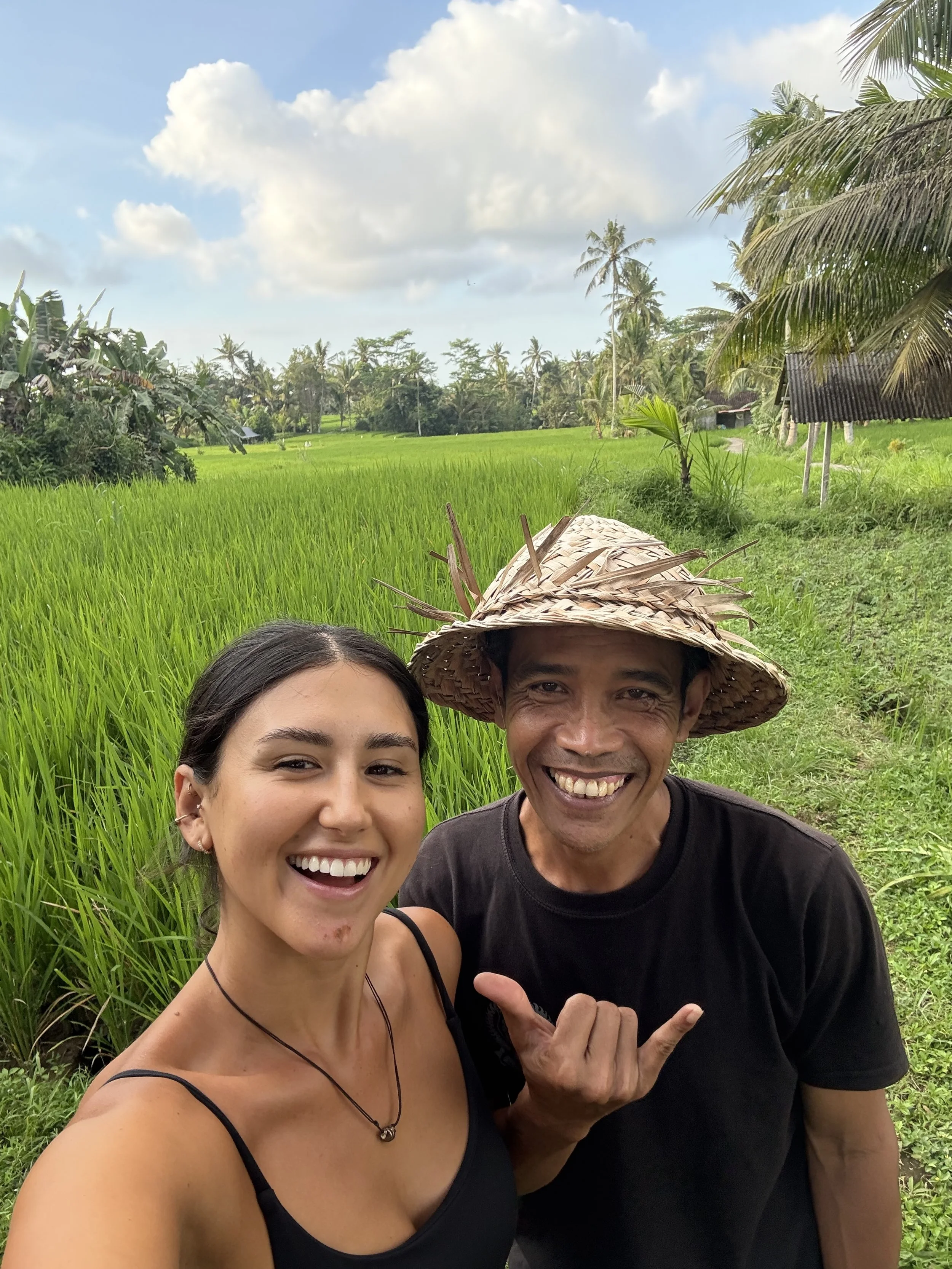
I arrived in Bangli and was warmly welcomed by my host, Dego, and his family at their home. In Balinese culture, several generations live together on the same family property, sharing daily life, traditions and responsibilities together.
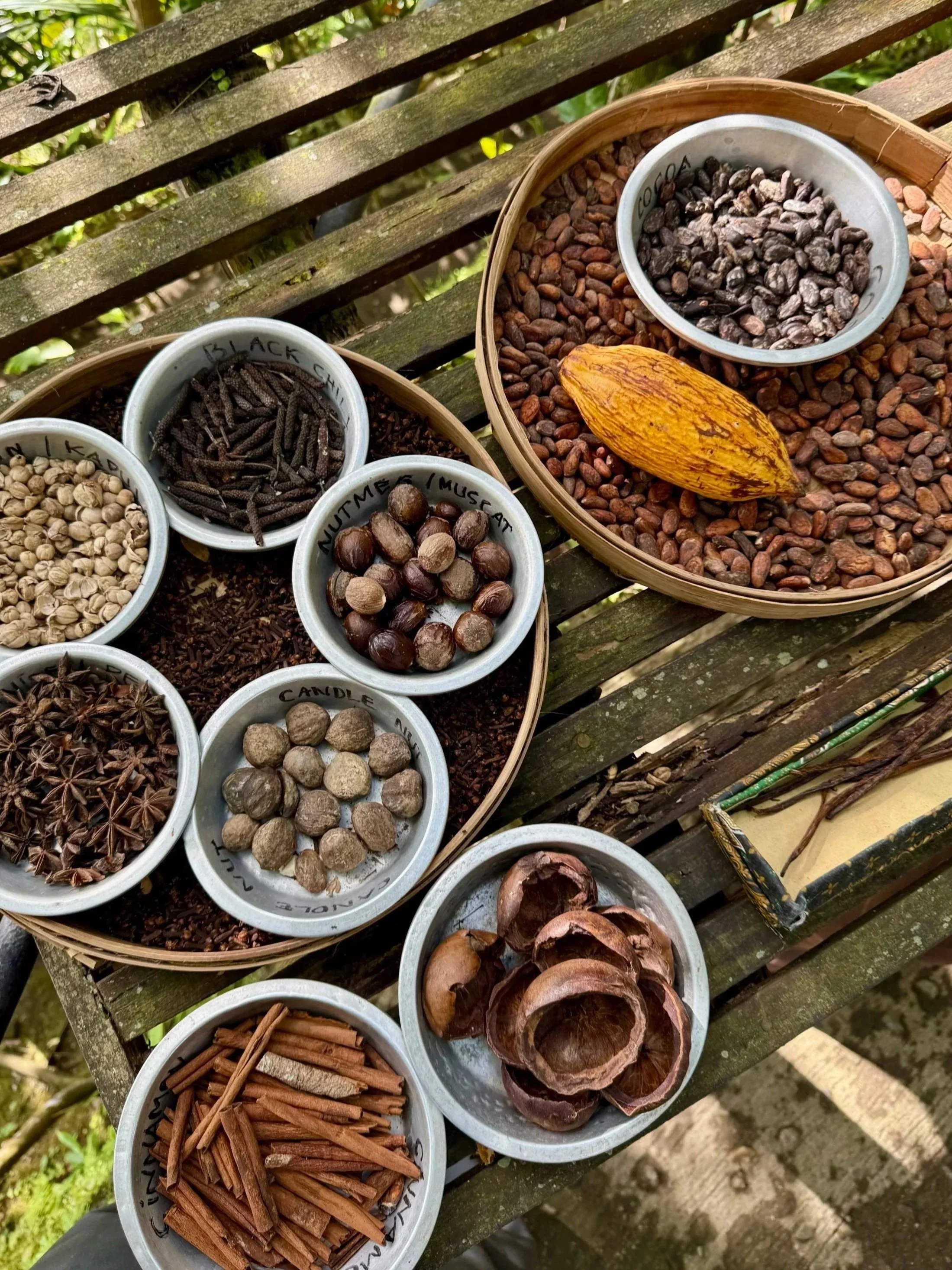
The eco-lodge sits five minutes from his family home, hidden deep in the jungle. The property isn’t marked on Google Maps — Dego led the way, guided by wooden signs and dirt paths. The property opens through his plantation, where cacao, pumpkin, passionfruit, avocado, pineapple and spice trees grow, all planted by hand over the years. You can feel the time and care embedded in the land, shaped slowly as a true labour of love.
BUILT BY HAND, DESIGNED TO BELONG TO ITS LANDSCAPE
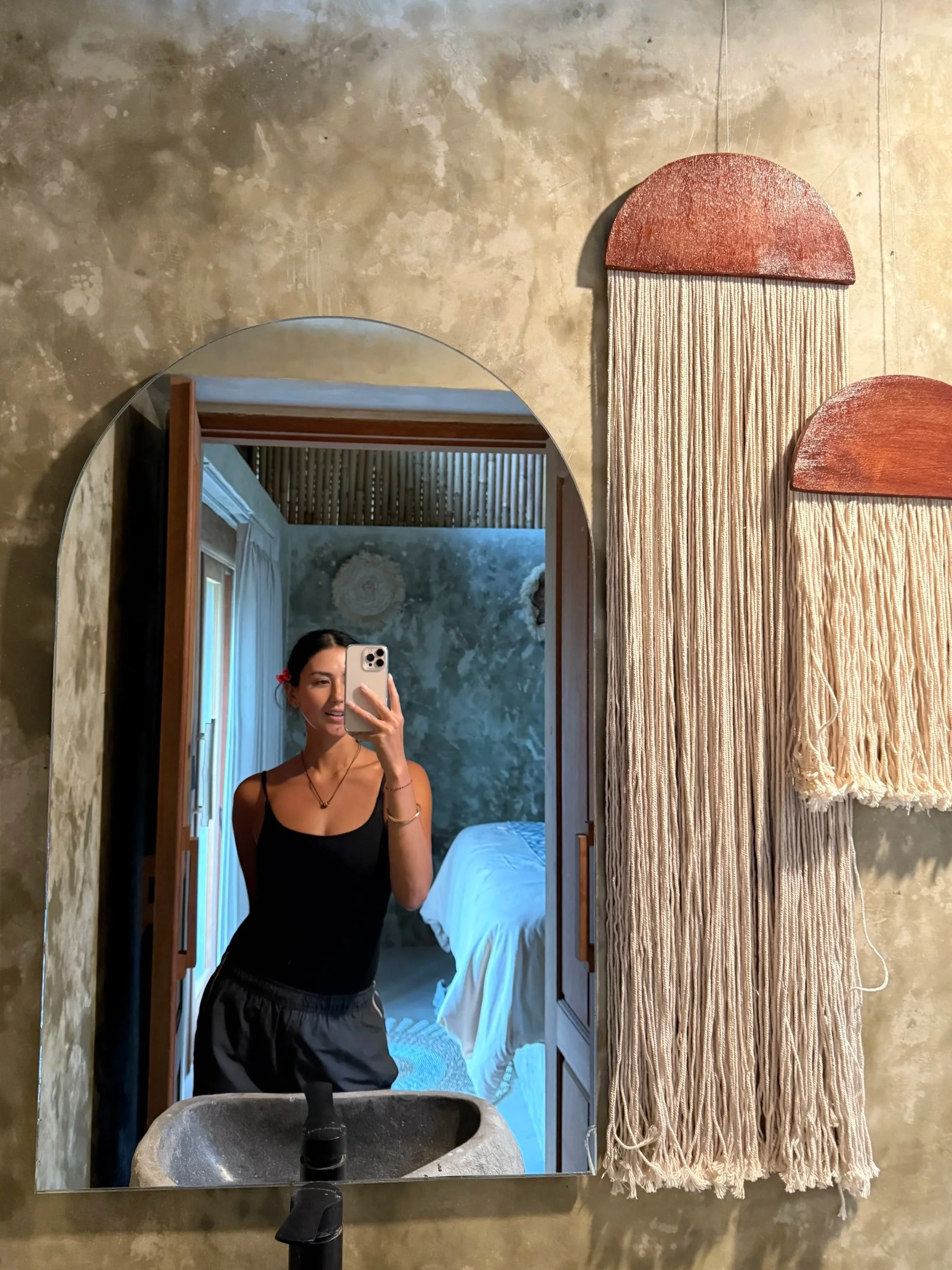
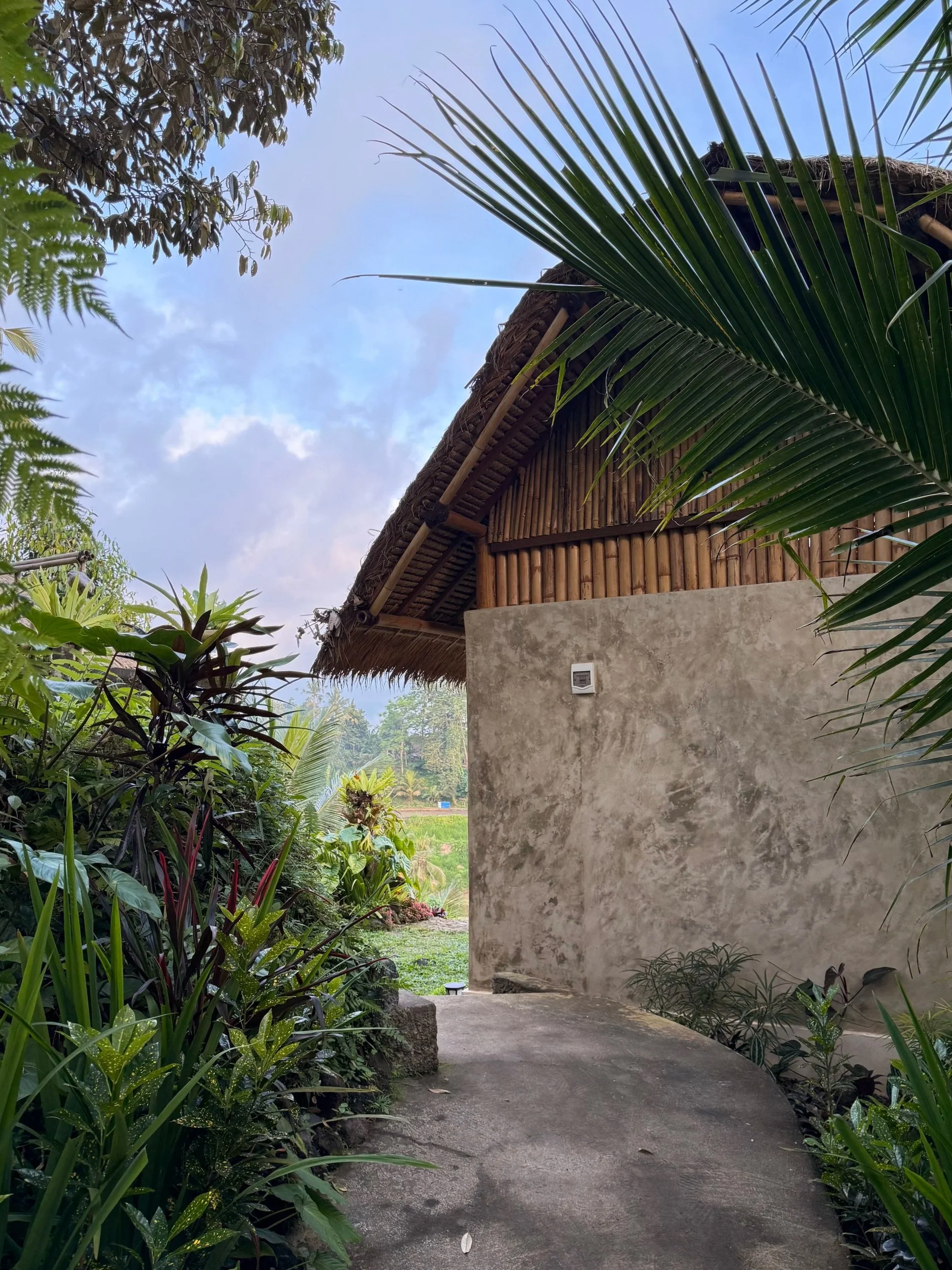
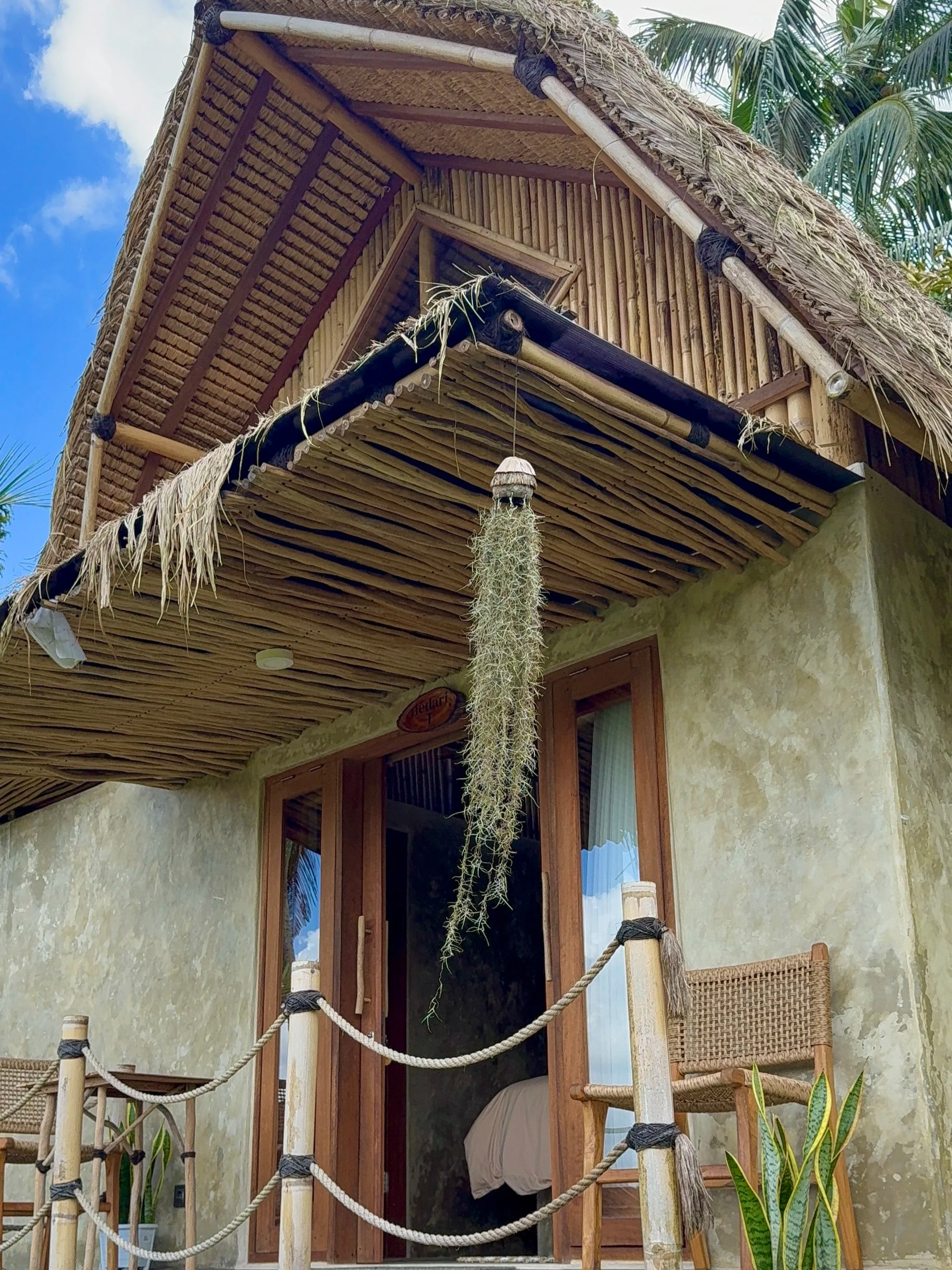
As an interior designer, I’m endlessly curious about how spaces are built. I’ve found in Southeast Asia, architecture works in conversation with nature — using bamboo structures, coconut wood, natural stone and teak, with designs shaped by climate and landscape.
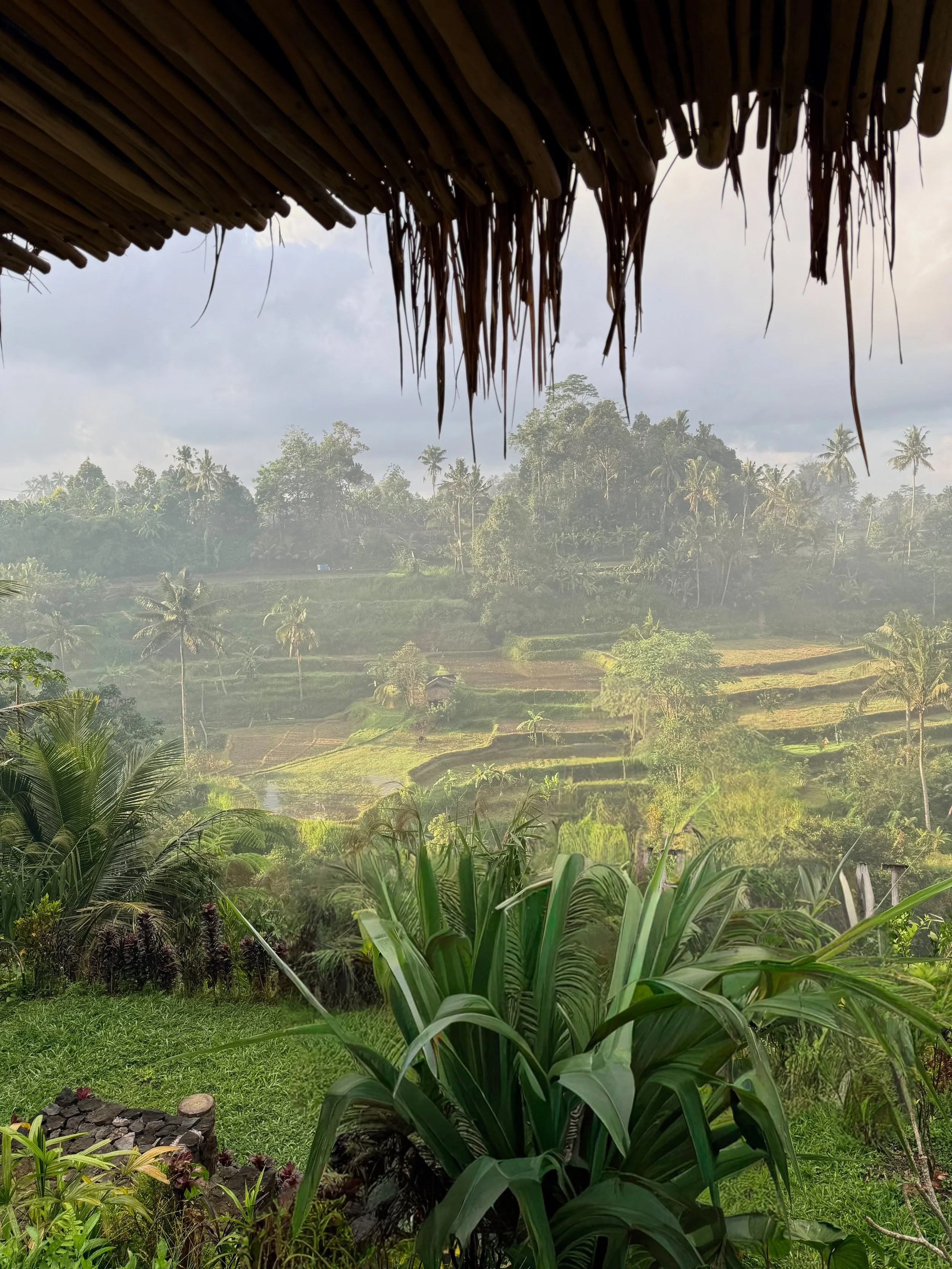
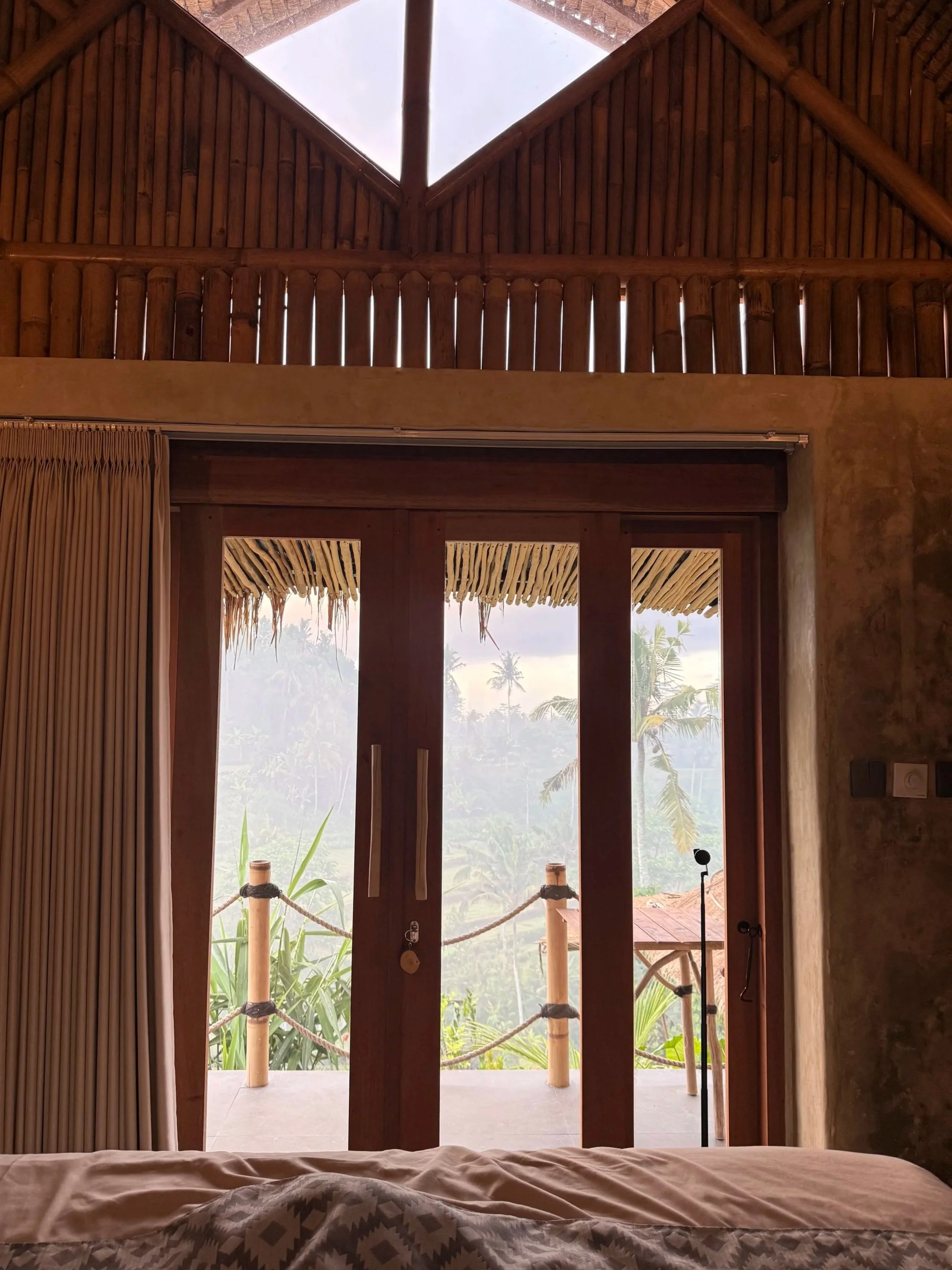
Dego built the eco-lodge himself in under a year. He dug the foundations, carried the materials, constructed the walls and thatched the roof by hand. Each bungalow sits on a different tier, offering privacy and uninterrupted views of the rice fields. Every detail feels intentional — from the open ceiling to shower under the stars, to the rendered walls and tonal palette that make you feel completely immersed in nature.
WHERE STORIES LIVE BETWEEN GENERATIONS
We stopped beside an open rice field, the paddies lush and green, sitting at hip height. It was August, with a month left till harvest. A farmer worked steadily in the sun, while an elderly woman moved through the field balancing a heavy basket on her head with effortless strength.
As she passed, Dego greeted her. She stopped to speak to him, and he listened intently, smiling at the weight her words carried. The conversation was sincere — a moment of genuine connection that felt grounding to witness.
After she continued on her way, Dego translated what she had shared. She had known his parents and spoke of them when they were together, memories he didn’t have many of. His parents divorced when he was young, something less common here and culturally significant within Balinese life. In traditional family structures, children typically remain within the father's lineage, and so he moved to Denpasar with his father.
After twenty years in Denpasar, Dego returned to Bangli because it felt like home. Through building his eco-lodge, he supports his family and gives back to his community, creating opportunities for travellers to support local businesses in a village often overlooked as people pass through Sidemen.
A PIECE OF BANGLI: CUSTOM SILVER JEWELLERY
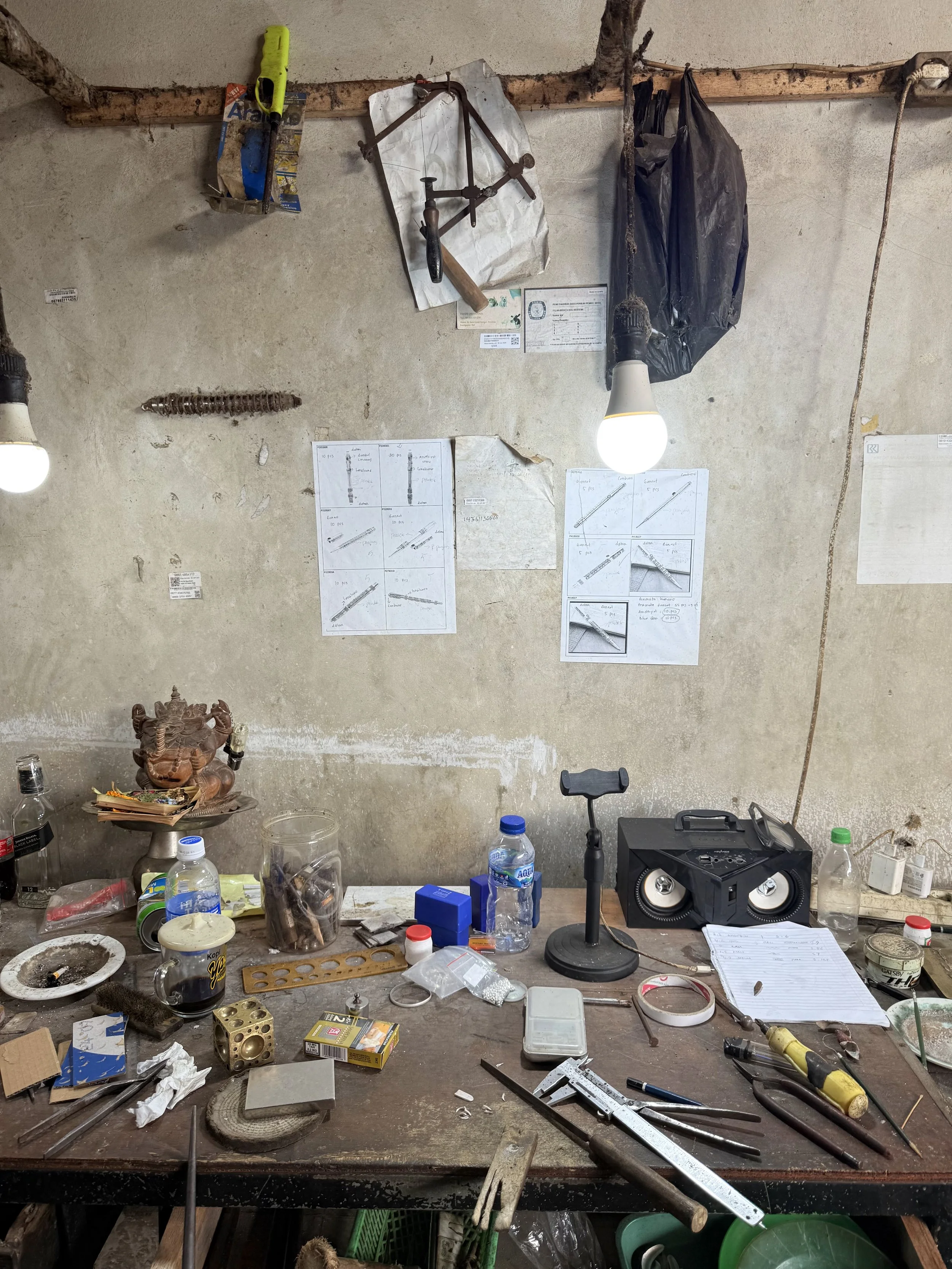
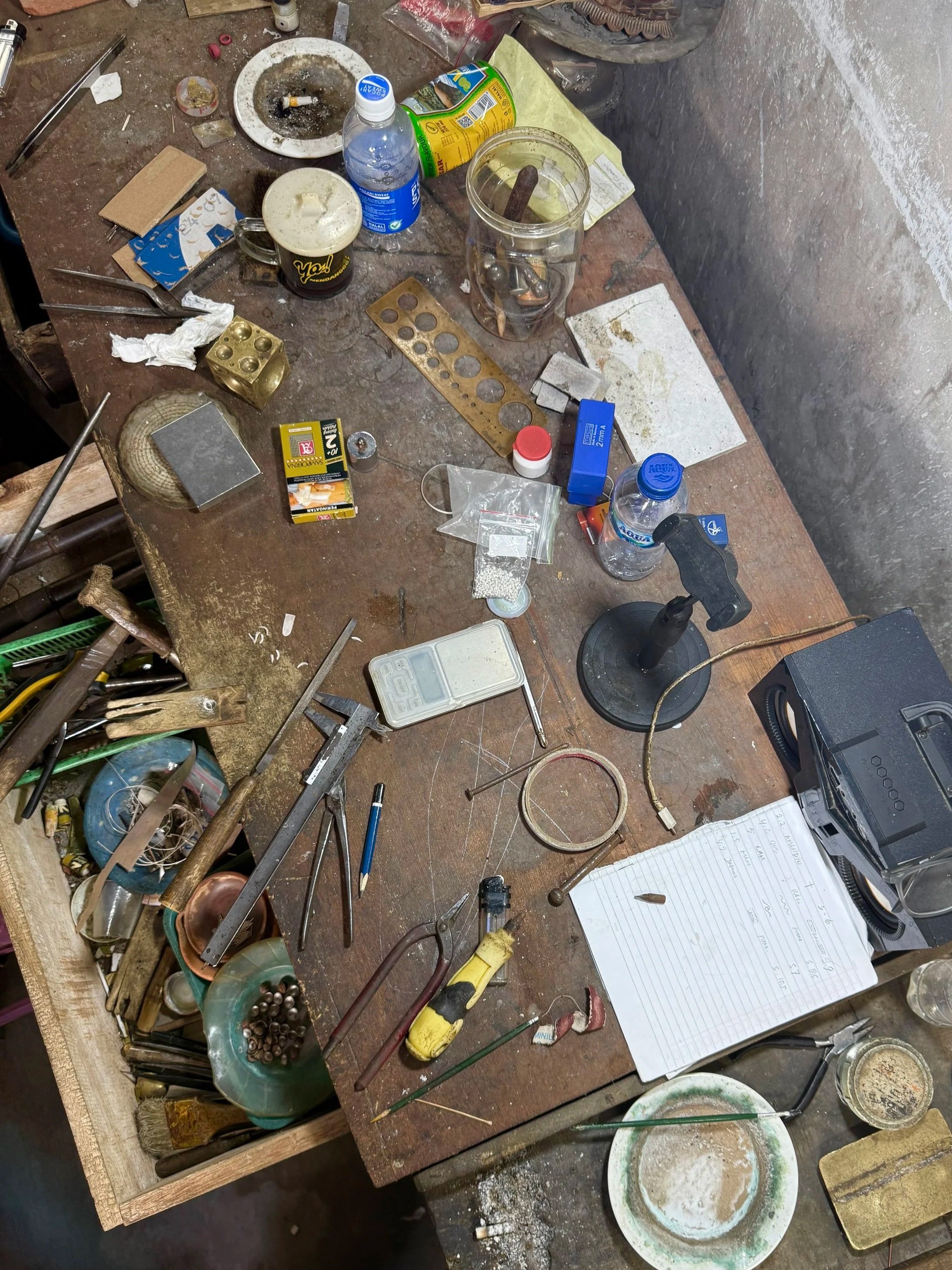
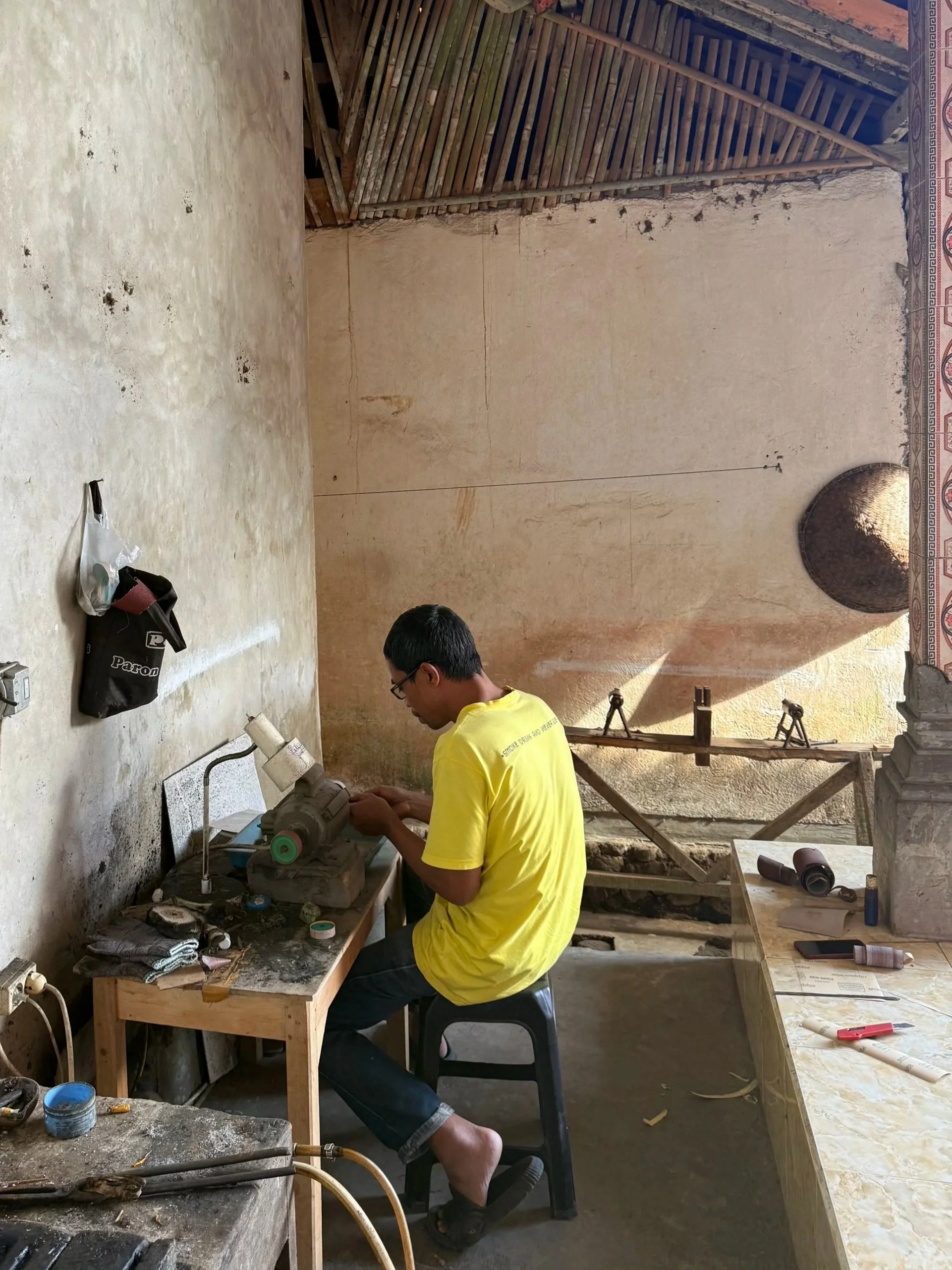
Before leaving, I asked Dego if he could take me somewhere to have silver jewellery made. He brought me to his childhood friend’s home, where his silversmith workshop was located at the back. It was raw and lived in with hand-drawn sketches on the wall, tools within reach, a cup of black coffee and a pack of cigarettes. A true artisan’s studio.
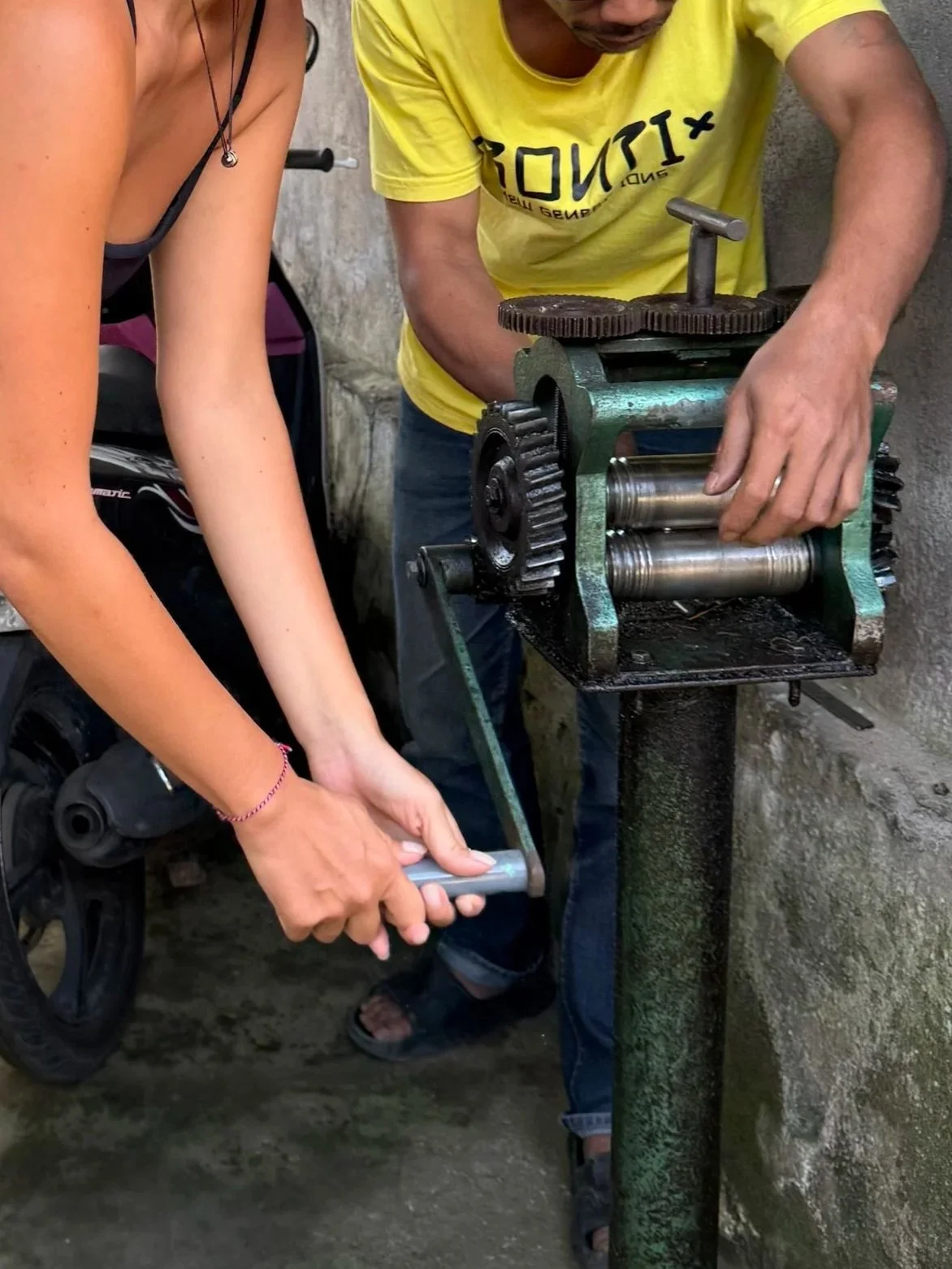
Together, we designed a pair of earrings. I watched the silver being weighed, melted, rolled and shaped, taking part in the process by pressing the metal through the rolling mill. The three of us shared stories and laughed like old friends. Dego read my palms and told me I’d achieve great things and settle a little later in life.
When the earrings were finished, Dego thanked me — not for the purchase, but for choosing to support someone local. I left Bangli carrying a small, handmade piece filled with meaning and memory.
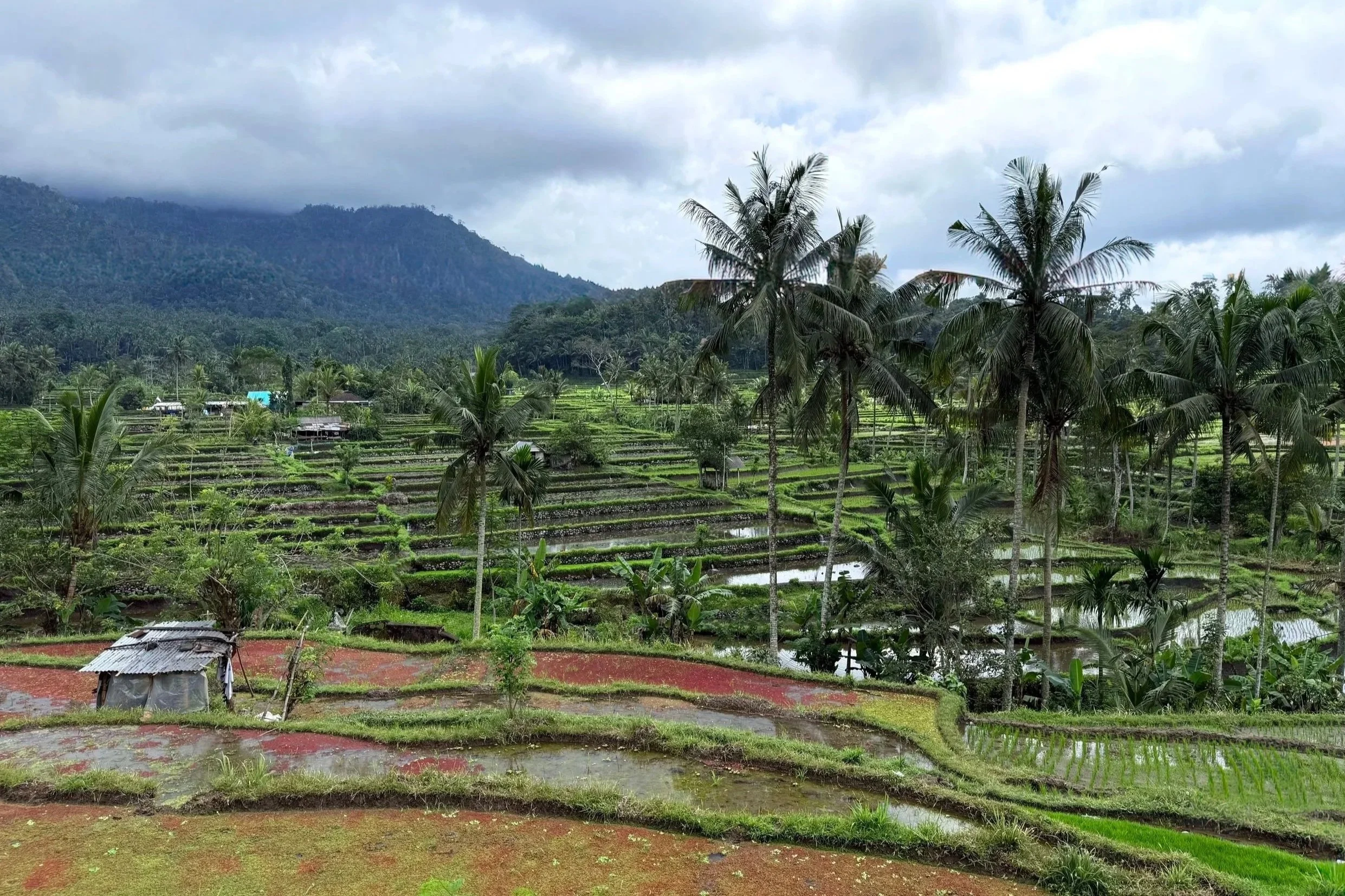
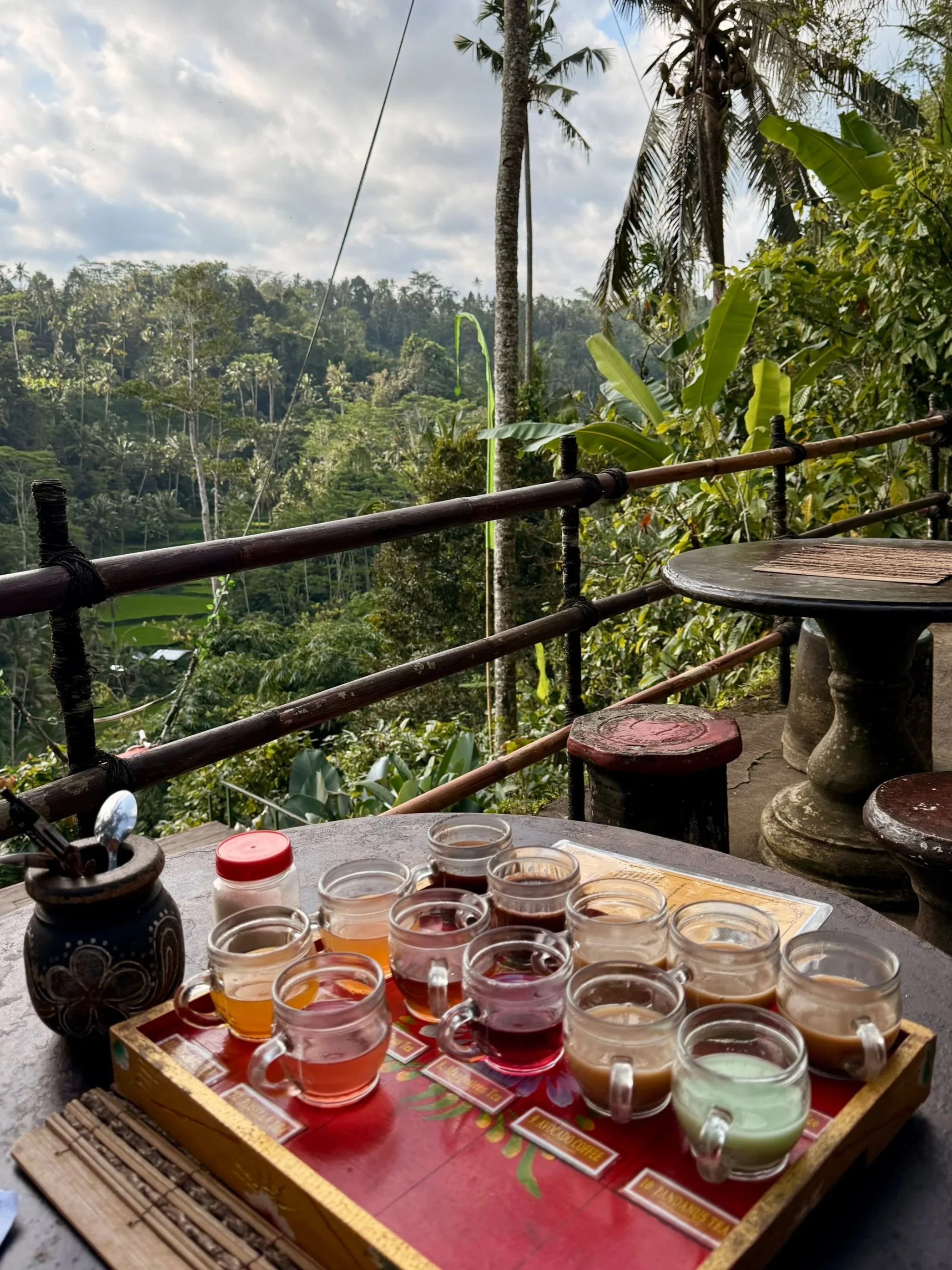
On the road from Bangli to Amed with a few roadside warungs to soak in the views.
FINAL THOUGHTS
Bangli reminded me that the most meaningful experiences often come when you look a little further, stay a little longer, and allow people to show you their world.
Travelling solo, I feel incredibly lucky to experience travel in this way, met with genuine connection and welcomed into the rhythm of a community. It’s reminded me that the best way to travel is to stay curious.
And this is when travel feels human.

-
Bangli traces its origins to Bali’s ancient kingdoms, and was once a key spiritual and administrative centre. The Kehen Temple (dating back to the 11th century) was central to the Bangli Kingdom’s religious life and remains one of the island’s most sacred sites. Unlike coastal regions that absorbed Hindu-Javanese influences through trade, Bangli’s highland isolation allowed it to preserve older Balinese traditions — especially in architecture, ritual life, and agriculture.
-
From Ubud, it’s about a 1 to 1.5-hour drive, depending on your stop — longer if you venture toward Kintamani or Penglipuran Village. You can hire a private driver (around 500–600K IDR for the day) or rent a scooter (100–150K IDR) if you’re comfortable with winding roads and steep inclines. The ride itself is part of the charm — think terraced rice fields, small villages, and glimpses of Mount Batur as you climb higher.
If you’re coming from Sidemen, it’s roughly an hour north, passing through beautiful countryside and local markets — an easy add-on if you’re slow-traveling through East Bali.
