
THE THAKHEK LOOP: RIDING THROUGH THE UNTOUCHED HEART OF LAOS
THE THAKHEK LOOP: RIDING THROUGH THE UNTOUCHED HEART OF LAOS
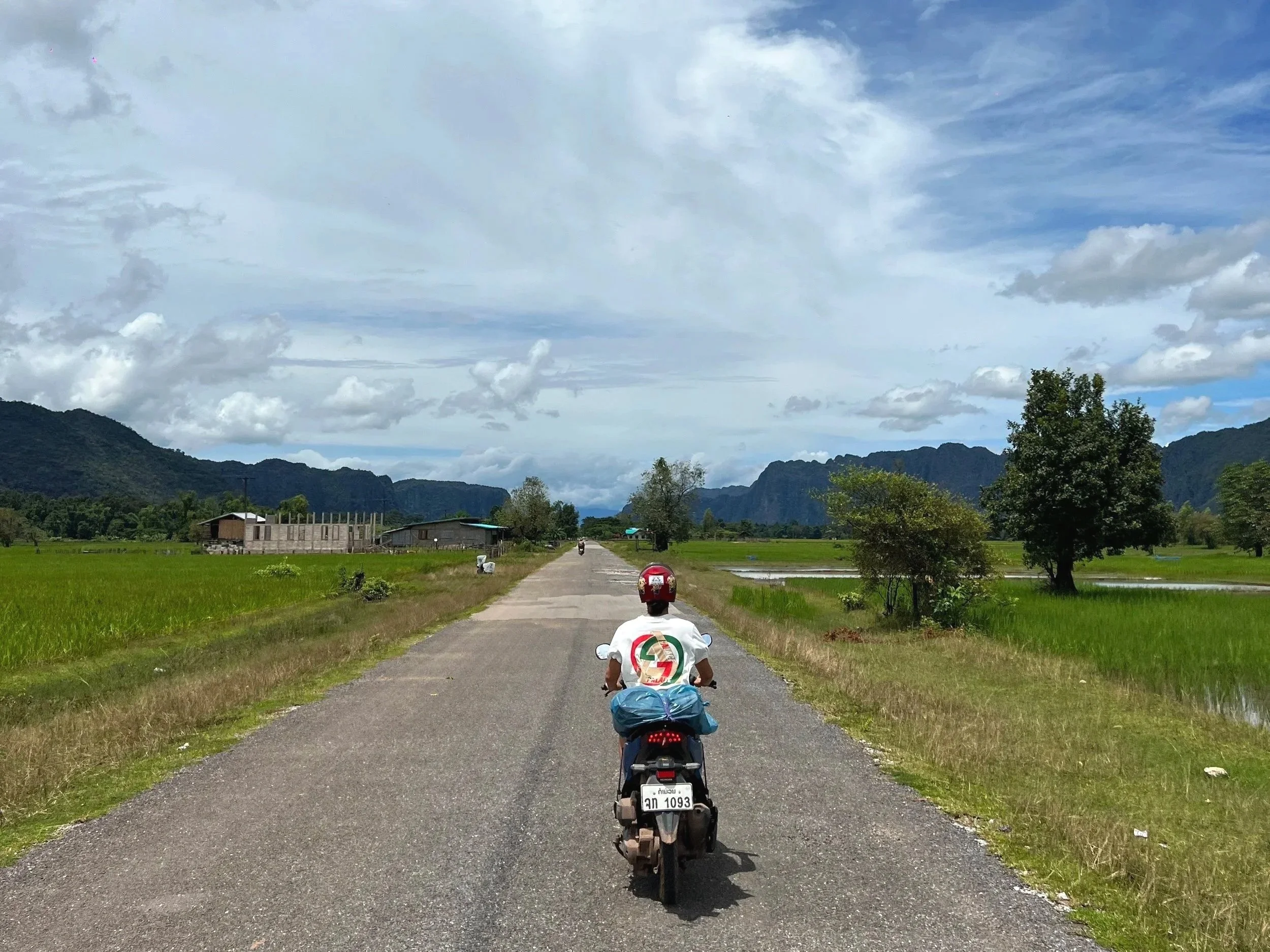
Laos is one of those countries I look back on, and the word that comes to mind is untouched. For the most part, it still is — and the Thakhek Loop is the kind of experience that shows you exactly why that matters. A road trip through central Laos, riding through remote villages where locals wave with pure joy, along roads shared with cows and through landscapes that feel like they've barely been seen, let alone shaped by tourism. Here is why the Thakhek Loop was one of the highlights of Laos, inviting you to take a slower pace through Southeast Asia.
WHAT LAOS ACTUALLY FEELS LIKE
Laos and Thailand often feel like “same same but different,” sharing deep cultural roots that are immediately noticeable as you move between them. Both are shaped by Theravada Buddhism, which influences everything from daily rituals to the calm, respectful way people interact. Along the Mekong River, these similarities are even more pronounced with closely related languages, nearly identical dishes like sticky rice, laap, and papaya salad, and traditions such as alms-giving and New Year water festivals. While Thailand feels more developed and fast-paced, Laos holds onto something slower and softer. Less touched, more understated, and quietly rooted in tradition.
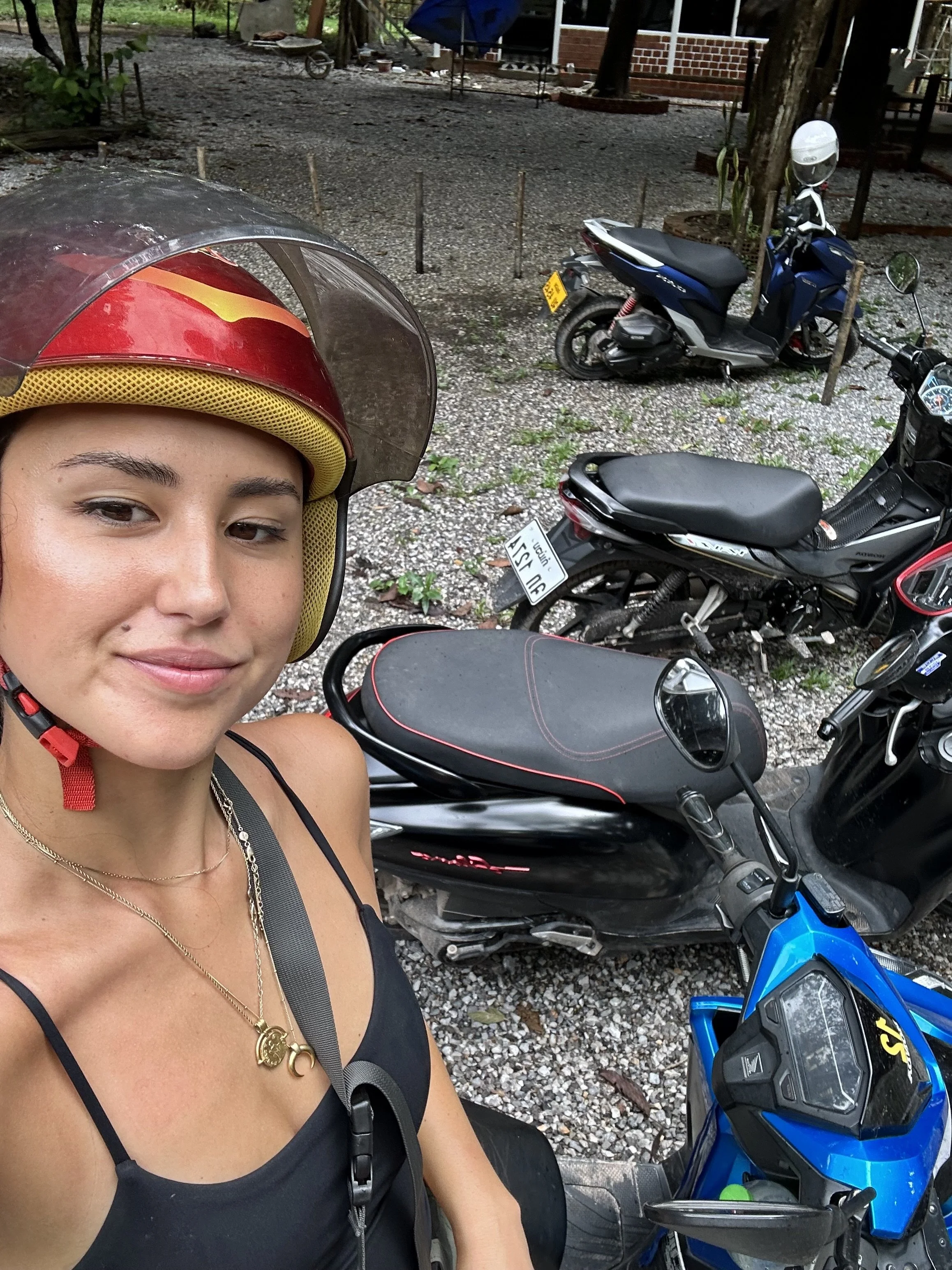
I heard about the Thakhek Loop from a French traveller I met in Vang Vieng who had spent two months travelling Laos. It was one of his favourite experiences talking about the wild beauty and untouched countryside with the kind of enthusiasm that quickly found its way into my plans and made it my next stop on the travels. The only problem was that I didn’t know how to ride a scooter.
After an afternoon of tipsy tubing on the river in Vang Vieng — think Somersmby’s apple cider, an inflatable ring, and an afternoon drifting along and watching the town pass by. I met Joe from New Zealand and Zeke from the UK while tipsy tubing, both wanting to do the loop. Somehow, I convinced all of us to commit to catching the 8:30am bus the next morning to Thakhek, a rural town that marks both the start and the end of the loop.
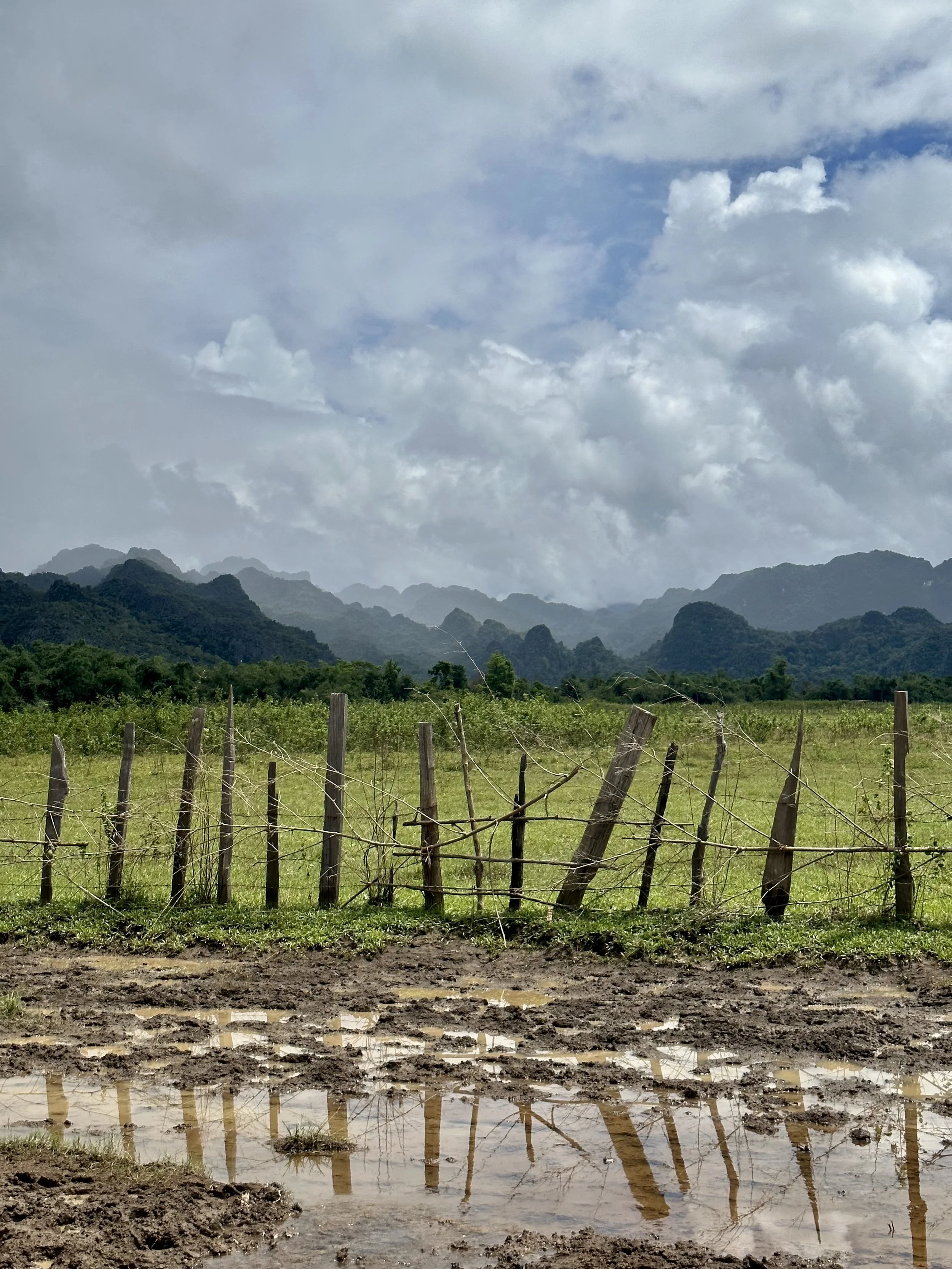
What was meant to be a 9-hour bus ride turned into a 12-hour endurance test. It was wet season — September, which had been particularly heavy the last ten days I’d been in Laos. Infrastructure is underdeveloped, where long stretches of dirt roads are filled with potholes and rainwater, making the journey its own layer of precaution. At times, only one vehicle could pass through what should have been a two-lane road, carefully weaving to avoid the worst of it.
And yet, it made sense. Laos feels untouched in a way that's becoming increasingly rare. It's not built for mass tourism and still has that local feel, like menus are written in the local language with photos that you point to, squat-style toilets in public spaces, and you quickly learn to carry tissues with you everywhere. Laos draws a certain kind of traveller: curious, open, and willing to let go of control.
THE LEAD UP TO STARTING THE LOOP
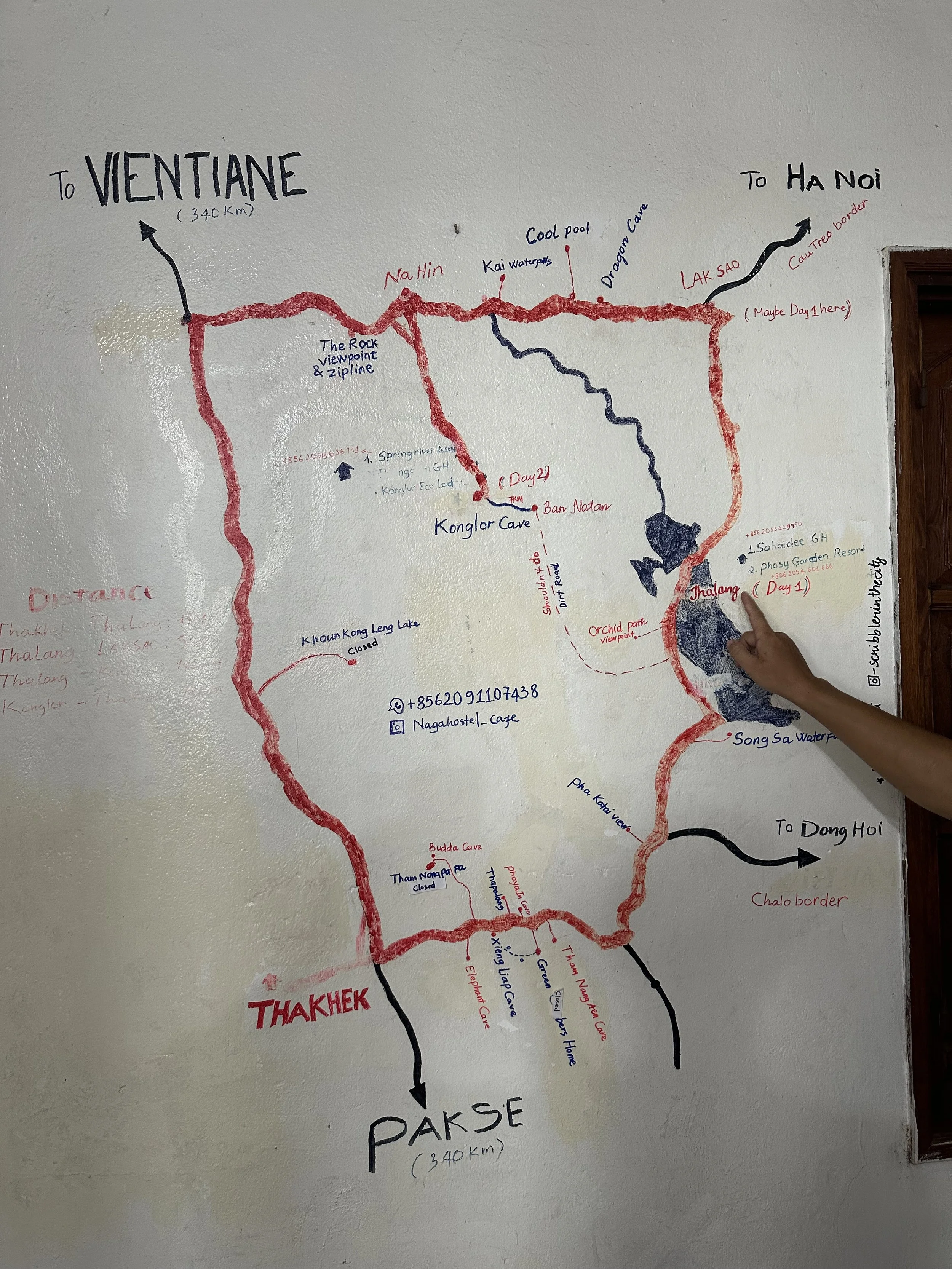
Our group of 3 became a group of 6 on the bus ride down — two Brits, a German, Kiwi, an American and an Australian. We checked into a hostel for a restful night ahead of the loop. In the morning, the owner made us breakfast, walked us through the route on a map, and recommended a scooter rental he trusted.
I'd only sat on the back of a scooter and never driven but it was something I'd wanted to learn for a long time. The French guy from Vang Vieng said the roads were good for beginners as it’s mostly flat and quieter once you get out of town. The boys showed me the basics, and we rode to the petrol station across town to fill up. Turning out, I slid on the wet asphalt and came off my scooter in the middle of the road.

I got up before I'd processed what happened, feeling slightly shaken. Any confidence I had was still lying on the ground. What if I can't do this? The alternative option was to turn back, but I didn't want that. This moment brought up a bad car accident I had when I was 21, and why I always stayed on the side of caution with driving.
Joe came to check on me, offering kind words and slowly riding alongside. He didn't rush me — he just stayed close enough that I didn't feel like I was slowing the group down, and gave me enough space to pick up my courage from where I'd left it on the road. That simple act meant so much to me.
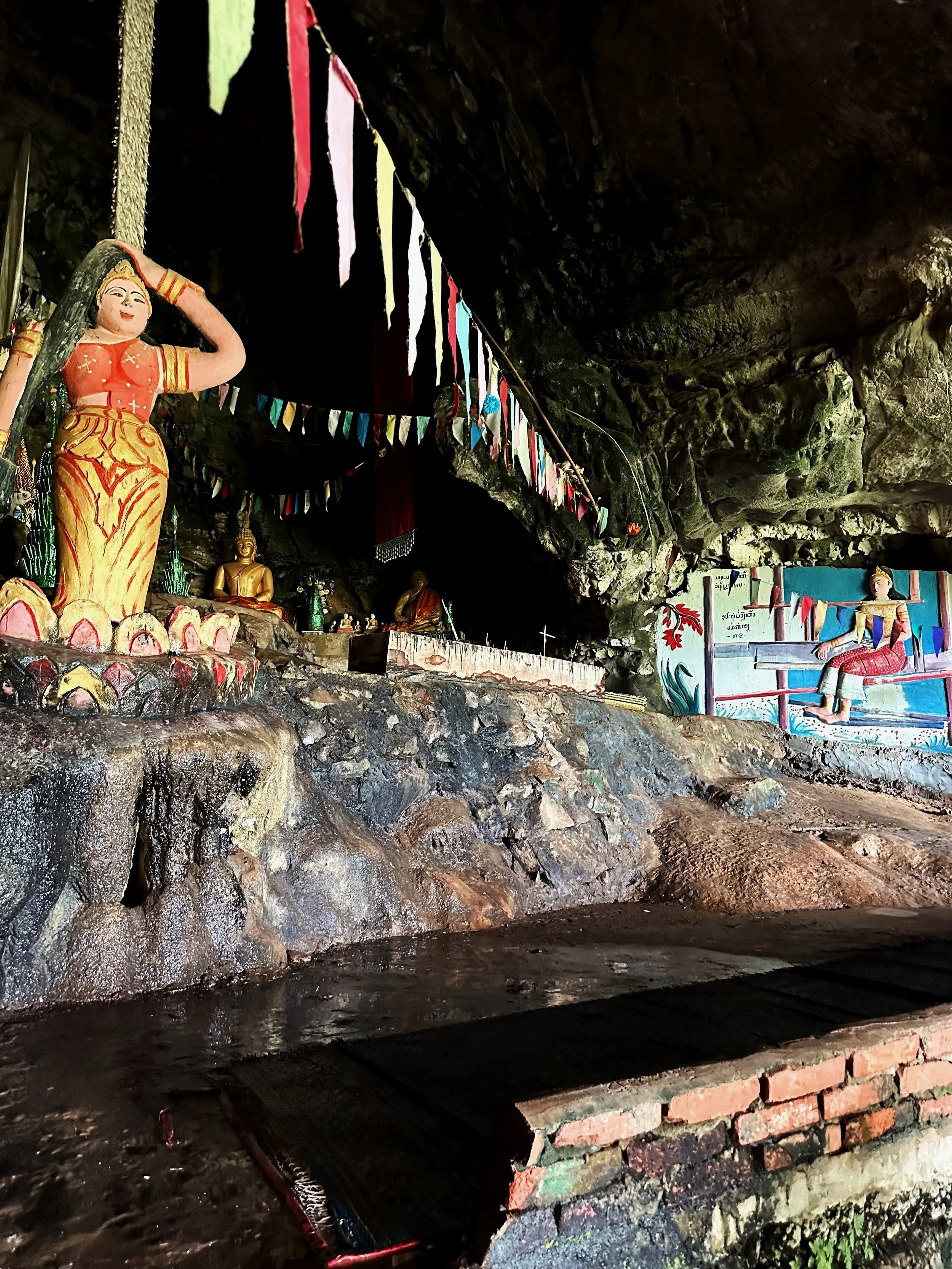
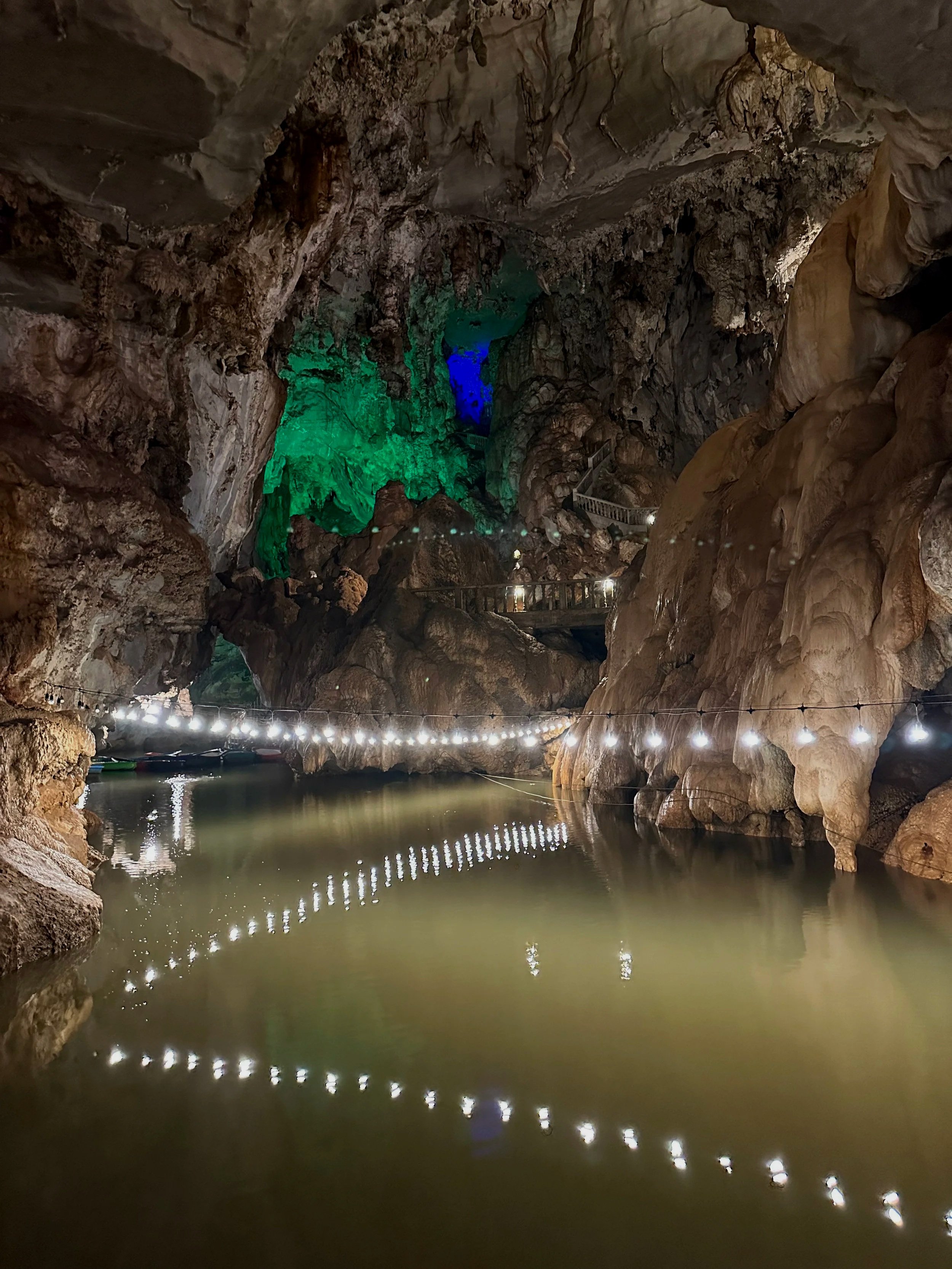
Day 01 // Thakhek → Tha Lang
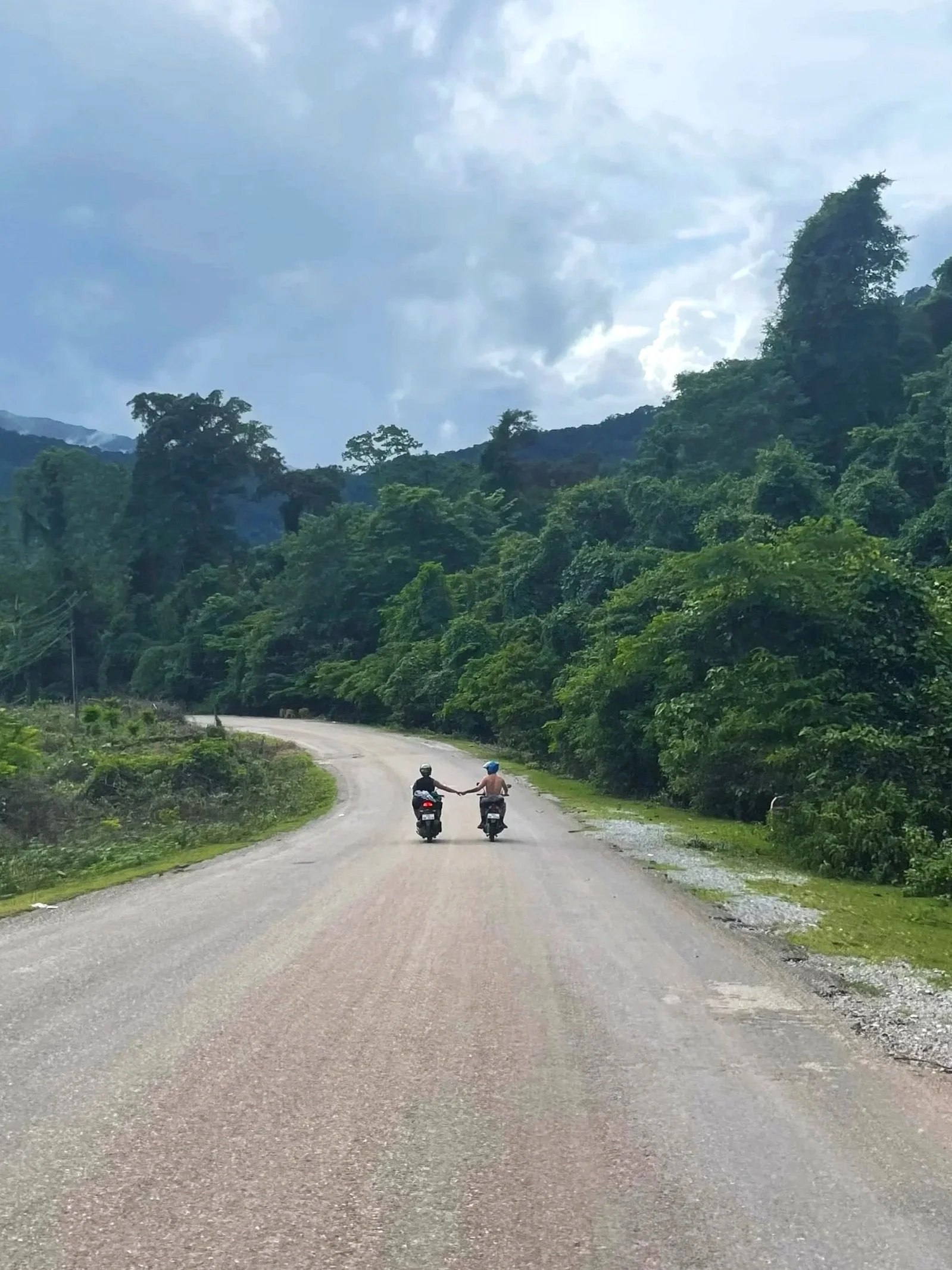
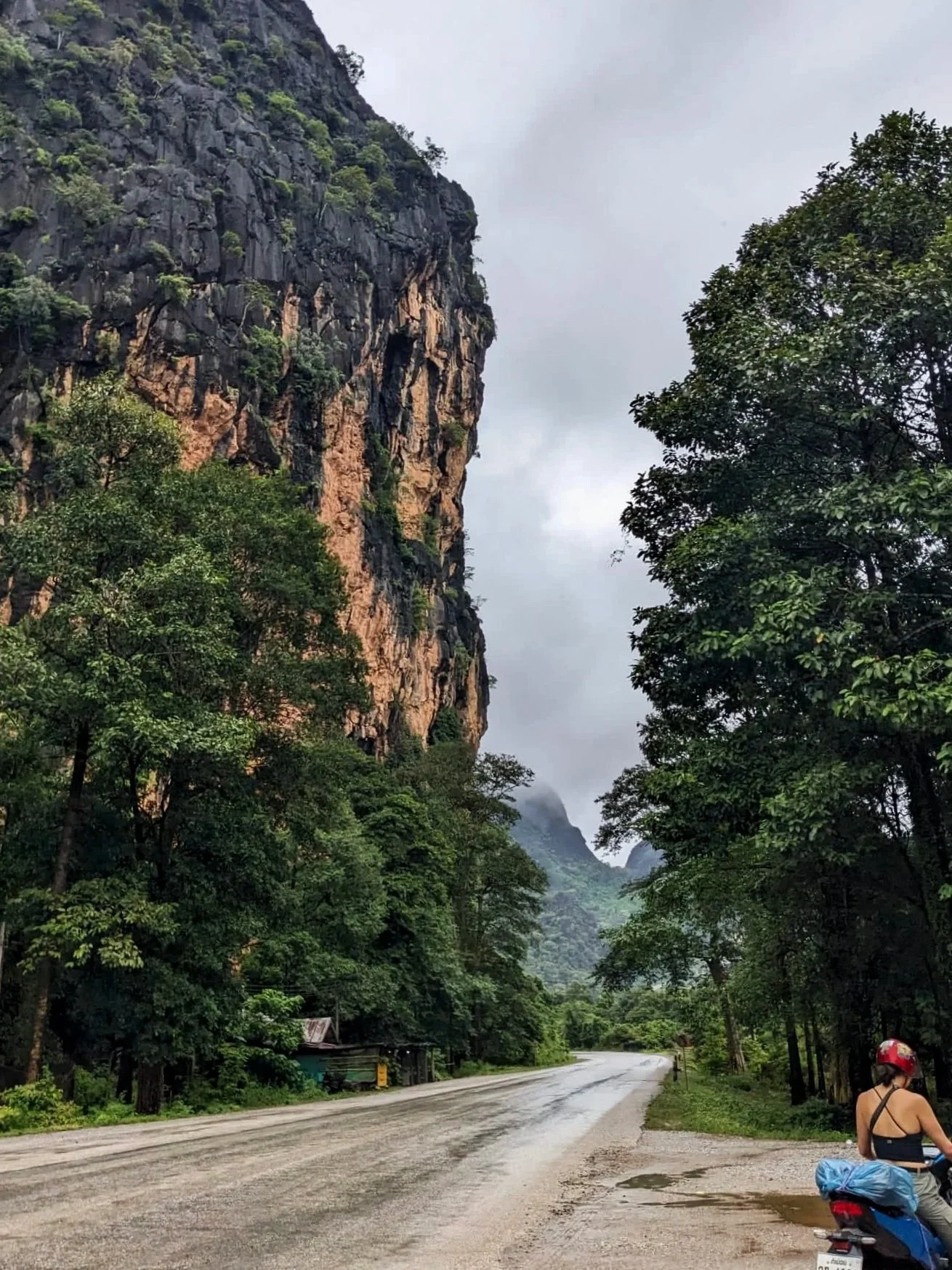
We did the loop anti-clockwise, taking the scenic route first and making our way up central Laos. The first stretch eases you in gently with flat roads that open to dramatic mountain surrounds and open fields that stretch endlessly. The weather for the day started moody and slowly lifted as we climbed higher on winding roads shaped by overhanging trees, passing by rarely any other people on the road.
Where To Stop
Elephant Cave — a Buddhist cave temple with ornately decorated deities, colourful Tibetan prayer flags and offerings left behind, in a place that feels so remote and sacred to come across.
Buddha Cave - hundreds of Buddha statues ornately decorating the cave walls, some up to 500 years old, which was only rediscovered in 2004.
Tham Nang Aen Cave — stretching over 1.5km with ceilings reaching up to 30m in places, with staircases leading up to overlook the cave and its lake.
Pha Katai Viewpoint — around 1,000 steps to the top, with sweeping views over the river and the landscape below.
As the sun was quickly setting, we found a homestay that was a 30-minute drive away. Navigating in the dark, with no street lights, we showed up at Sabaidee Thalang Guesthouse and asked if they had availability.
The homestay was very simple with six single beds per dorm, divided into men’s and women’s cabins and cold running showers. The manager was very welcoming, and it appeared that we were the only guests.
Day 02 // Tha Lang → Kong Lor
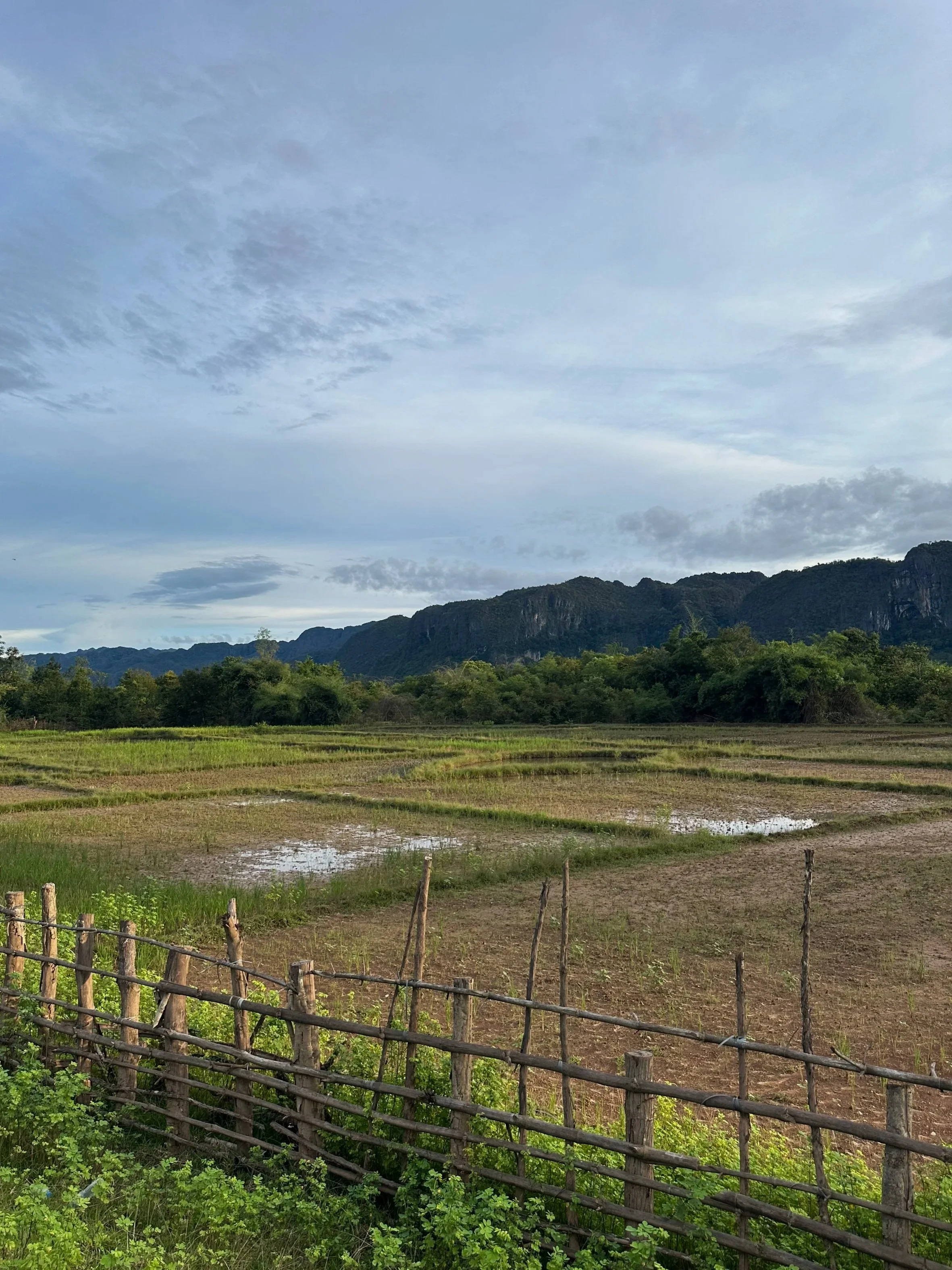
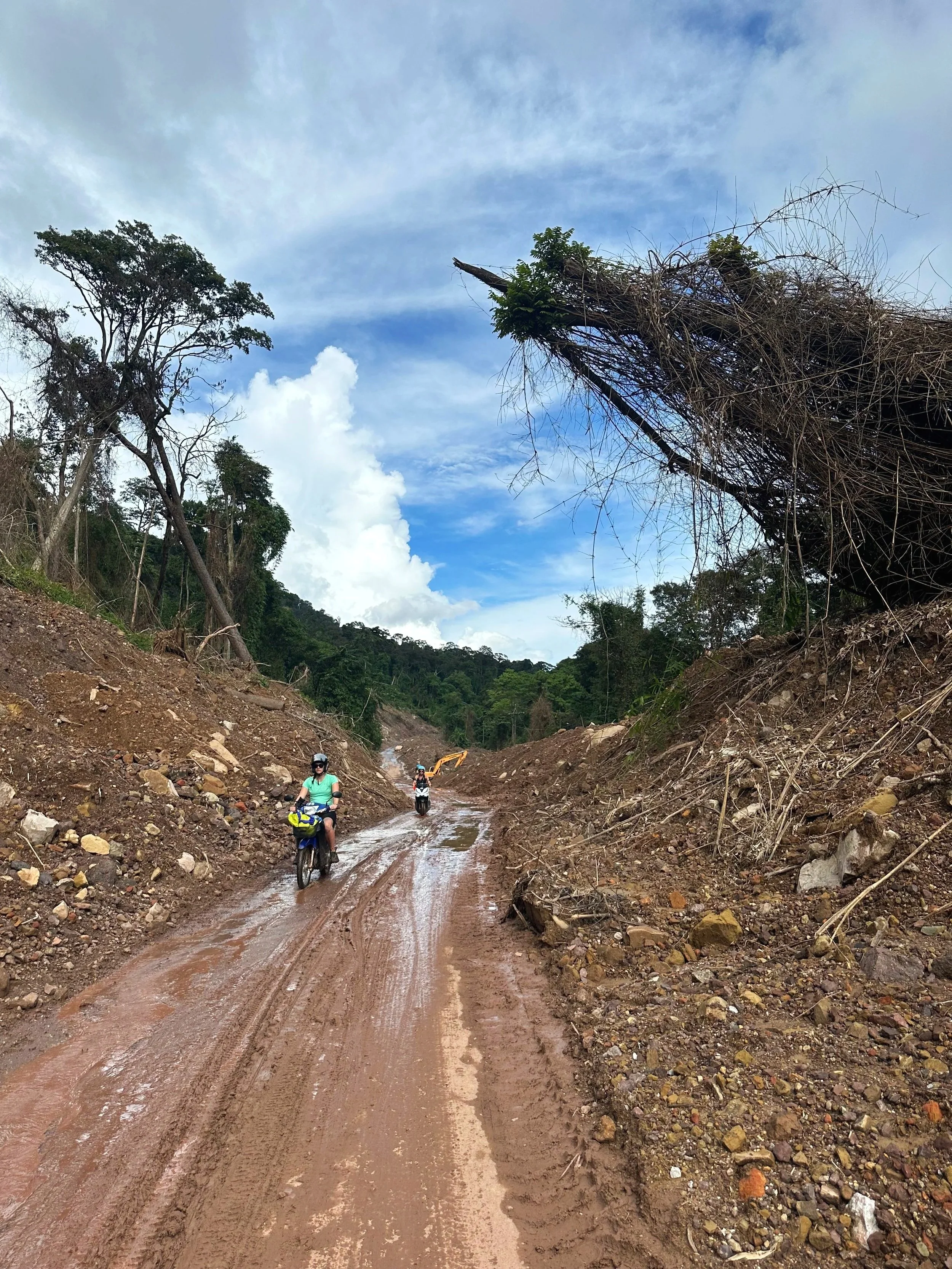
This is where the landscape turns surreal and vivid in pigment. Red dirt roads cut through bright green fields, with a backdrop of limestone mountains rising in the distance. Everything feels more open and alive. The morning ride was smooth until we hit a landslide. Fallen trees, loose earth, and a narrow, muddy path forced us to slow down. This was beyond a few of our levels to navigate, so the boys took joy in riding our scooters down, with caution — part of what made the loop feel so raw.
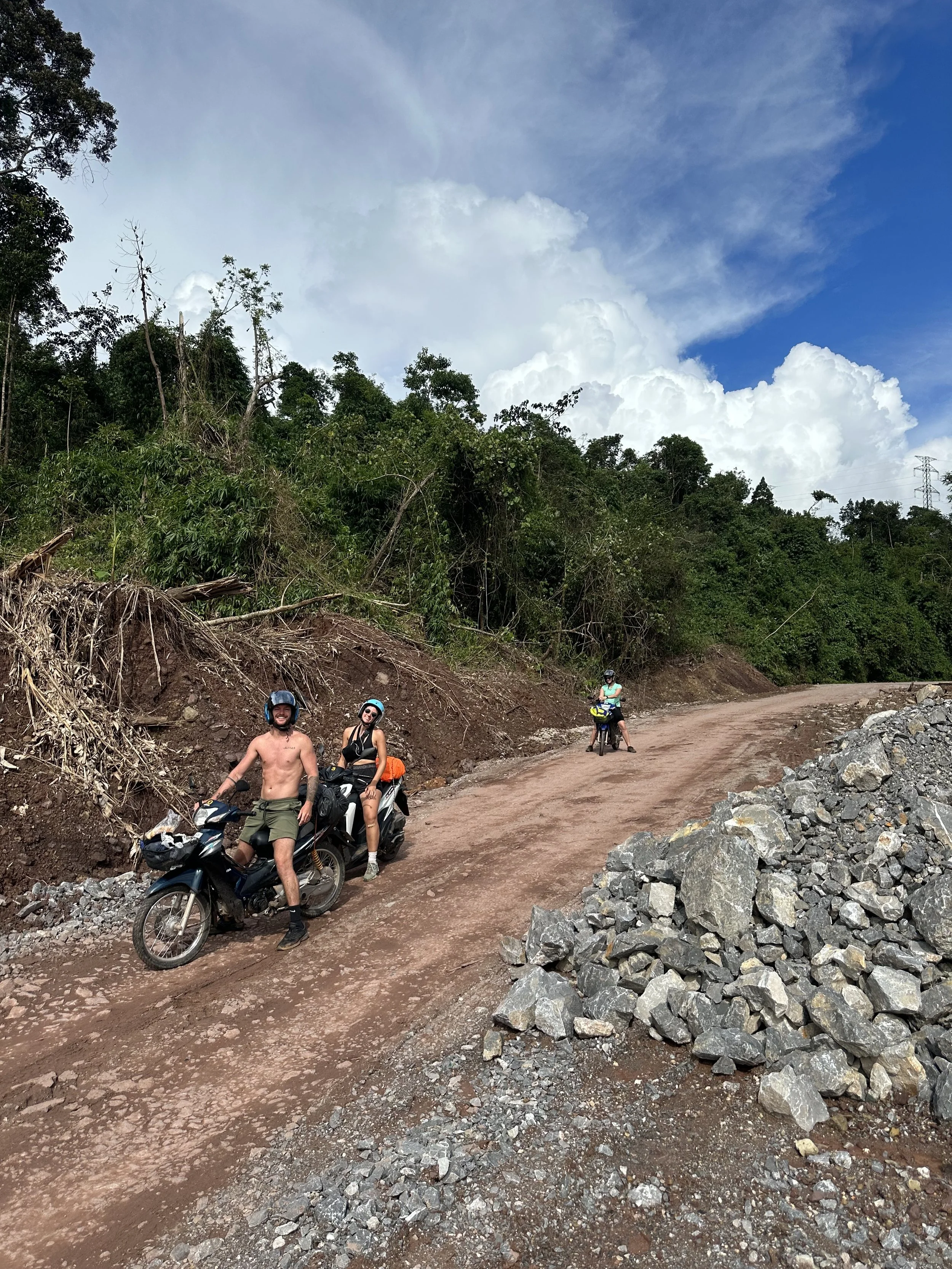
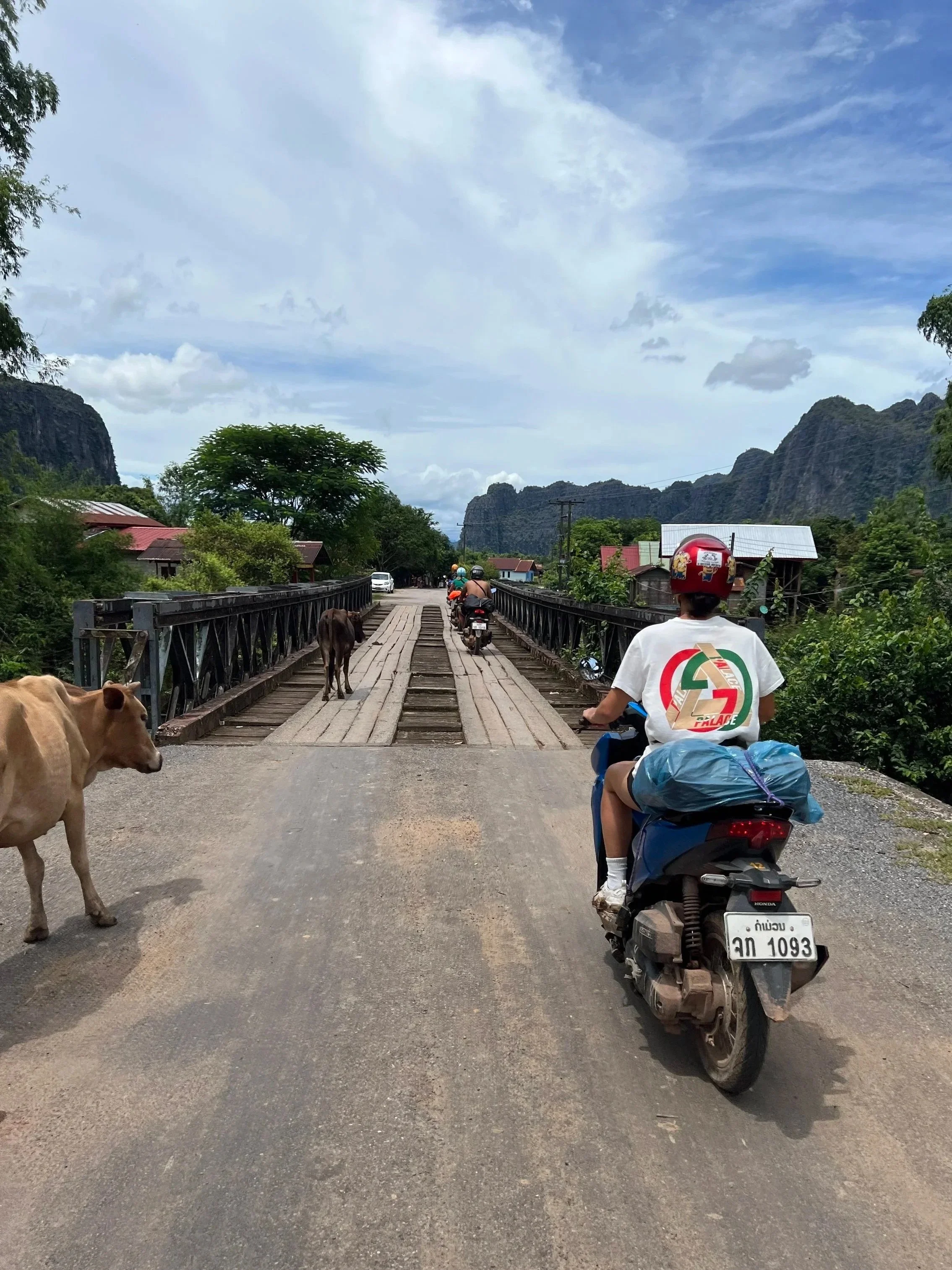
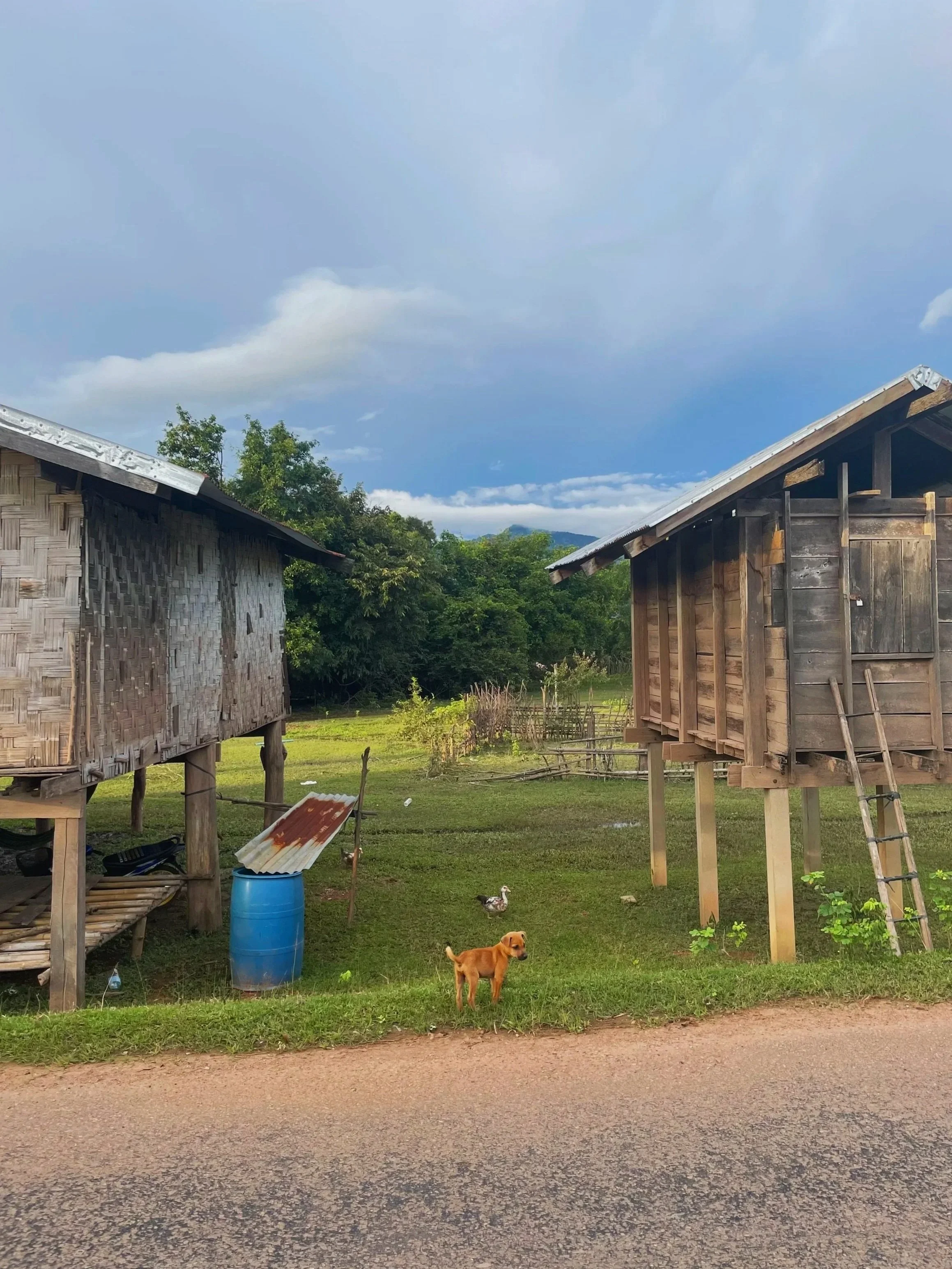
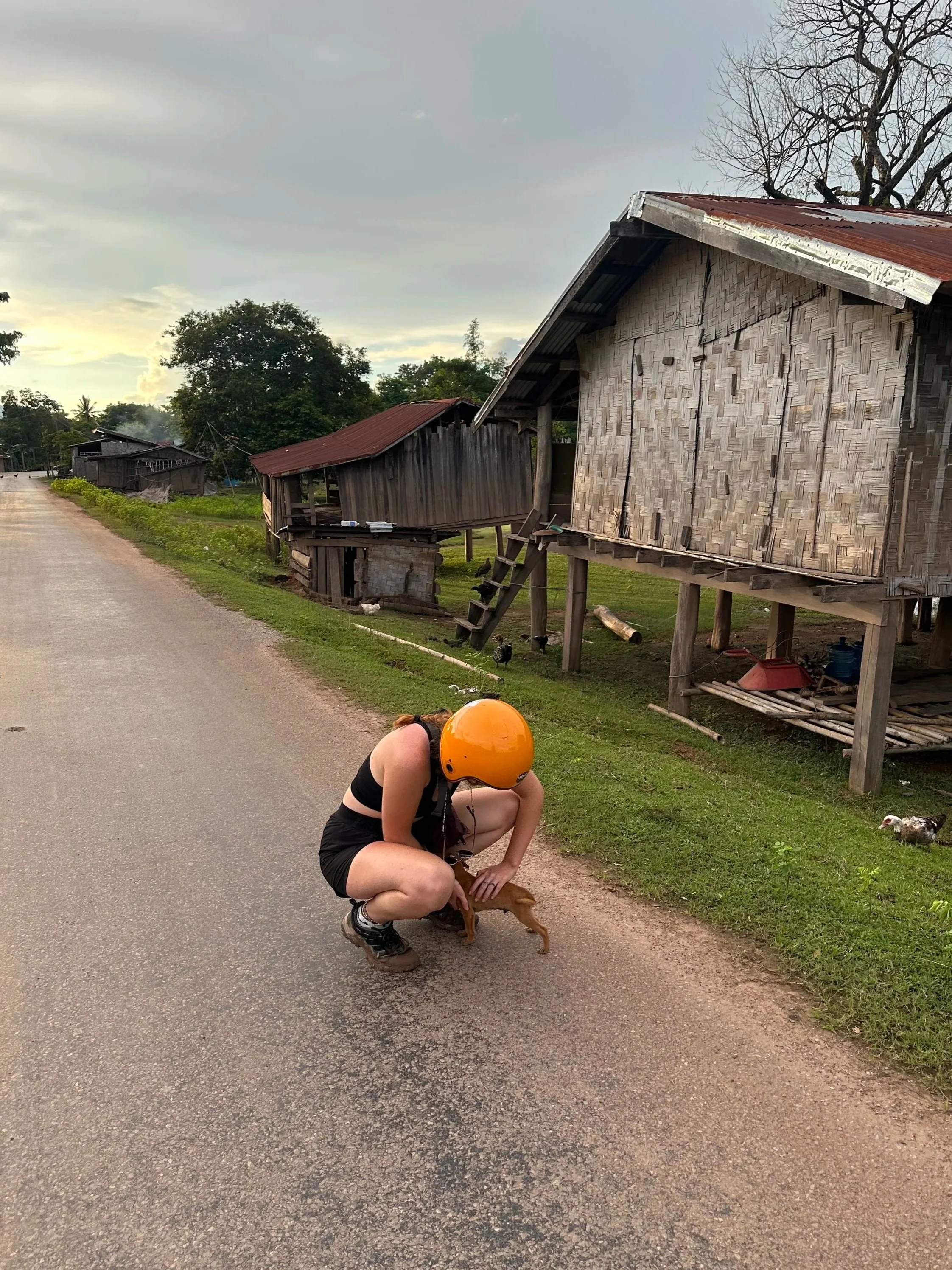
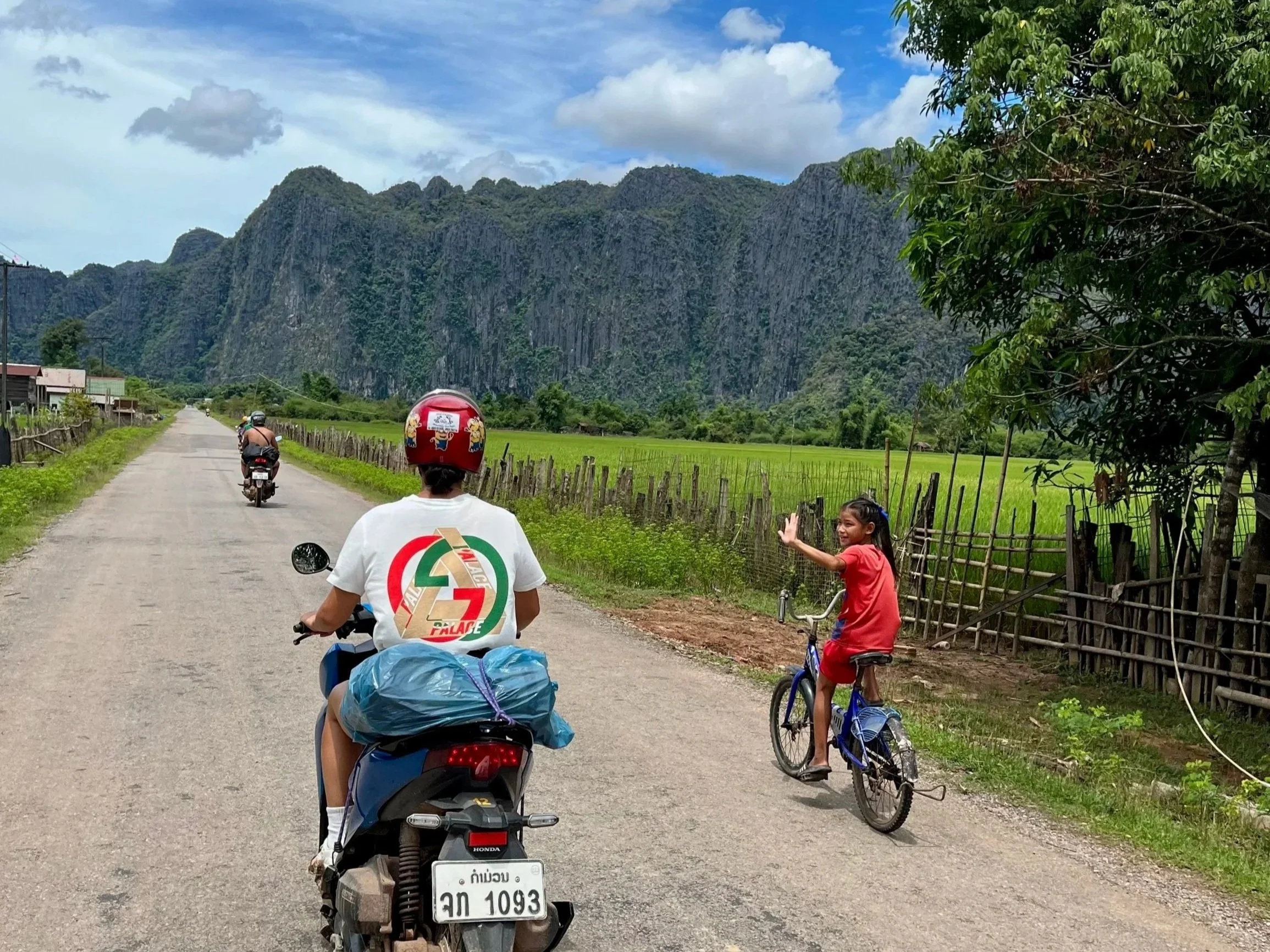
From there, it softened again. As the sun was starting to set, we drove through a village that lined the road where families stood outside their homes to wave as we passed. Kids were running to make sure we saw them, a real kick, a special interaction to be part of this moment in their day and for their pure joy to leave an imprint on our experience in Laos. The people of this country are extremely gentle and warm, community-oriented and softly natured.
Where To Stop
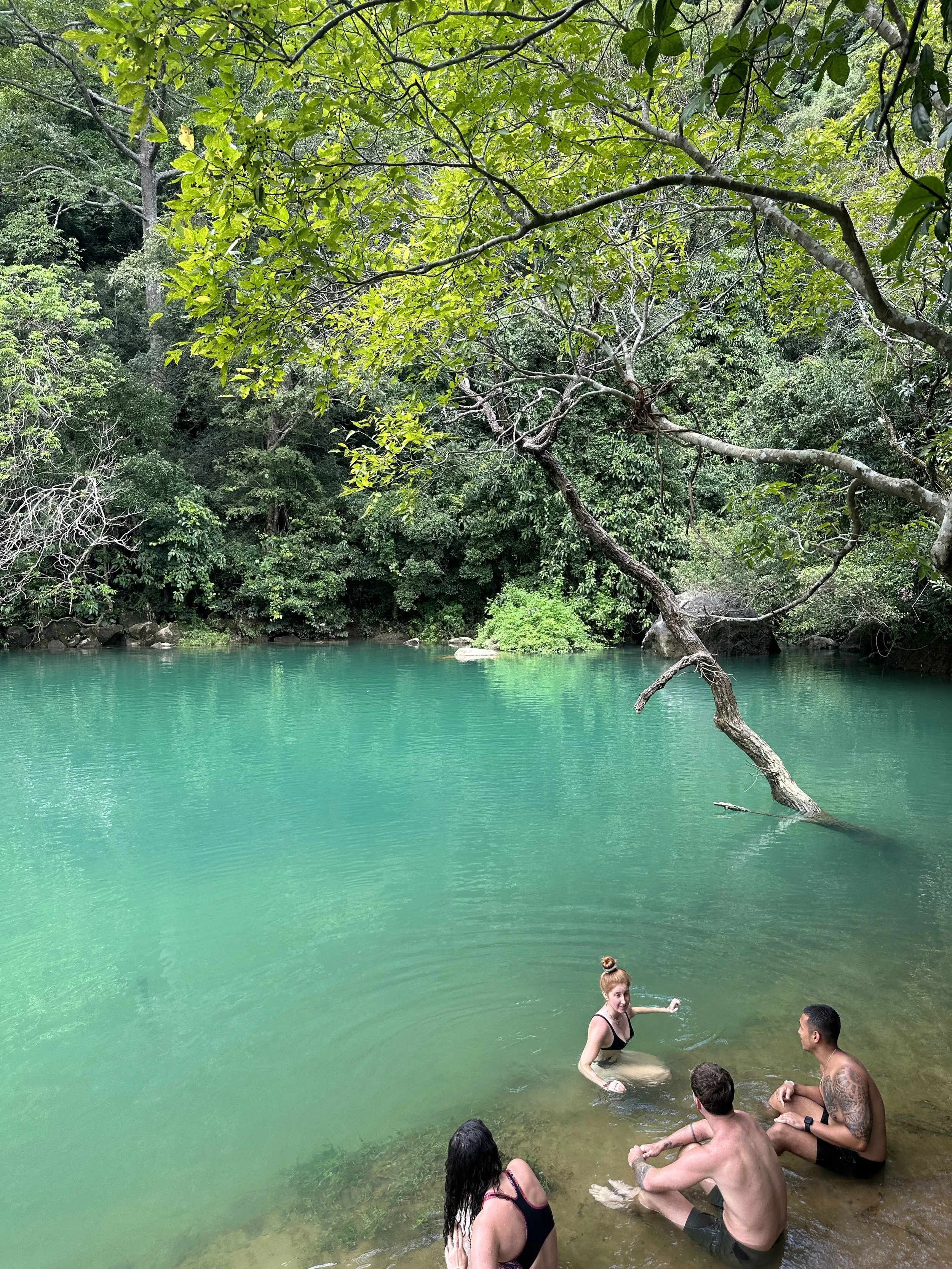
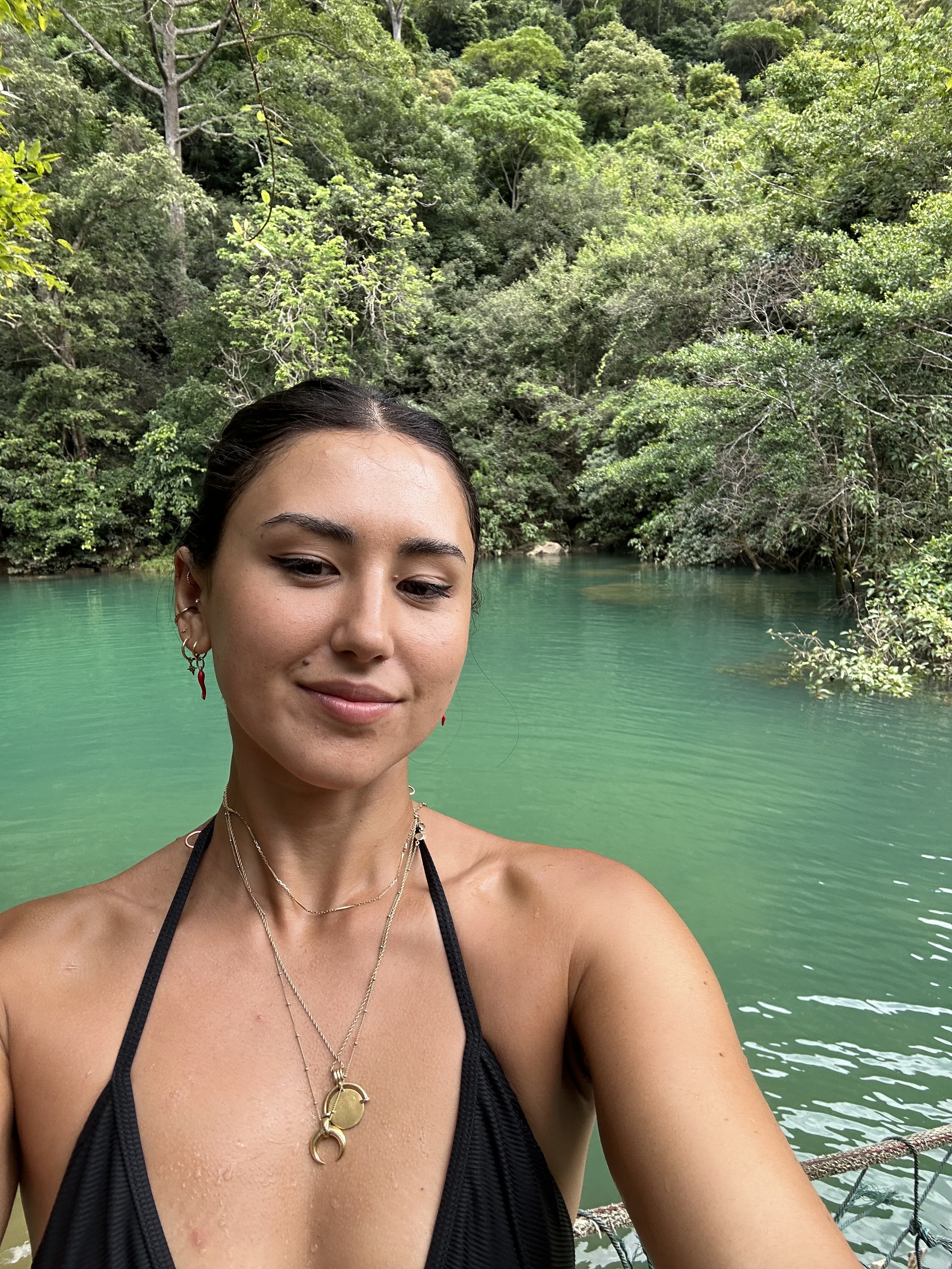
Kong Leng Lake — a natural swimming spot with clear, cool water, completely surrounded by forest that we had all to ourselves.
The final stretch into Kong Lor felt earned after a long day of driving. The accomodation we found was a huge step up — comfy beds, a hot shower and the kind of rest that hits hard after a full day in the heat.
*This accomodation is no longer open for business to recommend.
Day 03 // Kong Lor → Thakhek
The morning began slowly — breakfast, then an adventure-packed day exploring Kong Lor Cave and zipling through karstic forests before the long push back to Thakhek. It was a real push. The sun set well before we were anywhere close to being back.
Where To Stop
Kong Lor Cave — tucked into the landscape, the size and vastness is understated. Navigated entirely by boat, the cave follows a 7km passage through darkness, lit by a headlamp, passing natural formations that have formed for millions of years.
The Rock Viewpoint — the adrenaline rush of ziplining from karst across karst forest, opening out to some of the most breathtaking views in Laos from high above. It was one of the unexpected highlights.
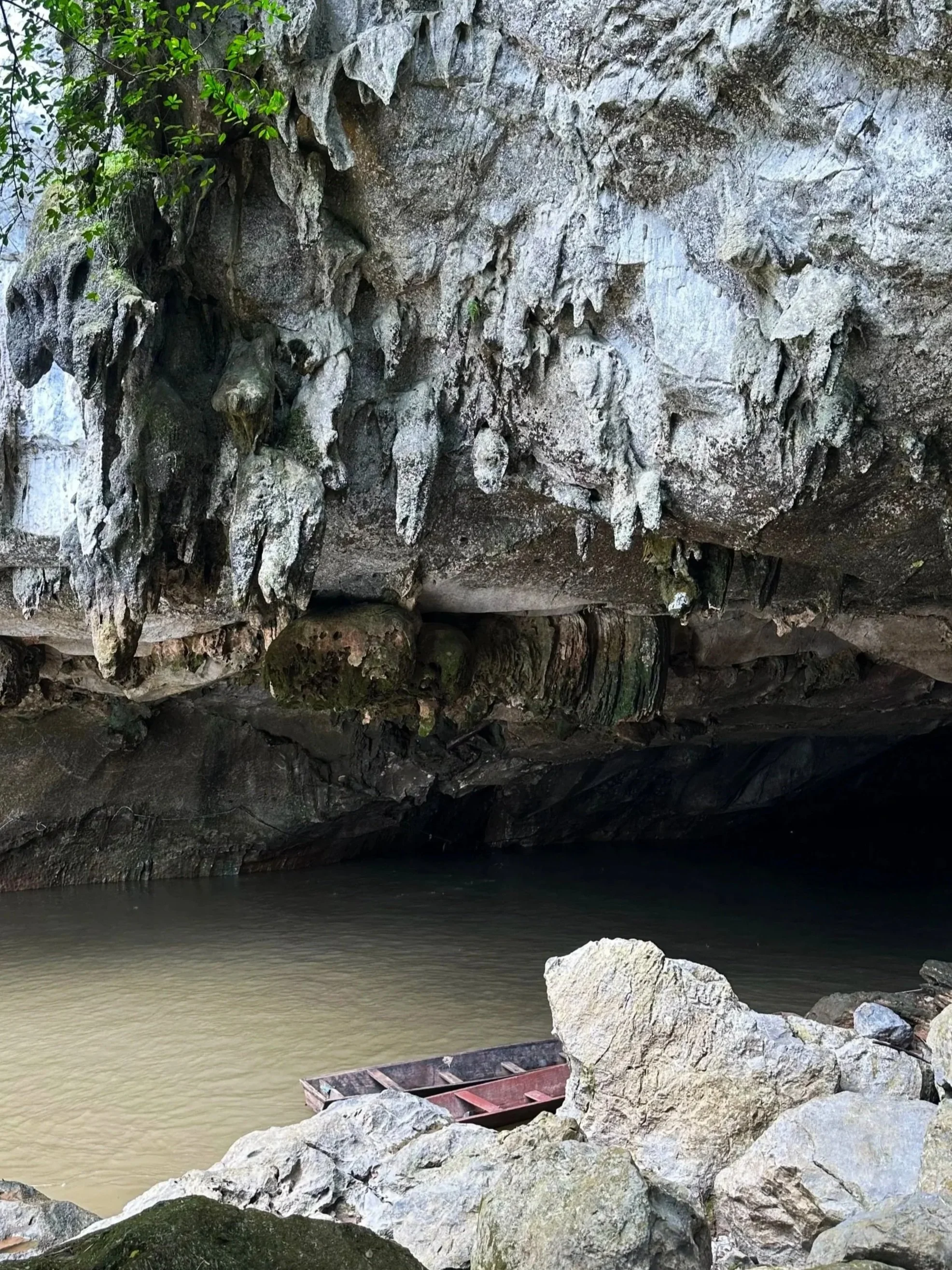
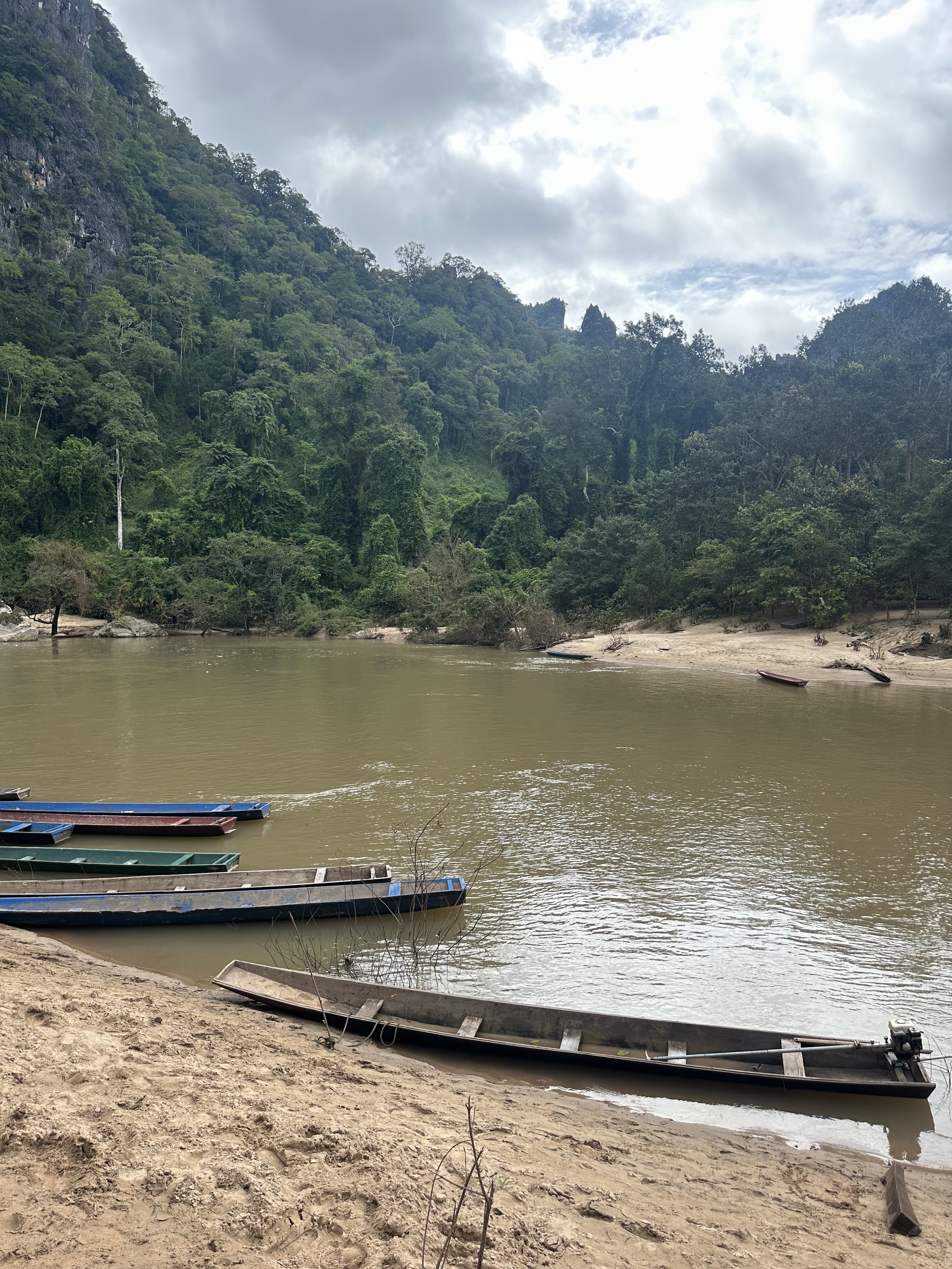
From there, the day stretched out ahead of us. We aimed to make it back before sunset, but it took way longer than expected. What started as a scenic, winding ride quickly gave way to the harsher side of the loop — the non-scenic route. A busy main road dominated by large trucks, layered in thick dust and scattered with unavoidable potholes, sending sharp, full-body vibrations. If you choose to ride clockwise, this section is done and dusted.
At first, it still held some beauty with open stretches of greenery, but it didn’t last long. The road turned chaotic as trucks sped past in both directions, often overtaking into our lane and forcing us to the very edge of the road. Dust filled the air, and at a point, it was impossible to see more than a few metres ahead. We were already exhausted with a long drive still to go, and my scooter’s headlight was barely casting any light as the sun began to drop quickly.
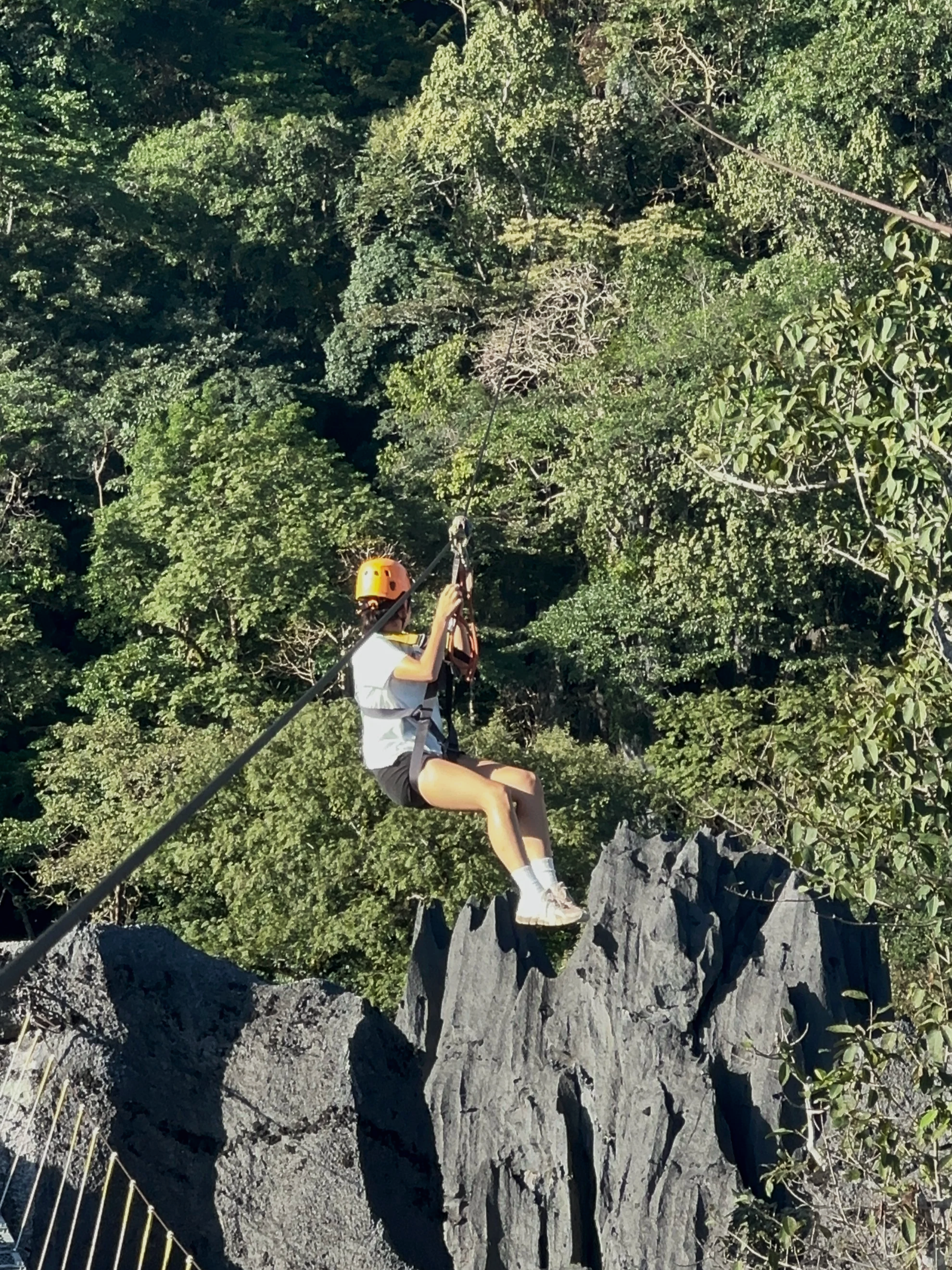
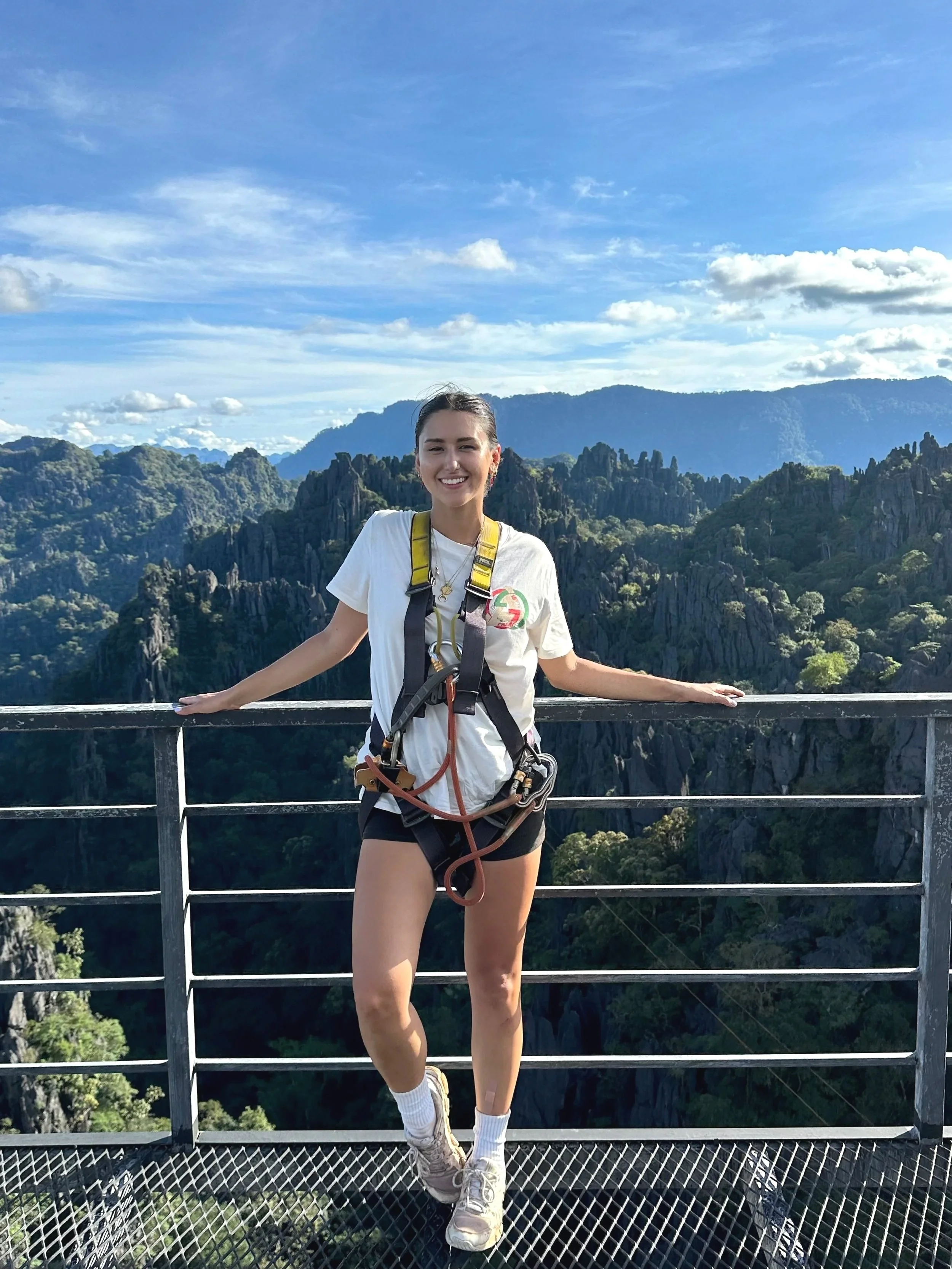
Drivers didn’t slow down. They overtook blindly, and in the dust and low visibility, you wouldn’t see them until they were almost on you. I was riding at around 80km/h, relying on the boys’ headlights to guide me. There were real moments where I came close to being hit — more than once, and I am so grateful that wasn’t the outcome.
It was intense, uncomfortable and honestly, the only part of the loop that felt unsafe. But it’s a part of the story, and a contrast from the stillness of the cave and the adrenaline of the cliffs earlier that day. The chaos of the final ride captured the reality of the Thakhek Loop — riding in a developing country, next to Southeast asian cowboys. Unpredictable, raw, and unforgettable.
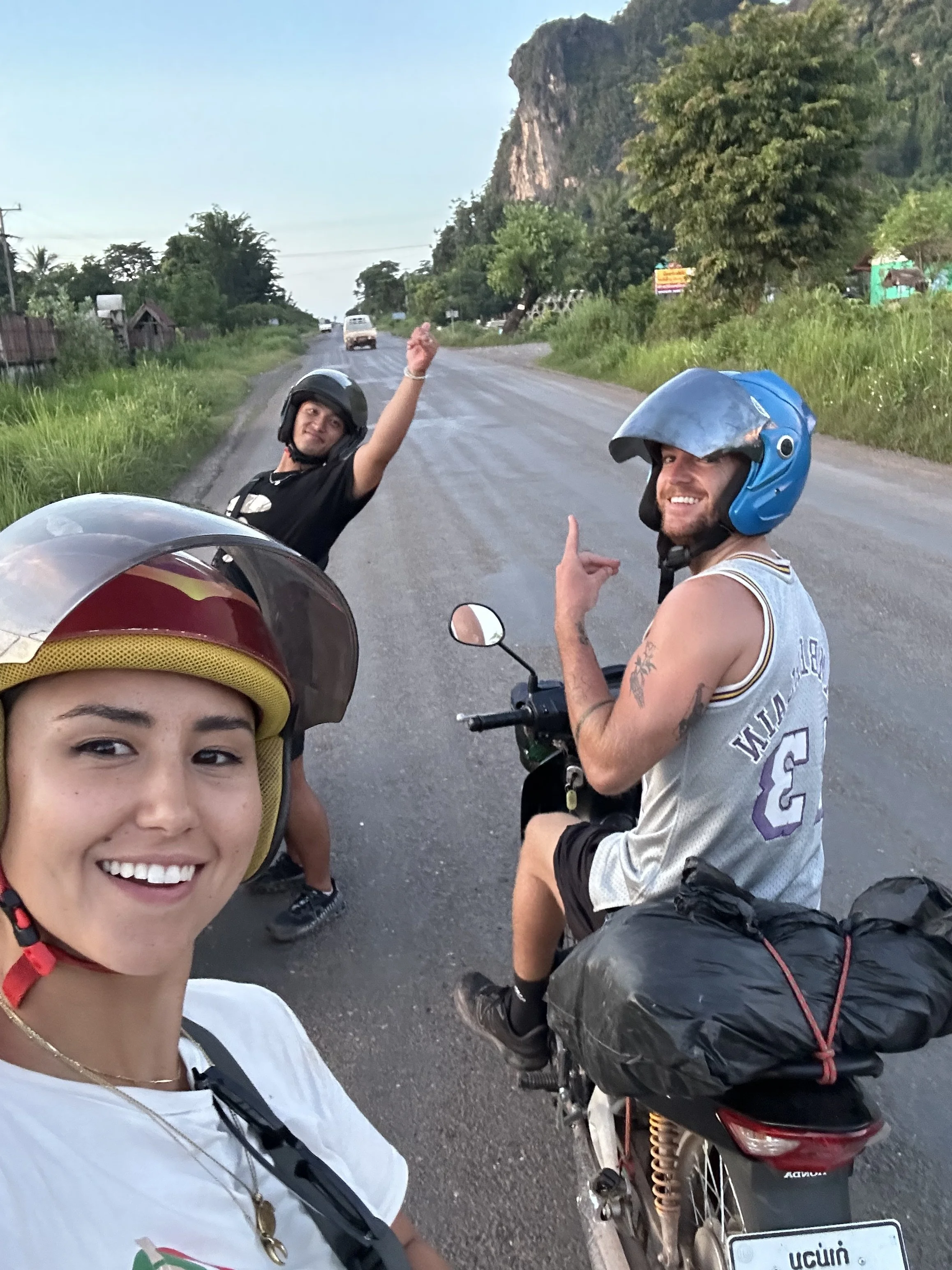
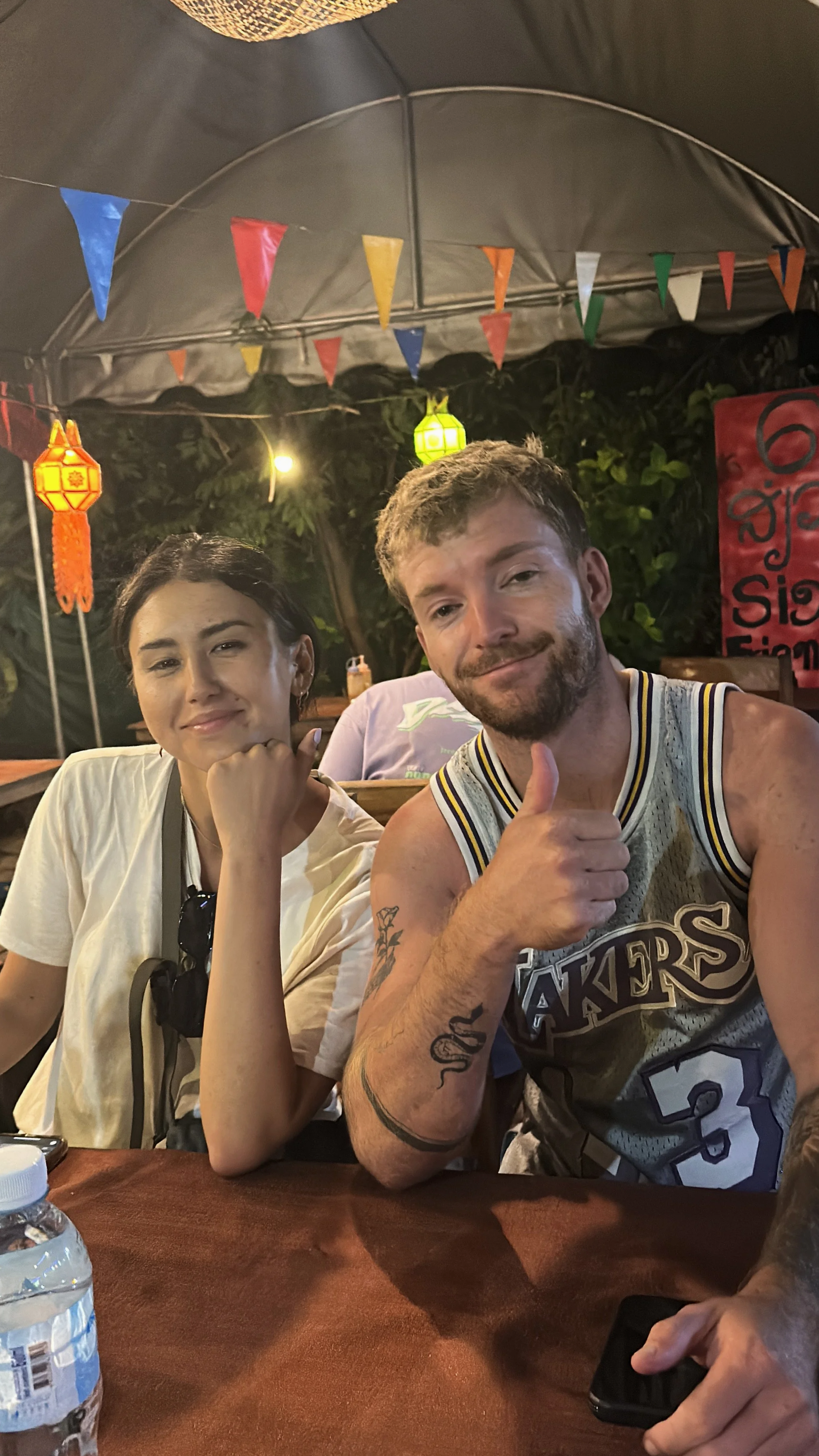
We made it back to Thakhek feeling completely wrecked. The kind of exhaustion where words barely come out. There’s a photo of us below: the left is us at the start of the last ride, full of energy, and the right one is from that night at dinner, trying to smile through it. Souls a little broken, but proud that we did it.
FINAL THOUGHTS
The Thakhek Loop isn't polished. It’s humbling and rewarding — simplicity met in every way from the people, food, landscapes, stays and community. A common thread in Southeast Asia. There will also be moments like walking a landslide on foot, or squinting through dust at tail lights you almost didn't see, where you will ask yourself is this safe???
But that's exactly what makes it noteworthy. It asks something real of you. And it gives back more than you expect — rich in experiences, and the kind of self-trust you can only arrive at when you’ve lived in something, fully present and said hell yeah to it.
For me, it was never just about the ride. It was about accomplishing something I had wanted to do for so long, which was to go on a road trip and drive myself. This key moment had ripple effects, giving me the confidence to ride and having since driven so many places alone, crossing islands and landscapes in different countries.
THINGS TO KNOW BEFORE YOU GO
Scooter Rental
Rental shops take a copy of your passport and hold a deposit
No scooter license required
Check your headlight before you leave — not just that it turns on, but that it’s bright enough. Riding in the darkness through dust with trucks racing down on both sides is not the kind of moment to find out it doesn’t work.
Accomodation
Hostels and guesthouses on the loop are very simple — family-owned, cosy, and always serving delicious local and often western dishes.
We were lucky to show up and request on the spot, but this won't always be the case — especially in high season.
Pricing ranges from $11 - $23 AUD per night.
Duration
Do the loop in 4 days. It is exhausting, and everything takes longer than expected. If you do push for 3 days, start the day early and plan to arrive back in Thakhek before sunset.
Navigation
The hostel shared a Maps.me that was created by travellers doing the loop. The app works offline and will be the most important element of the trip. Download it before you leave town.
Road Conditions
Mostly flat with winding sections through the mountains.
Start early — there are no street lights on the roads, and driving in the darkness adds a layer of difficulty and risk.
