MUNDUK: BALI’S BEST KEPT SECRET IN THE CENTRAL HIGHLANDS
MUNDUK: BALI’S BEST KEPT SECRET IN THE CENTRAL HIGHLANDS
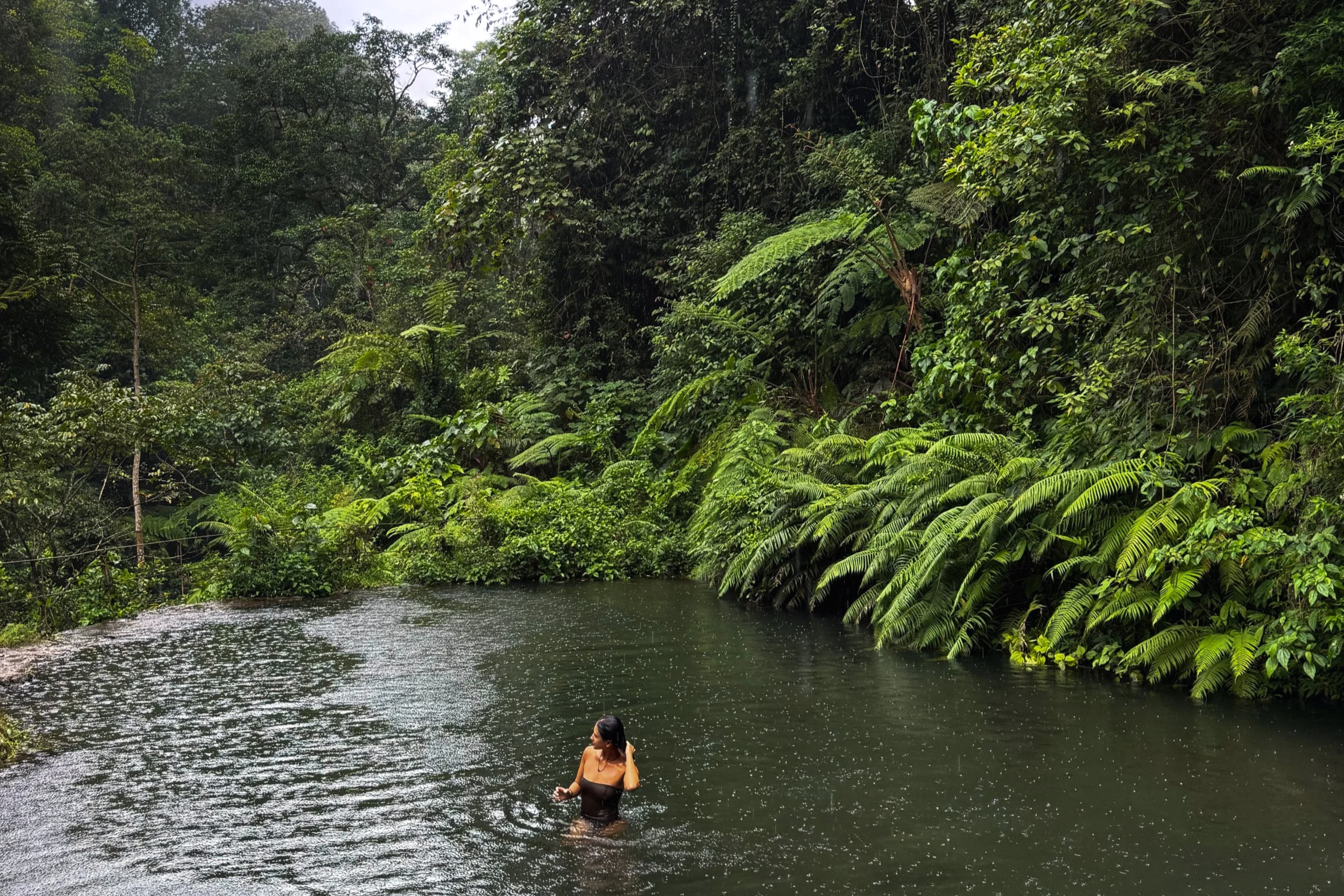
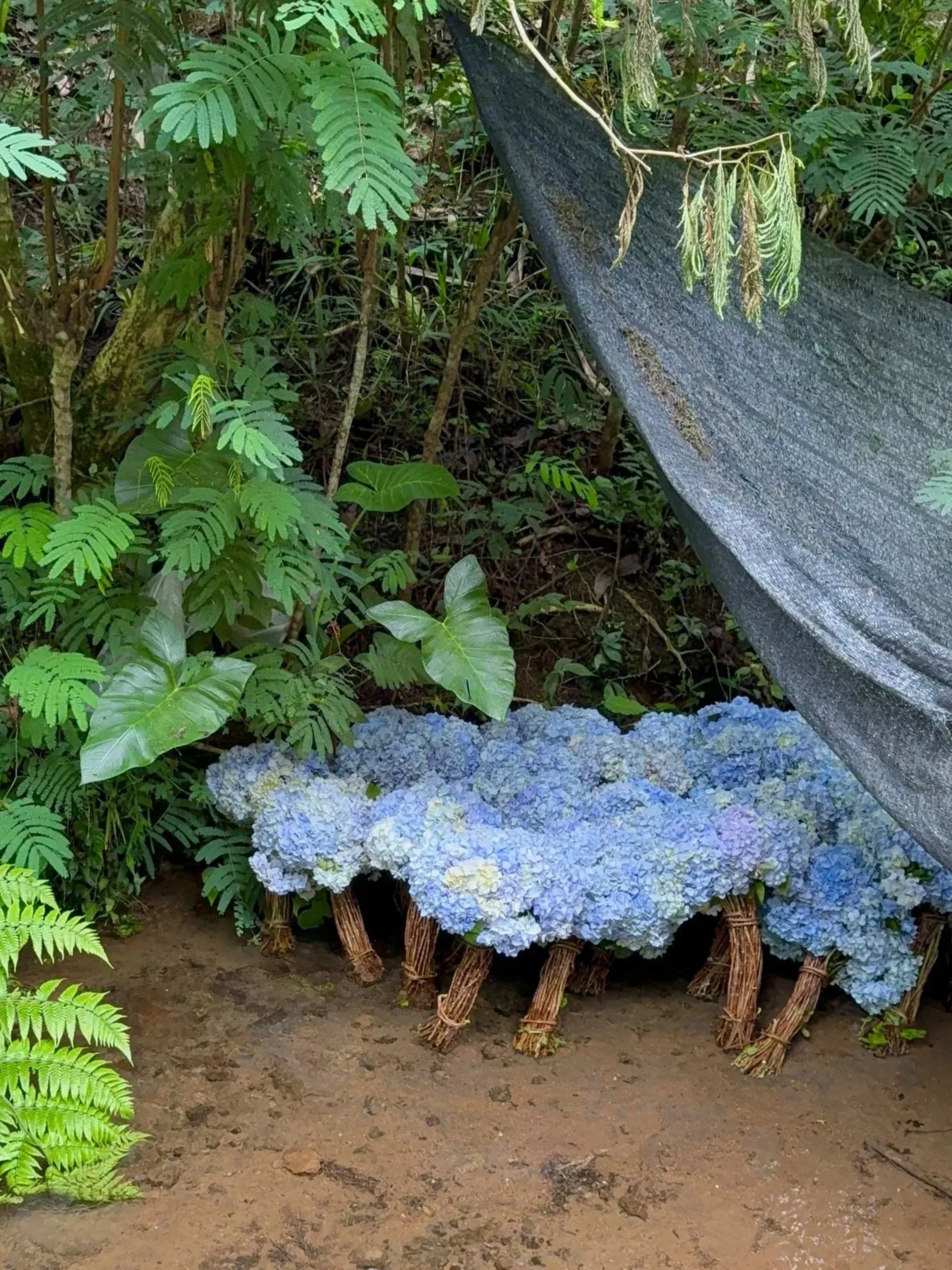
In the northern highlands of central Bali, Munduk is a village where life still moves in rhythm with the land. Rooted in tradition, daily life is shaped by generations of farming — cloves, coffee and cacao grown on hillsides that have been tended the same way for decades.
Mist drifts over the mountains in the early morning. The scent of cloves lingers long after the rain. And through the valleys, the hum of cicadas fills the silence between one breath and the next.
I came here for the landscapes and the waterfalls. What stayed with me was the feeling of being welcomed like family — an openness to sharing Balinese culture, where connection isn't measured in time, but felt in the energy of the people who carry it.
MUNDUK’S HISTORY
In the late 1890s, Dutch settlers discovered Munduk as an escape from Bali’s tropical heat. They introduced new crops — coffee, cocoa, vanilla and spices — that transformed the hillsides into fertile plantations. Generations of local farmers still tend these same fields today, a rhythm and living tradition that has shaped Munduk for more than a century.
The Dutch also built mountain lodges and hillside estates tucked between cinnamon and clove trees. Remnants of this era linger through Dutch colonial architecture, where they are more prominent in Munduk than anywhere else on the island. Distinct architectural elements feature steep roofs, wide verandas and shuttered windows where European design was adapted to Bali’s misty highland climate. Many have since been restored into guesthouses and cafes, blending colonial charm with Balinese craftsmanship through teak wood, red clay tiles, and intricate hand-carved details.
THE PEOPLE OF MUNDUK
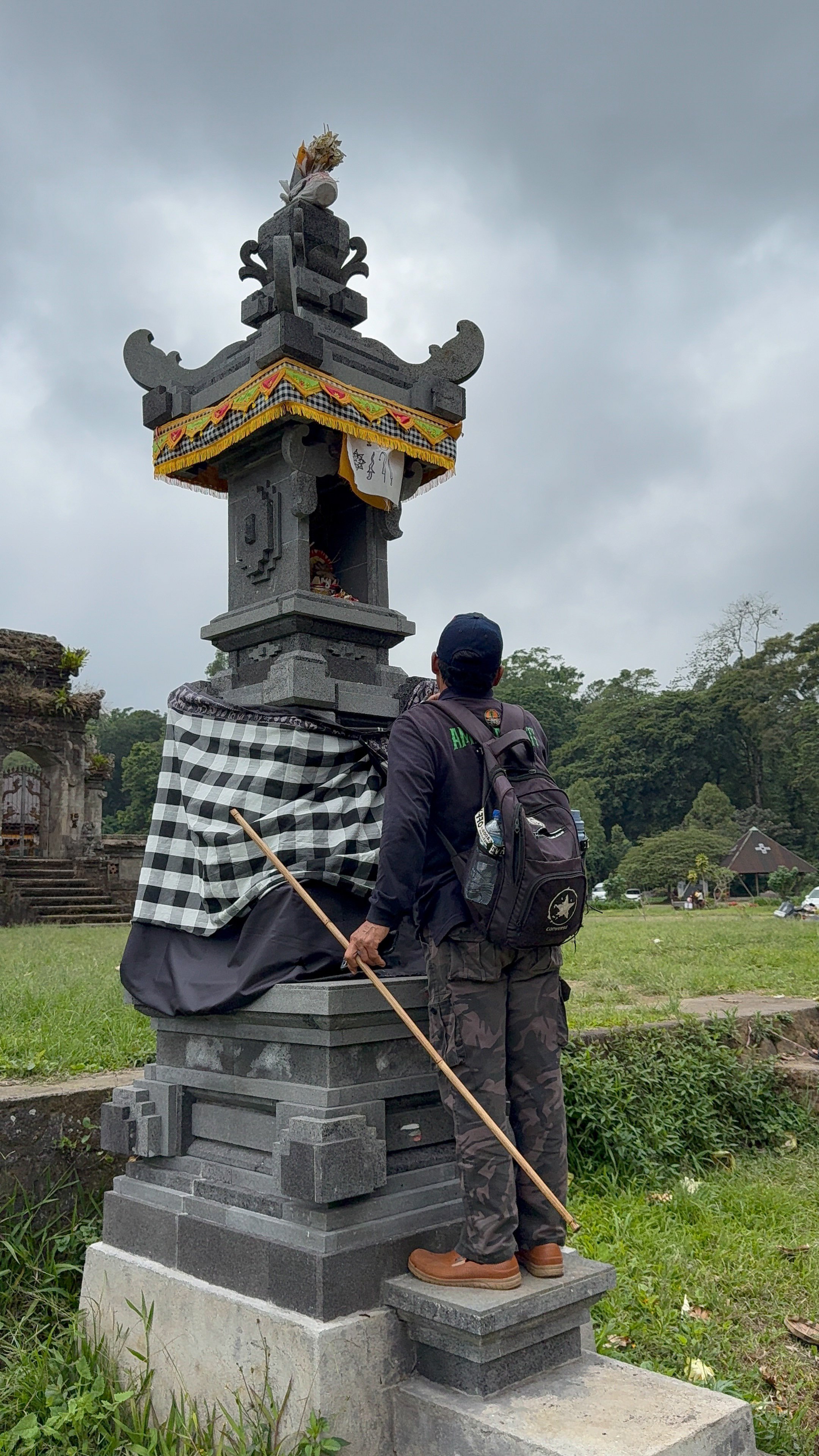
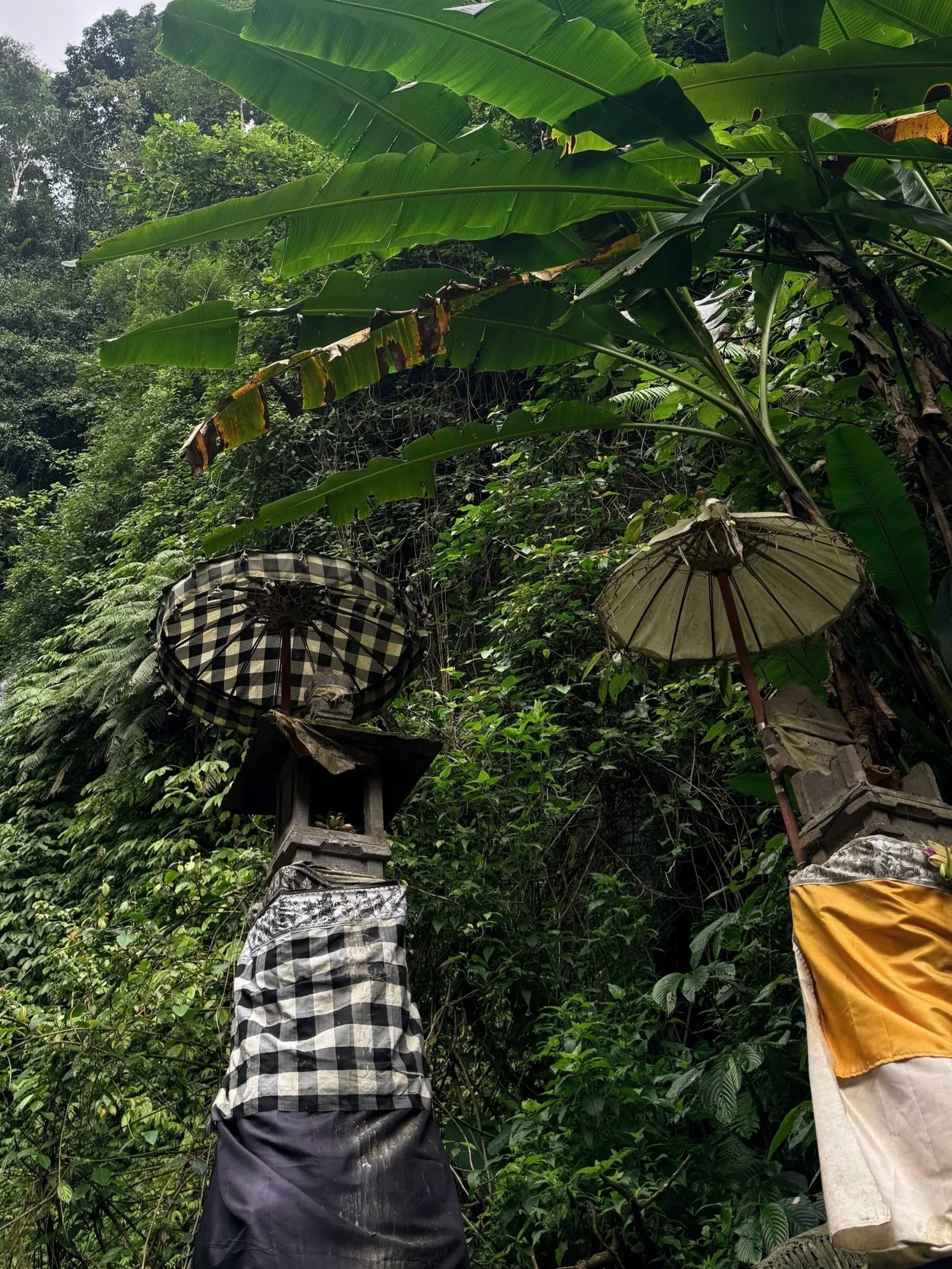
Home to around 6,200 people, Munduk is a village shaped by generations of farmers — rice, avocado, coffee, and spice — who have worked the same land their ancestors did. Balinese culture and spirituality remain strong here. Ritual offerings decorate the paths, locals greet you with warm smiles, and there's an openness to share stories about their home, the changing of seasons, and the crops that sustain them. It's one of the few places in Bali where tradition still holds strong, largely untouched by the rush of time and tourism.
HOW I CAME HERE
On this trip to Indonesia, my intention was to explore more of Bali beyond the places I already knew. Two months earlier, I'd taken a weekend trip to Amed and stopped at Blue Earth Village for dinner. Sitting beside me at the benchtop overlooking the ocean was a Swiss woman visiting her daughter and grandchildren, who are half Swiss and half Balinese.
Her daughter and son-in-law run a resort in Munduk, describing it as a peaceful mountain village that still feels very local. I saved the location in Google Maps, knowing it was somewhere I wanted to circle back to.
HOME AT UMAH YUGADI BALI
While searching for places to stay, I came across Umah Yugadi Bali. Owned by Kadek and run by his cousin Ketut, they’ve created more than a homestay; it’s a place centred on connection, where culture, ritual, and daily life are shared naturally.
When I arrived, Ketut greeted me with the warmest smile as she stood beside her aunt sorting temple offerings — woven trays filled with local fruits, rice cakes and colourful sweets collected from the banjar (village temple). I was welcomed in like family where they showed me their village through their eyes and shared stories about Balinese life, where community and spirituality shape everyday living.

In Bali, each village is centred around a banjar — a local community system where families gather for ceremonies, celebrations, and important decisions. Life here is deeply communal, with neighbours supporting one another through every stage of life, including death. Kadek explained that when someone passes, families are encouraged not to cry openly, as it’s believed tears may will weigh on the soul’s journey to the next life. Instead, strength and ceremony guide the spirit forward.
As the weekend unfolded, I began to see how this village has preserved its traditions. Life remains closely tied to the land through growing and harvesting, while the community gathers at the banjar and moves through village life knowing one another. Between continuous laughter and perfectly synchronised karaoke duets to Maroon 5 and Ed Sheeran, Munduk began to feel less like a destination and more like a place I’d been gently welcomed into. These are the moments that stay with you — the ones that remind you travel isn’t just about the places you see, but the people who open their lives to you along the way.
THINGS TO DO IN MUNDUK
Life here moves at a gentler pace. The cool climate, volcanic soil, and terraced farmland have supported generations of Balinese families. From misty waterfalls and rainforest hikes to sacred lakes hidden in the jungle, Munduk offers some of the most soulful experiences in Bali’s highlands.
The surrounding roads also lead to some of the island’s most beautiful viewpoints, coffee plantations, and small mountain cafés worth stopping at along the way.
The Twin Lakes + Tamblingan Rainforest Hike
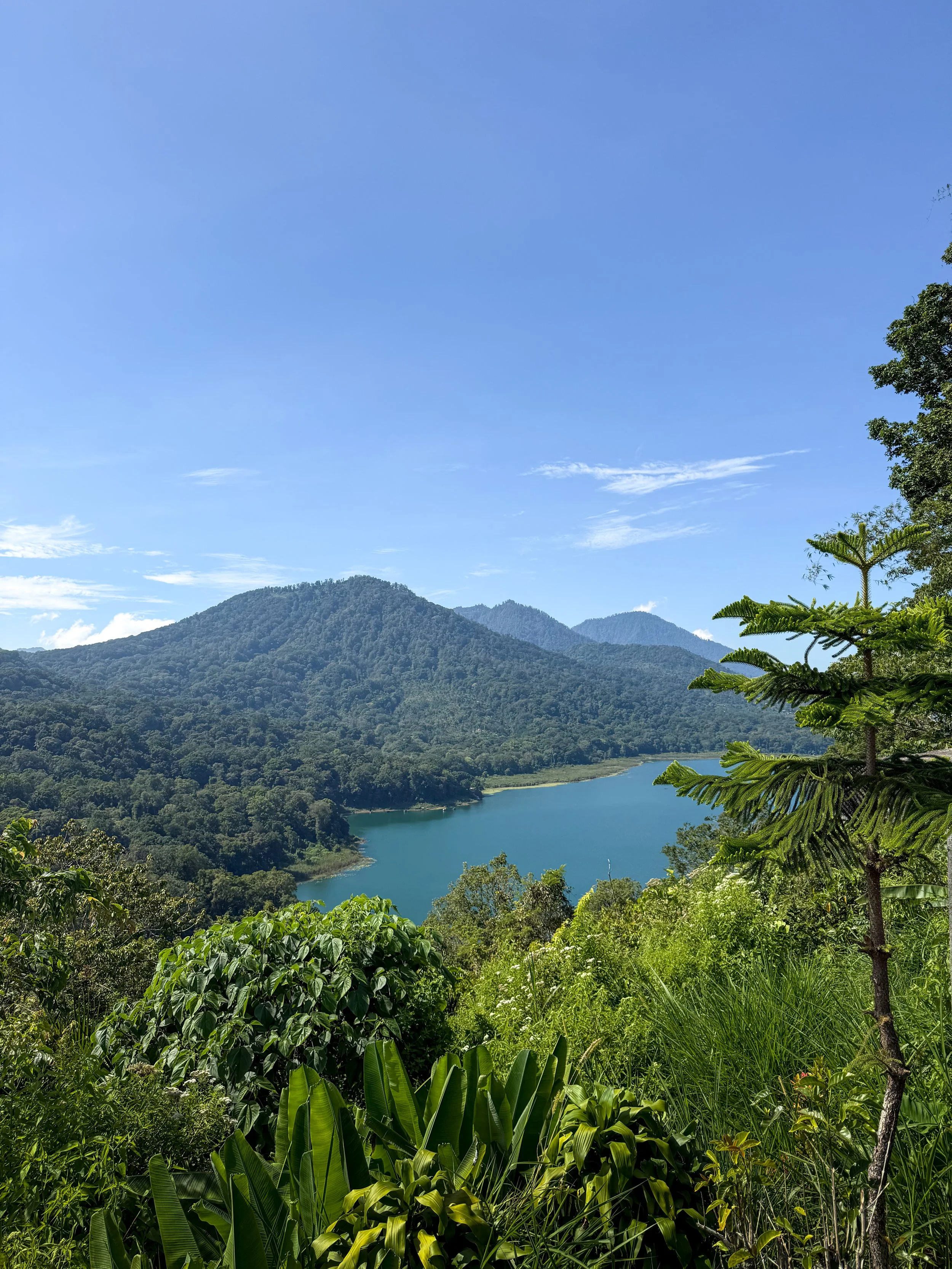
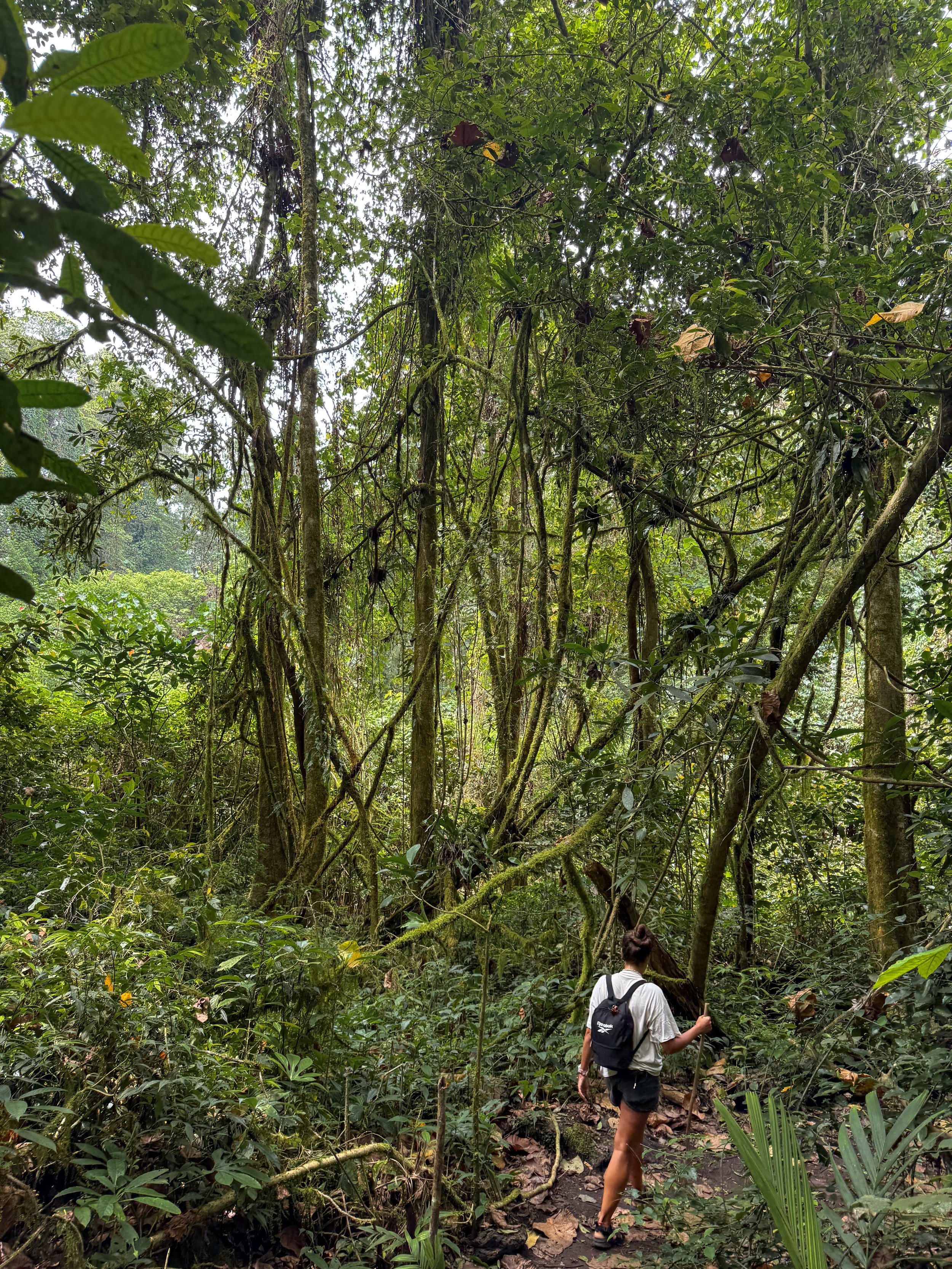
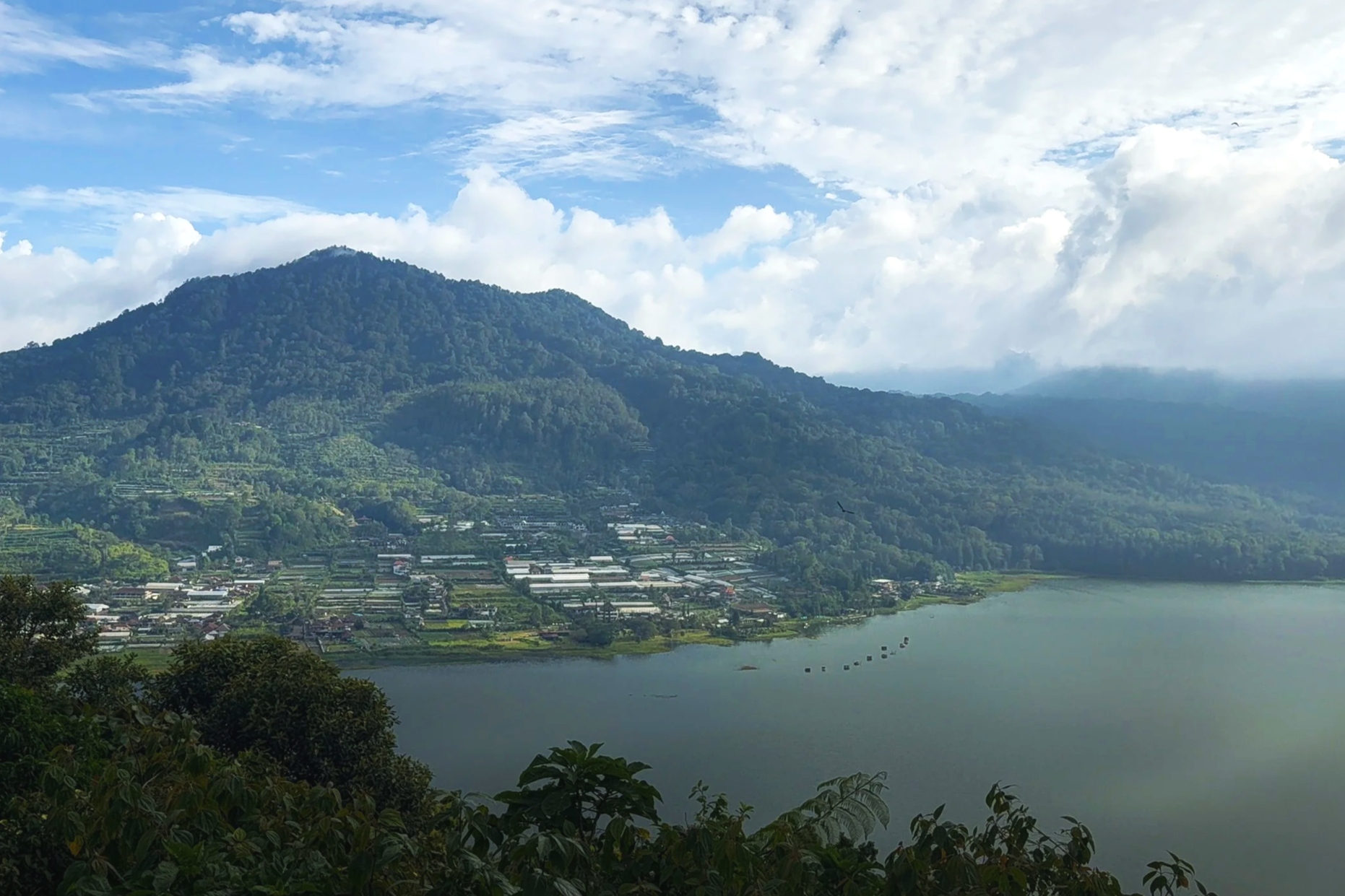
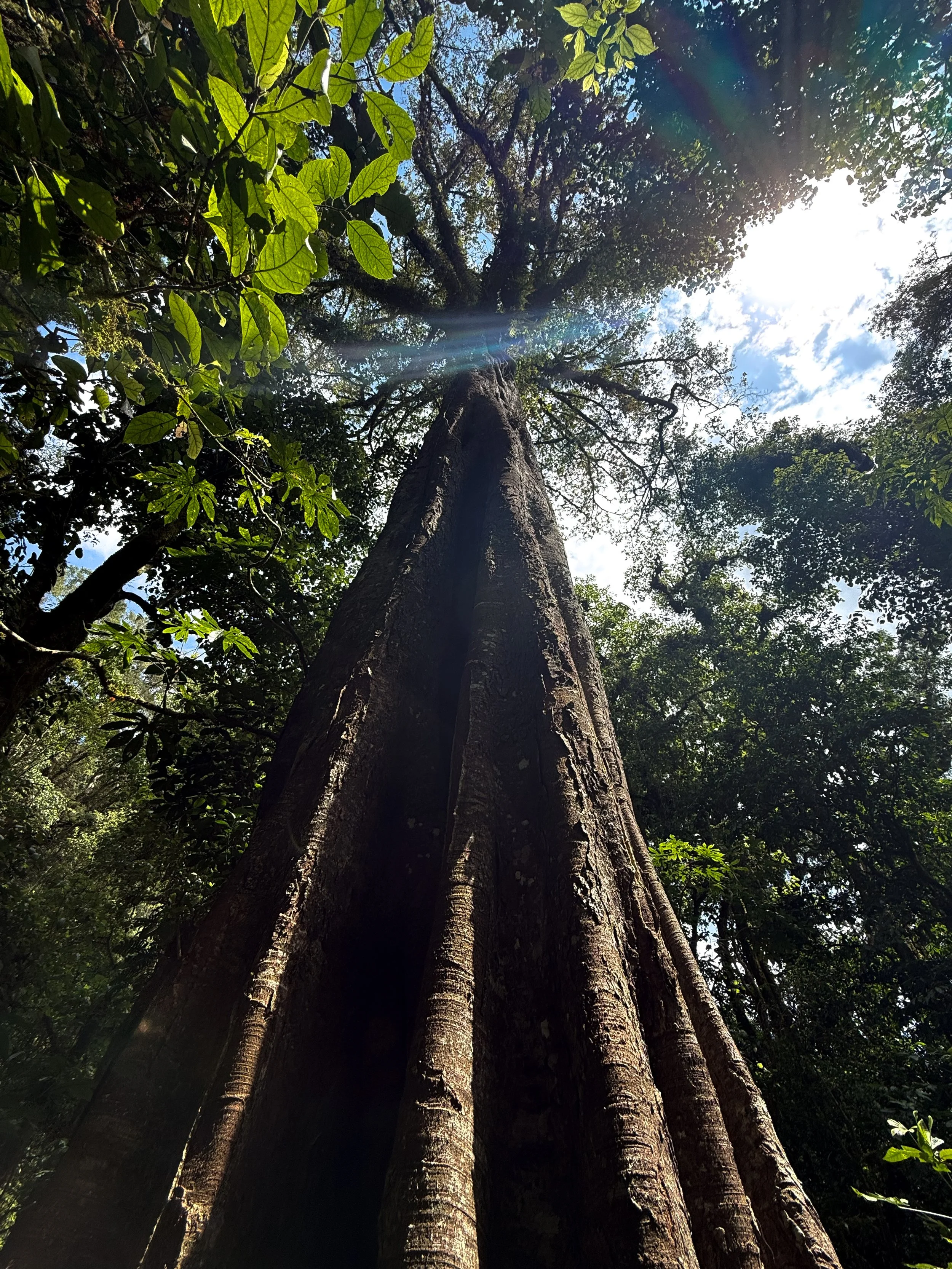
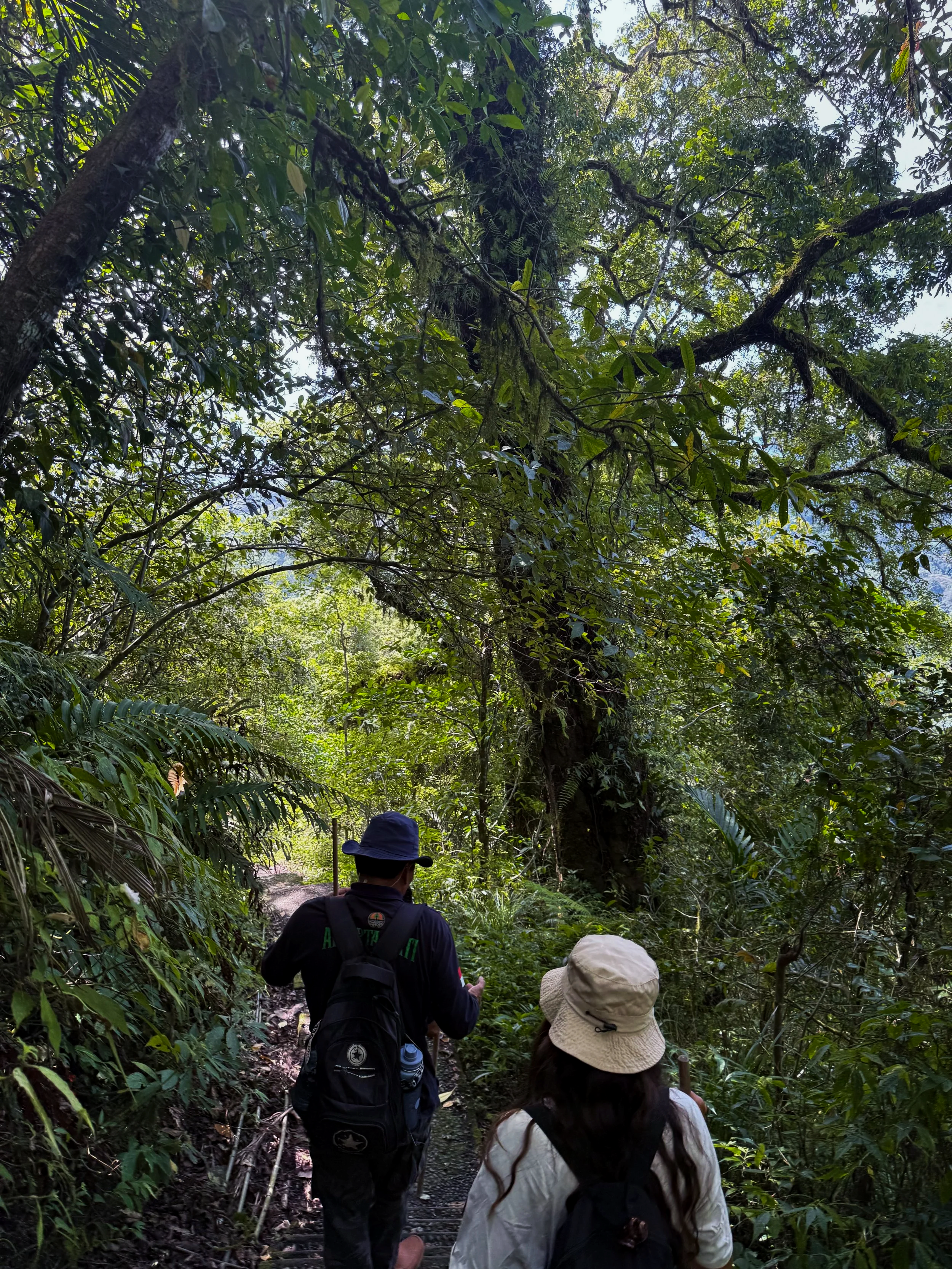
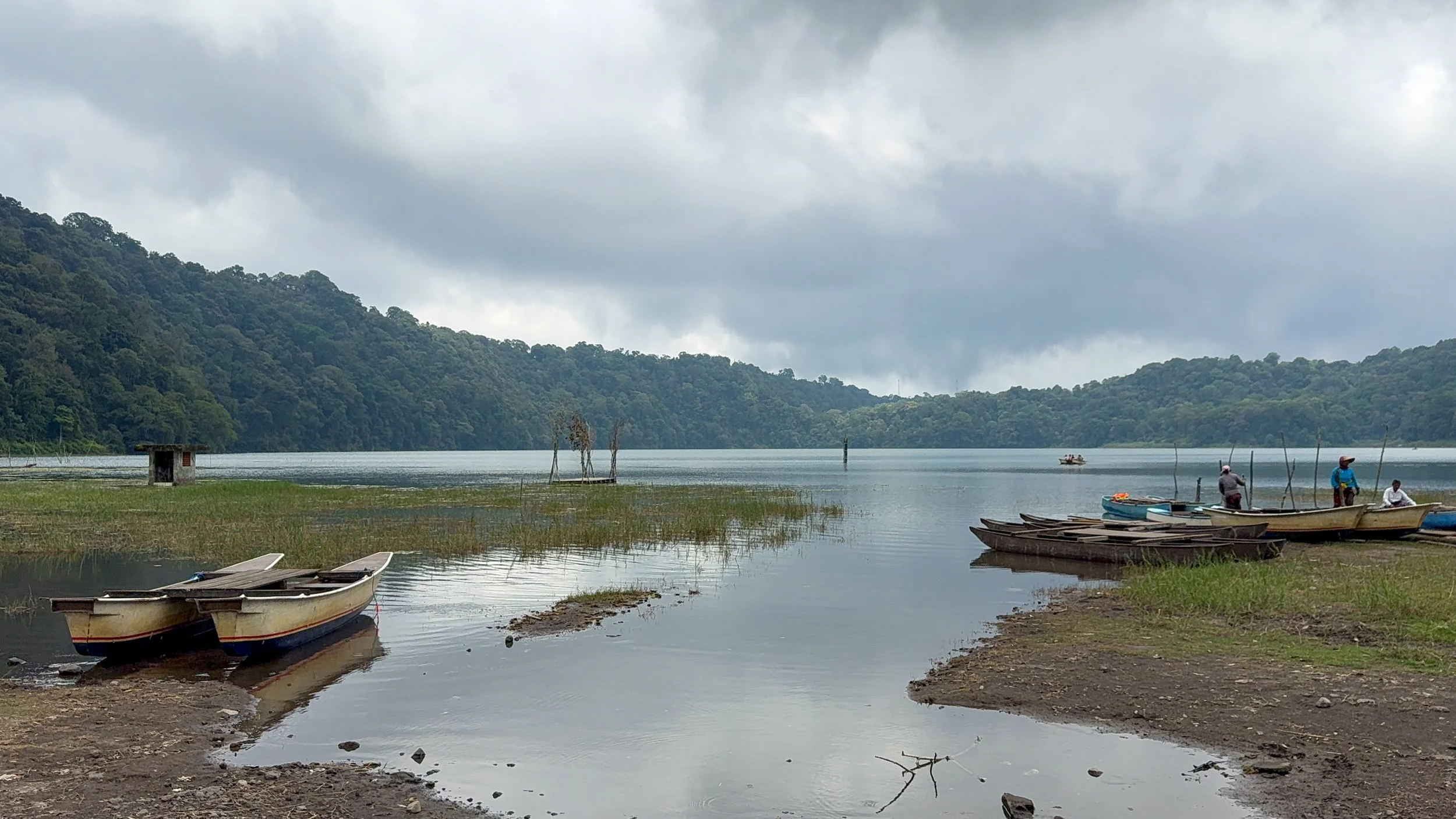
The Twin Lakes Viewpoint overlooks Buyan and Tamblingan — two volcanic lakes separated by dense rainforest, and one of the most beautiful viewpoints in the highlands. From here, you can hike through the Tamblingan Rainforest with a local guide. My guide was Made, a Munduk local who grew up living and breathing this forest. The trail winds through ancient trees that have stood for thousands of years, some with trunks stretching over three metres wide. As we walked, Made pointed out native species, explained which fruits animals avoid (a natural sign they’re poisonous), and showed us trees slowly “pickling” — when a dying tree grows a new outer layer and hollows out from within over decades. Some looked like two trees fused together, others large enough to step inside — a living reminder of nature’s ability to renew itself.
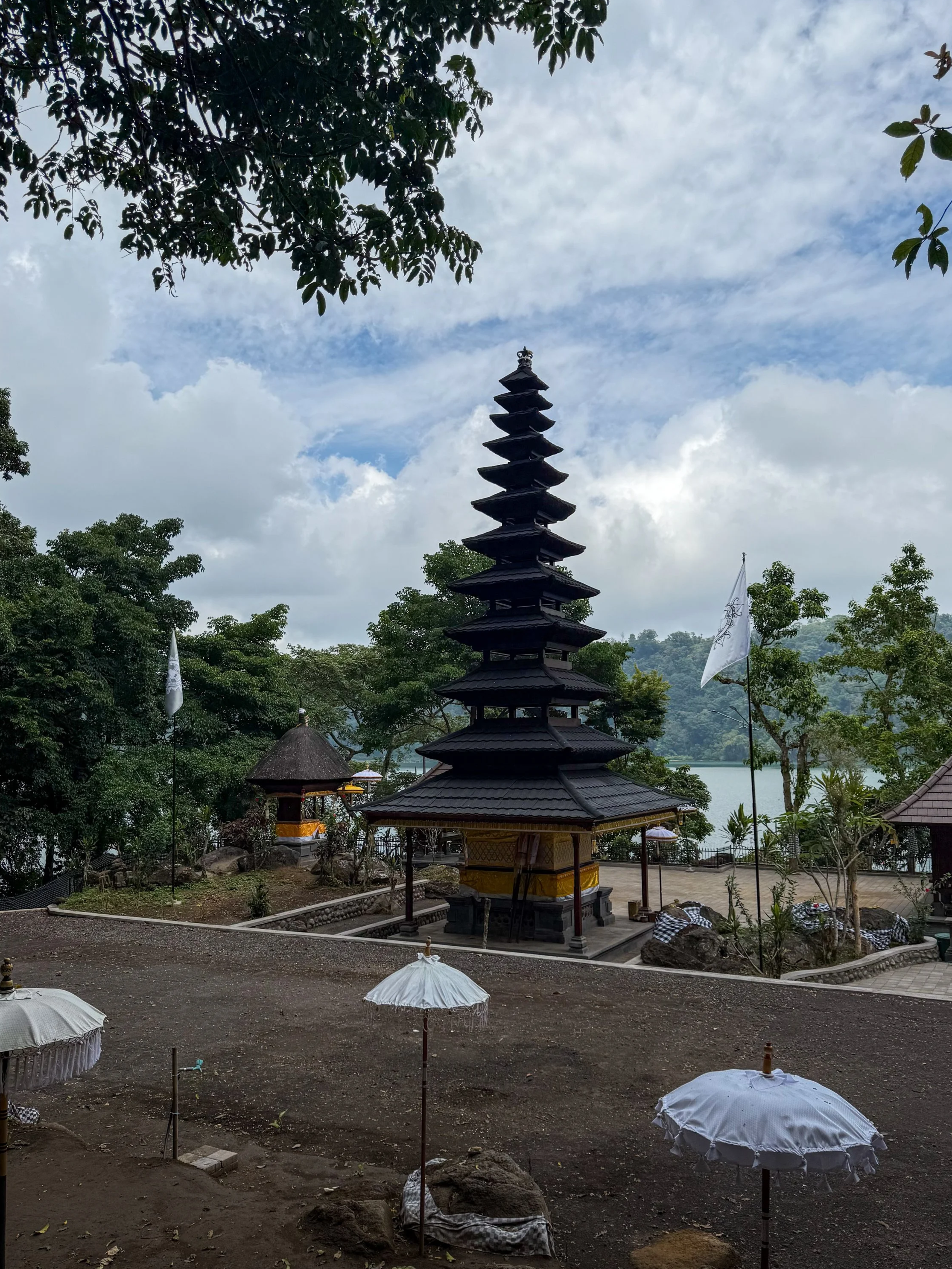
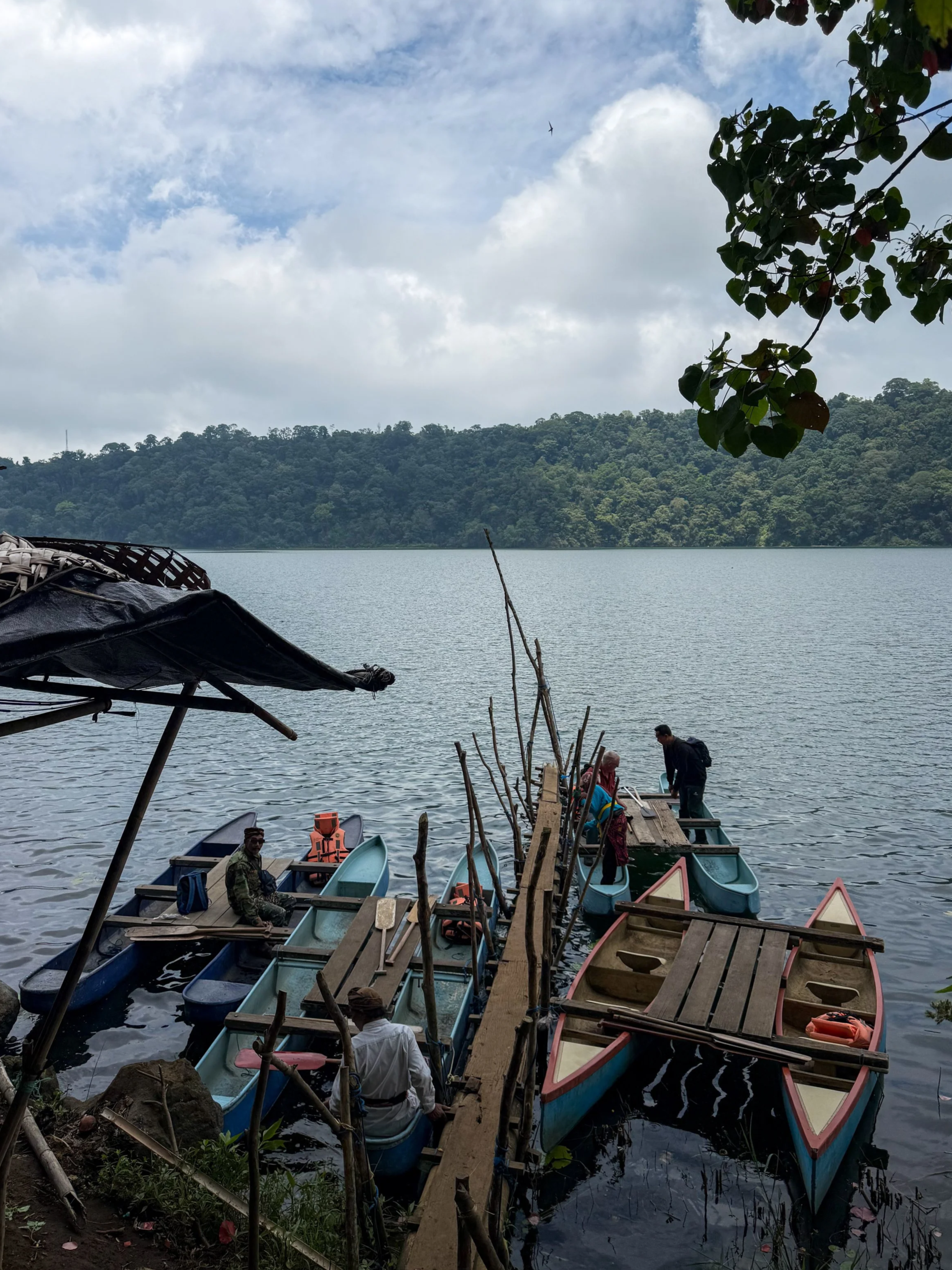
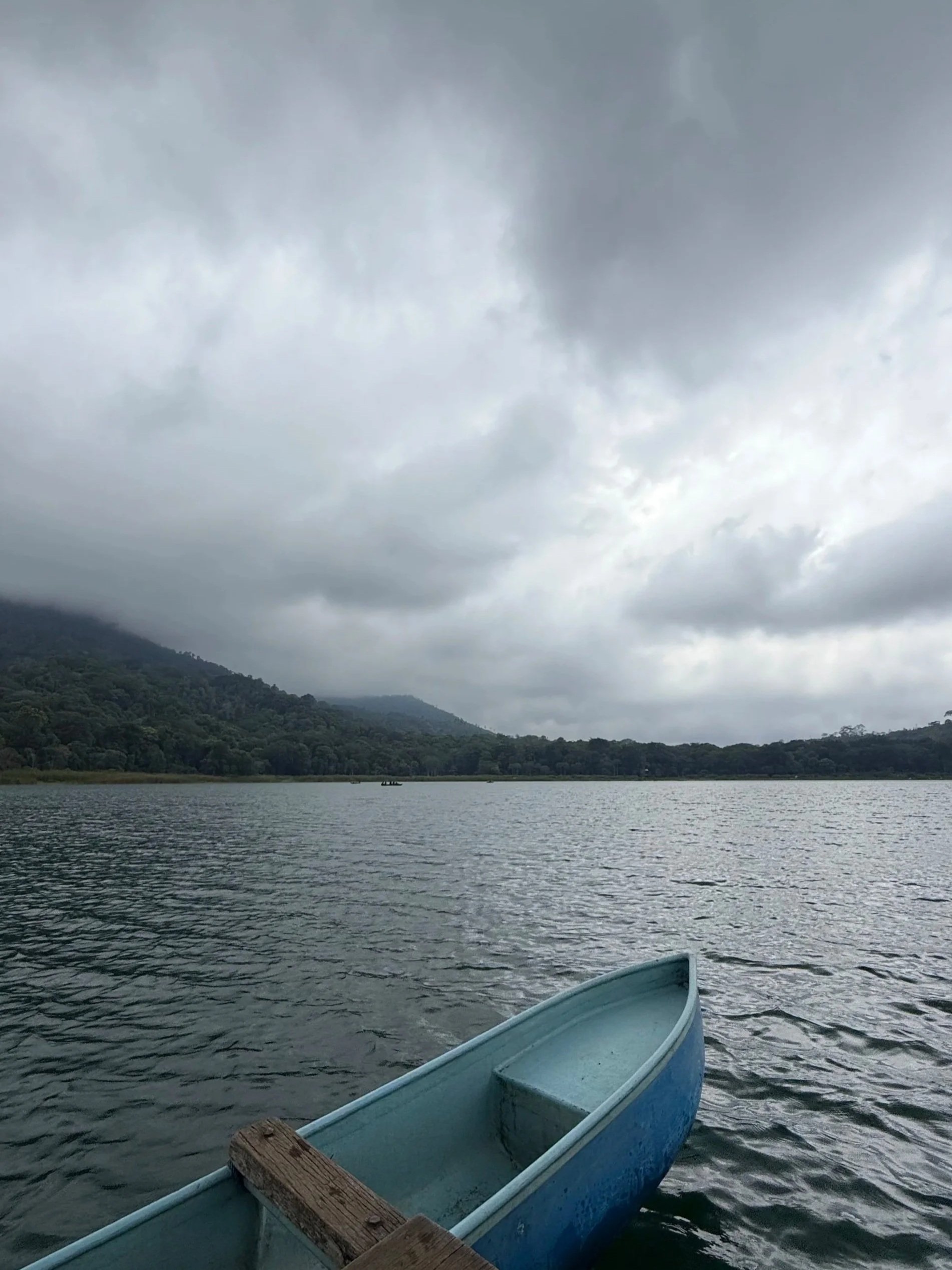
The trail ends at Lake Tamblingan, where traditional wooden canoes carry you across the water, paddled by hand to preserve the lake's purity. The water is considered sacred, and the crossing feels almost ceremonial.
On the far shore, an ancient temple sits hidden among the trees, still used for ceremonies today. Surrounded by rainforest and mountains, the entire place feels incredibly peaceful — untouched and deeply spiritual.
Note: the hike takes 3 hours, and the cost includes a guided tour, hike & canoe hire — 250,000 IDR + tip
Waterfalls - Munduk + Banyumala Waterfall
Water shapes the landscape around Munduk. Jungle trails weave through clove trees and dense forest, leading to a series of waterfalls scattered through the hills.
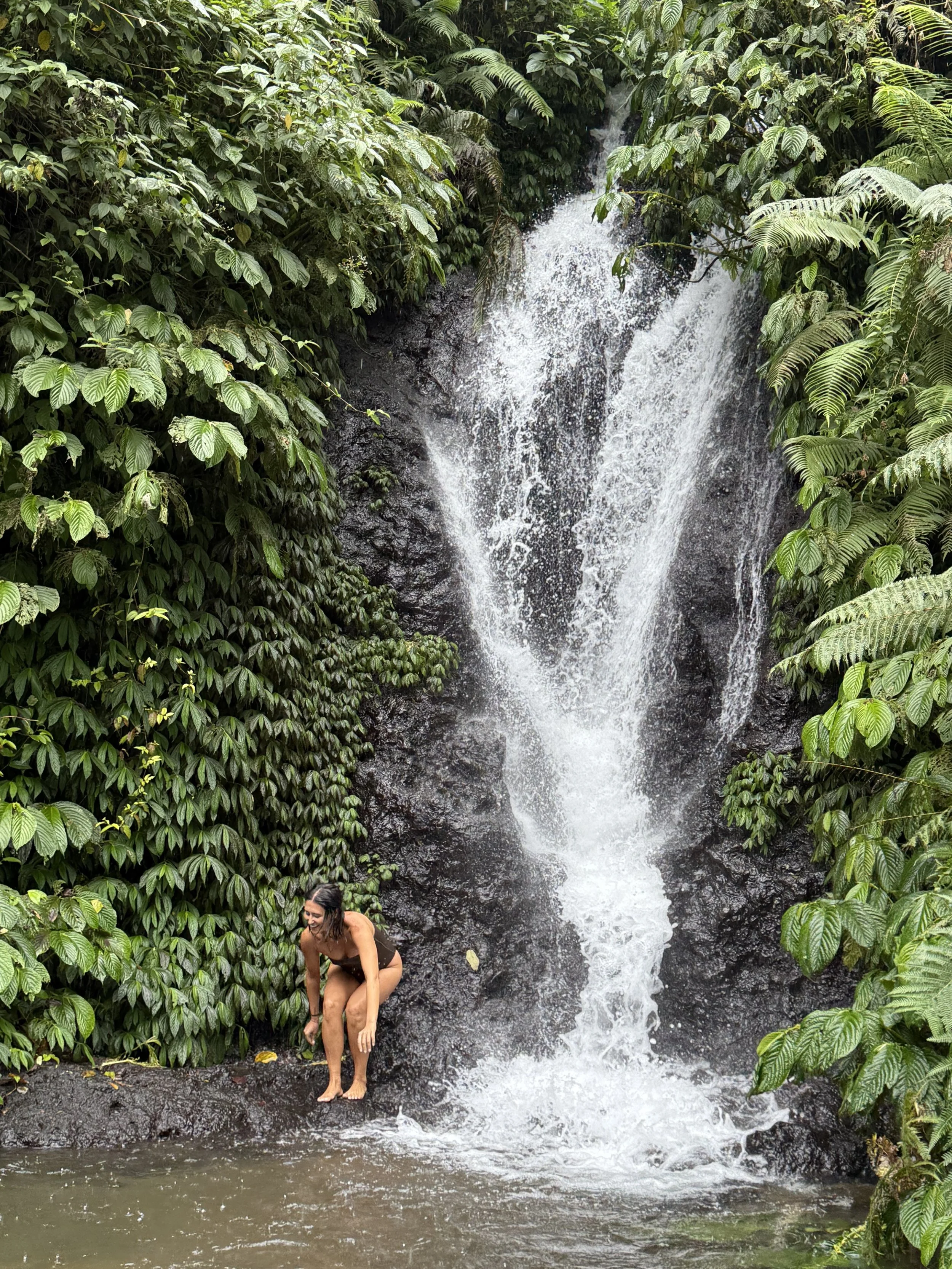
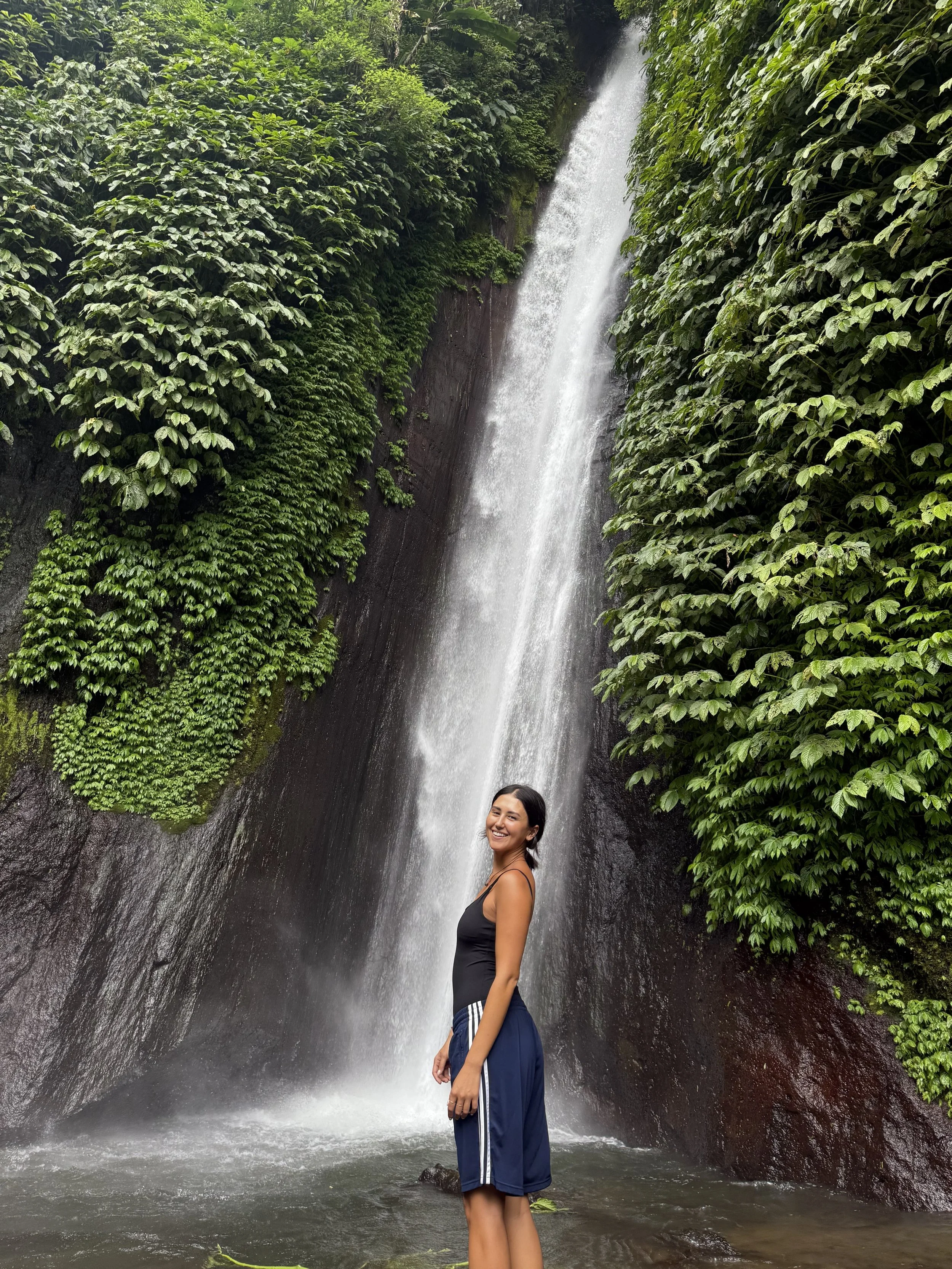
The Munduk Waterfall trail connects four falls — Melanting, Labuhan Kebo, Red Coral, and Golden Valley — all linked by stone paths and jungle walkways. Rather than a quick stop, it’s best experienced slowly, moving from one cascade to the next.
I visited Red Coral and Golden Valley, both reached by a gentle trek through the forest. Each waterfall feels different — some wide and flowing, others narrow and powerful — but all are deeply embedded in the surrounding jungle.
Melanting Waterfall is the tallest of the four and one of the most dramatic, plunging through thick vegetation into a cool pool below. The entire circuit can take around 2–3 hours, depending on how long you linger along the way.
The experience is as much about the journey as the waterfalls themselves — descending stone steps, hearing the roar of water grow louder as you approach, and stepping into the icy pools beneath the falls. Cold, but awakening.
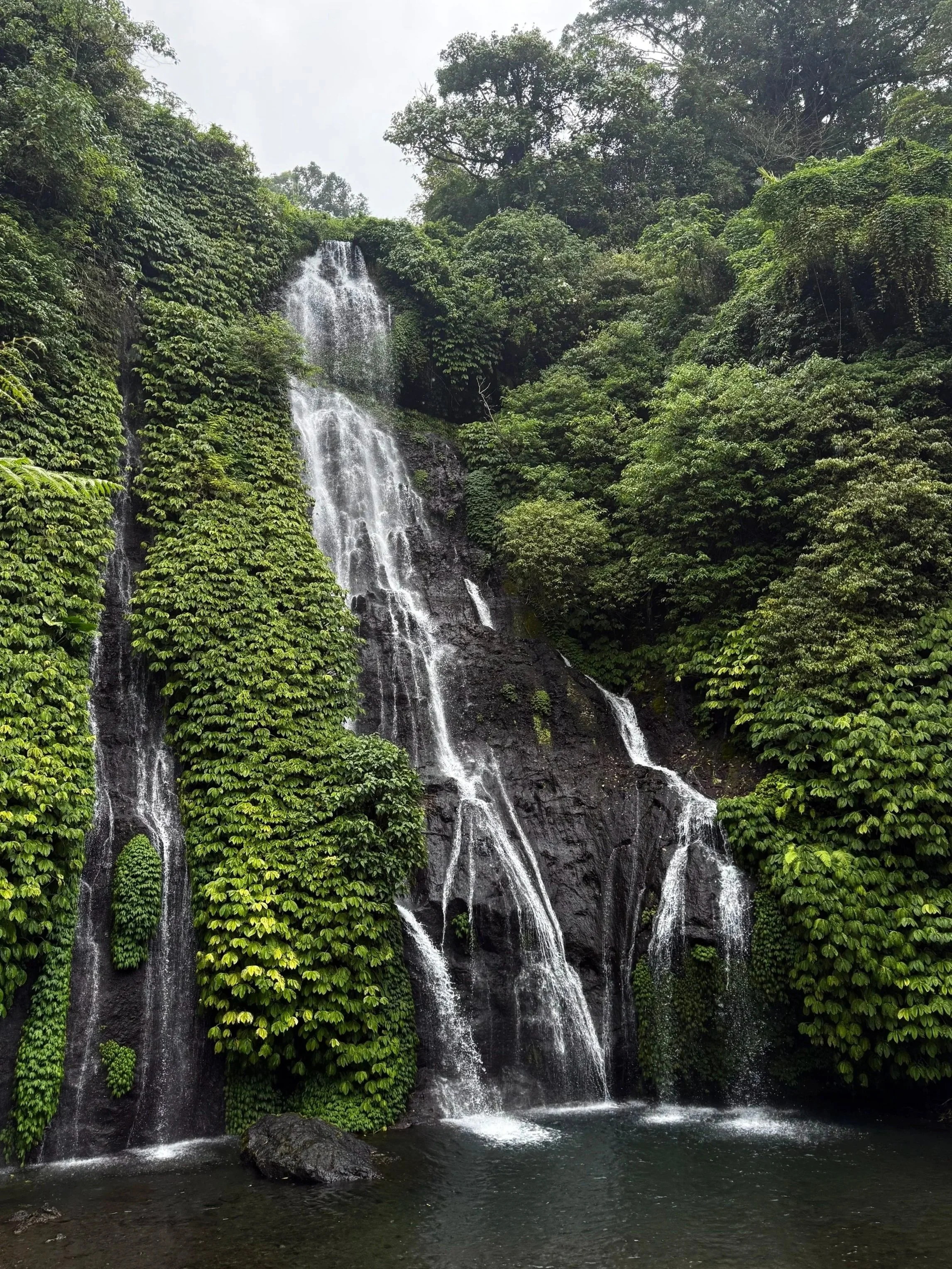
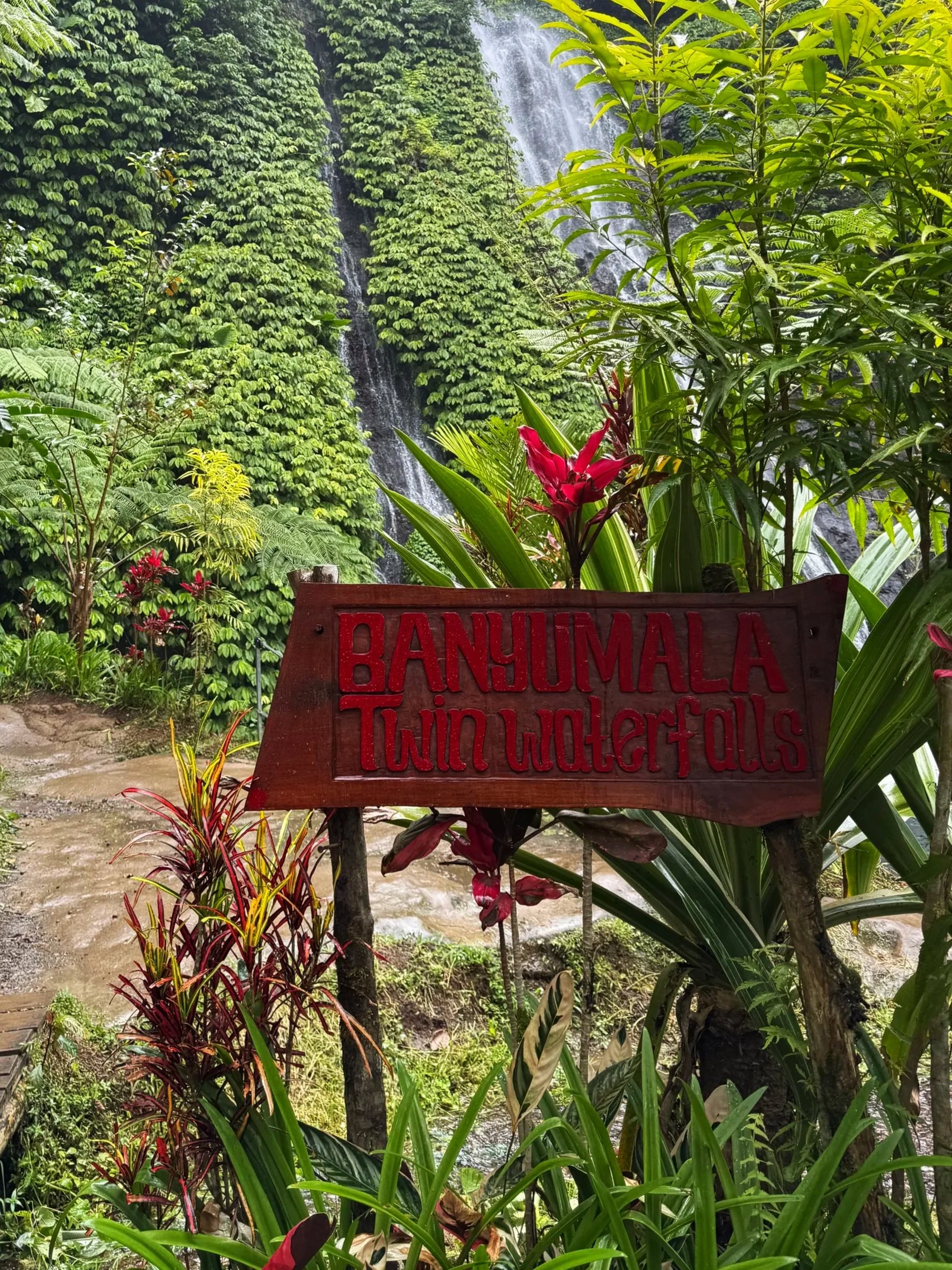
I also visited Banyumala Waterfall, about 30 minutes away, which was easily one of the most beautiful waterfalls I’ve seen in Bali. Twin cascades spill into a clear turquoise pool surrounded by dense forest — the kind of place where time slows down and you naturally stay longer than planned.
Fruit Picking, Coffee Plantations + Fields
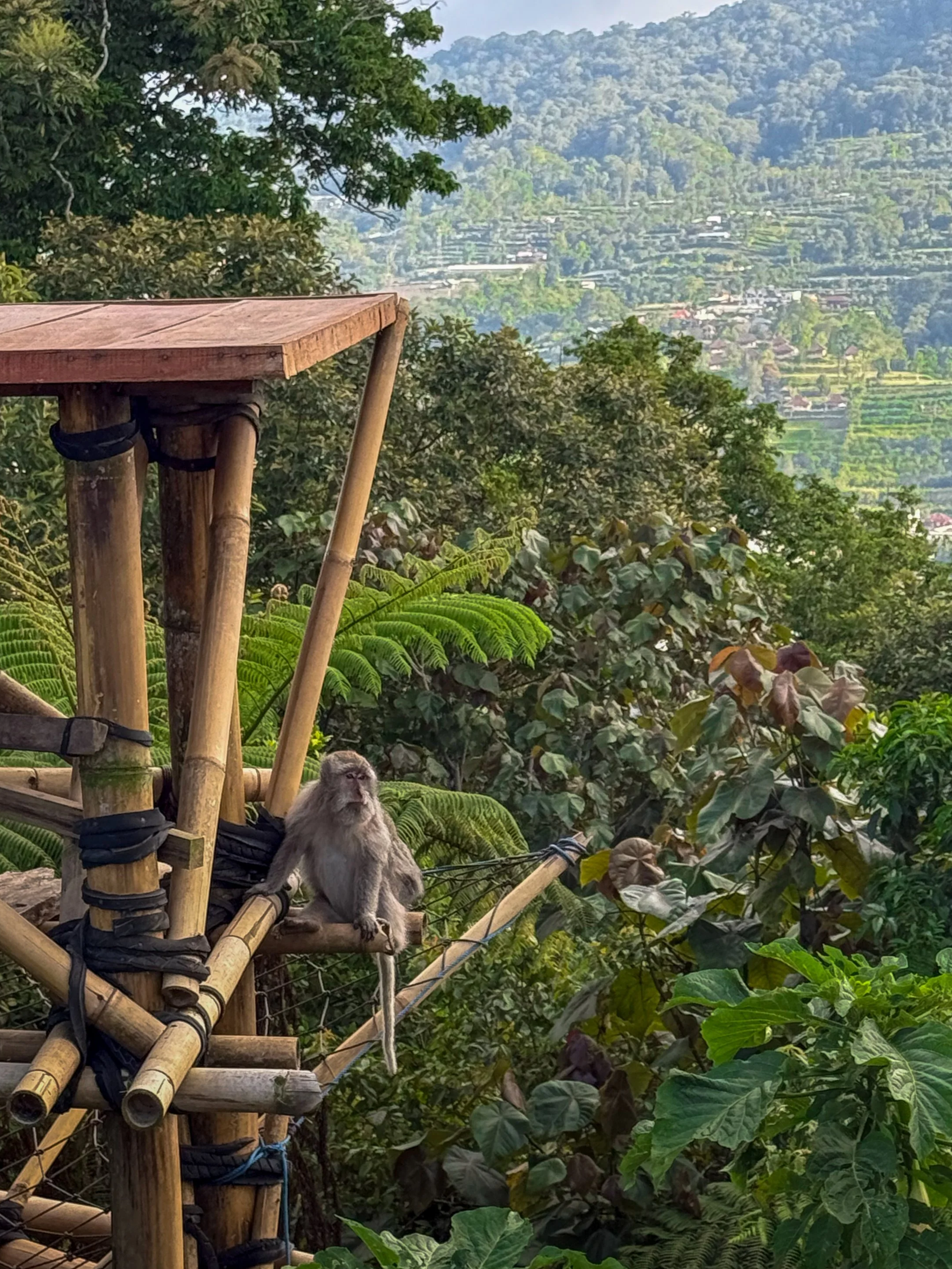
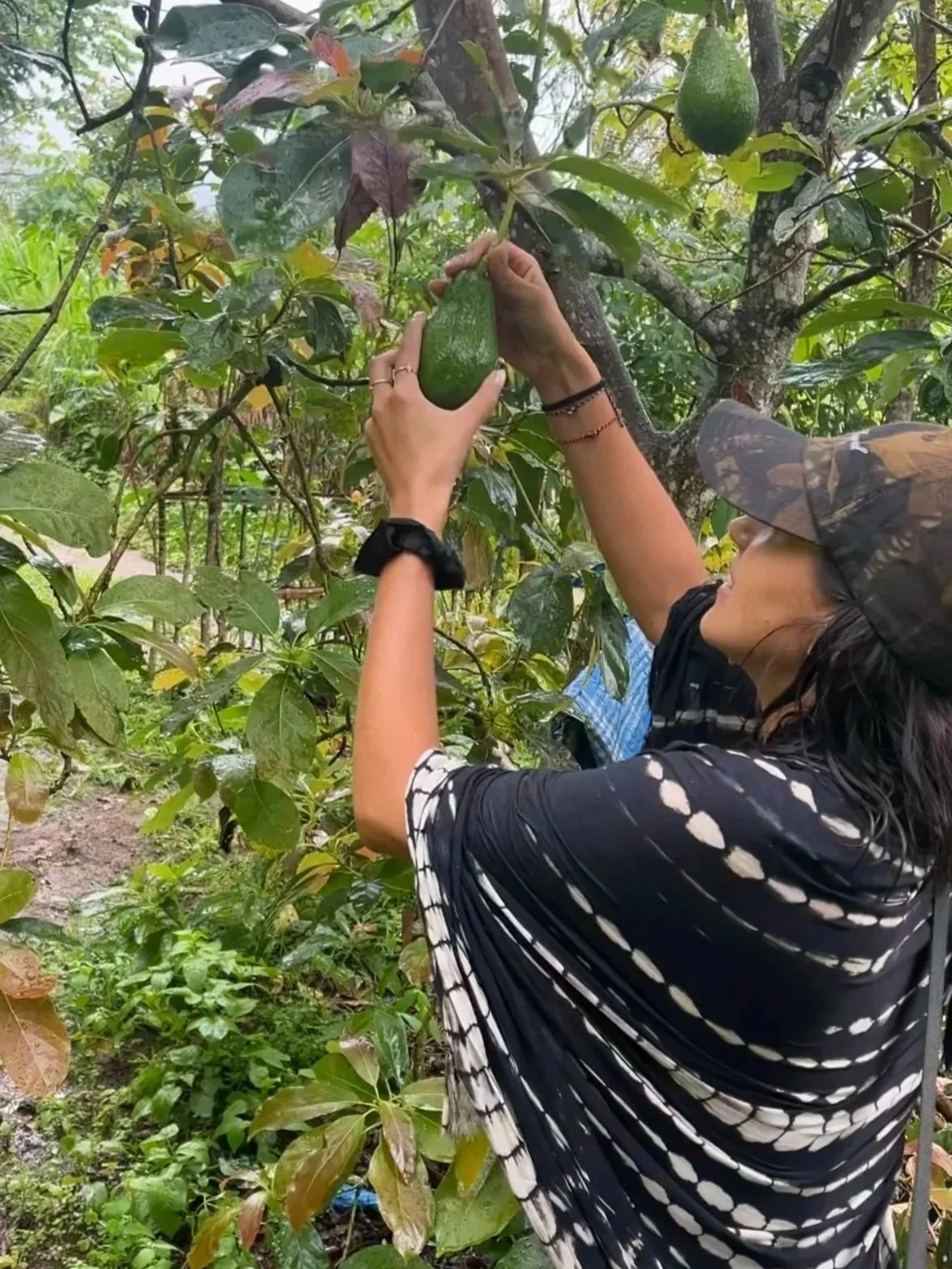
Kadek took us down to his mother’s nursery, where acres of avocado trees stretch across the hillside, their branches heavy with fruit ready to be picked.
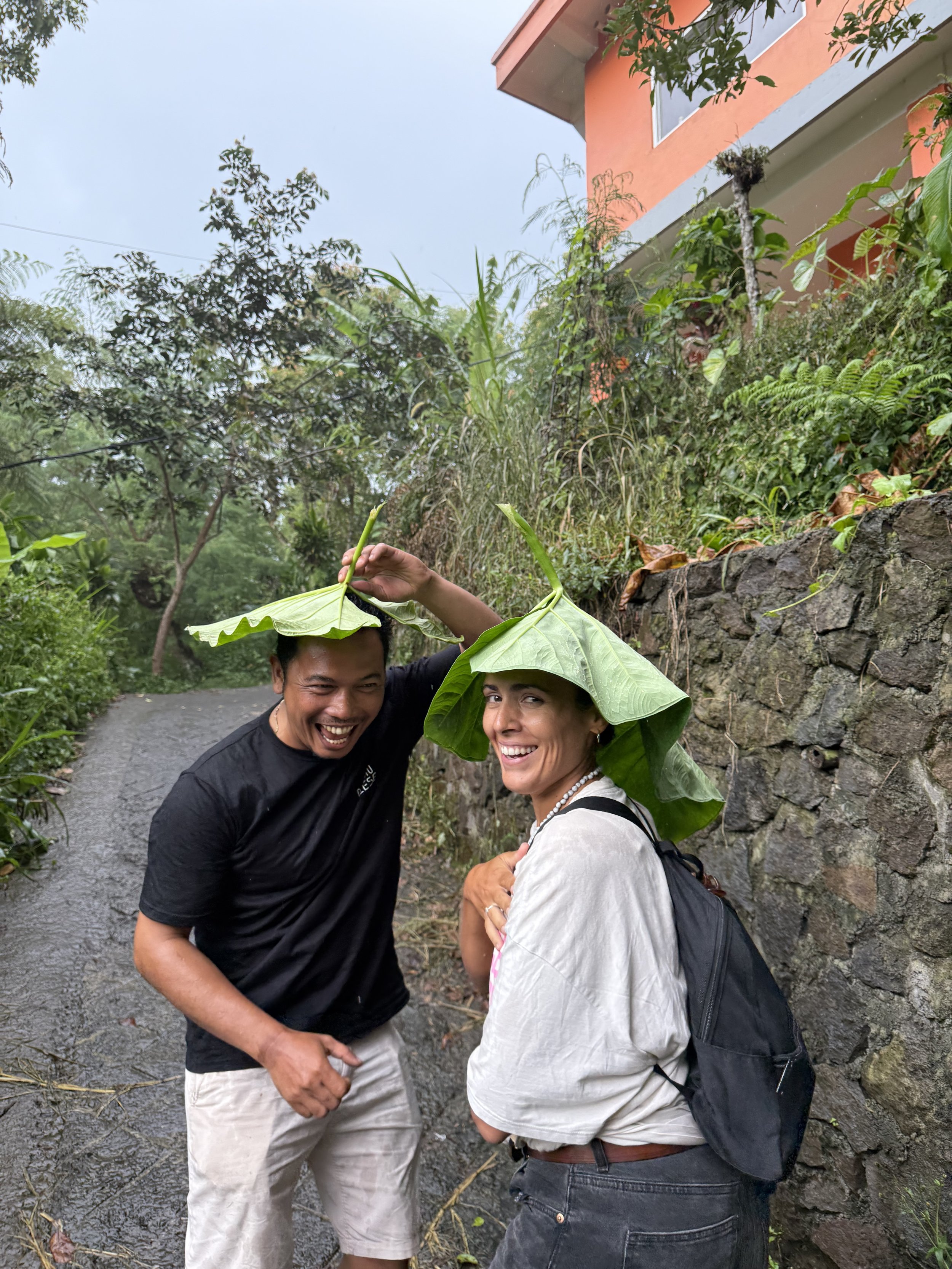
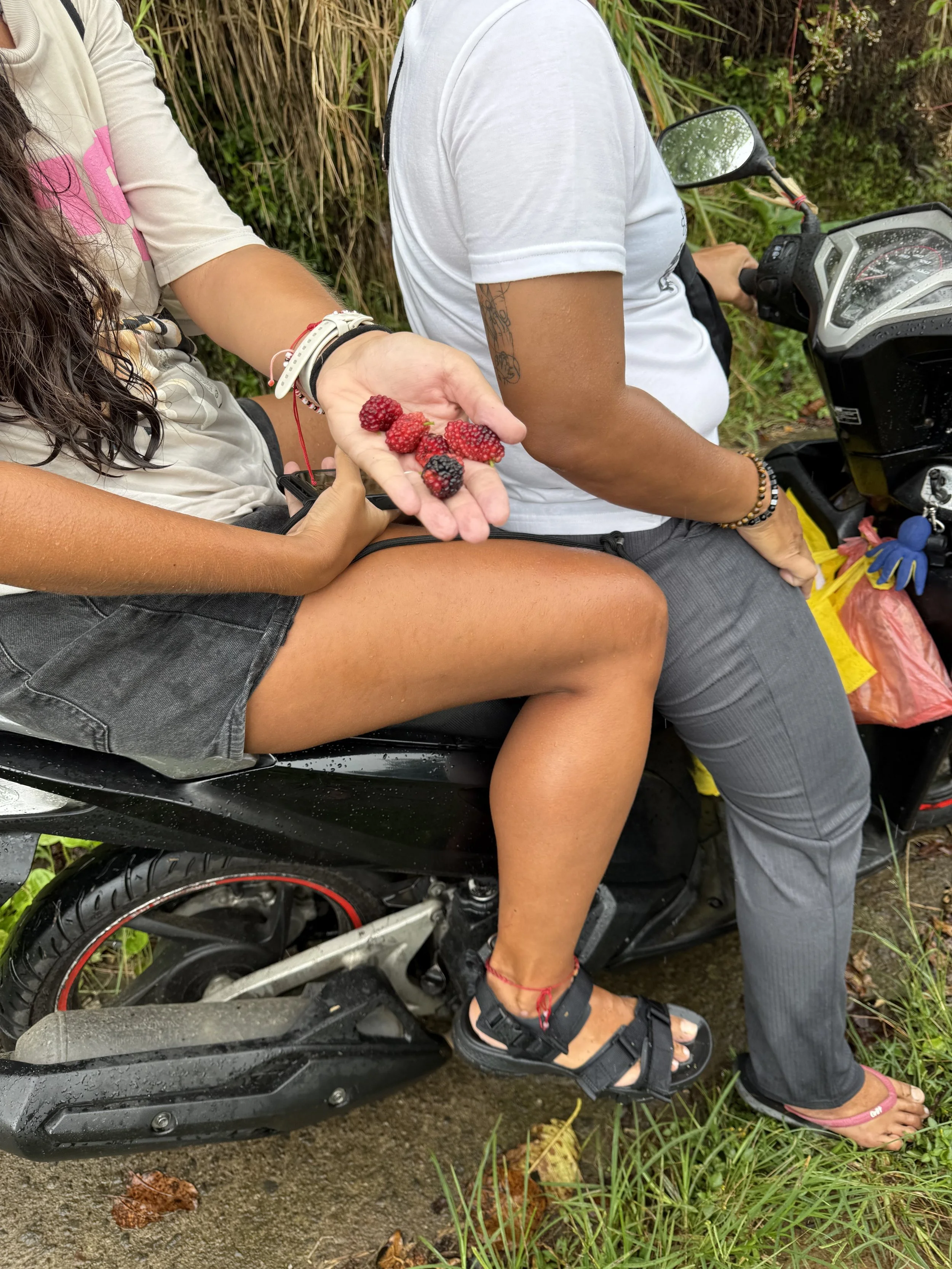
A downpour started as we headed back. Along the way, Ketut gathered fruits straight from the trees — guava, berries, and snow fruit, which only grows in the north of the island. They call it snow fruit because it resembles a small fuzzy pea with a seed inside, tasting similar to lychee, just less sweet.
Munduk’s cool mountain climate and fertile volcanic soil make it one of Bali’s most productive regions for plantations and crops. The region is also known for its strawberries and coffee plantations. Around Munduk, small cafés sit beside strawberry fields where you can pick your own to eat fresh or take home.
Ulun Danu Beratan Temple
Just a short drive from Munduk, Ulun Danu Beratan is one of Bali's most iconic sights — a floating temple dedicated to the water goddess Dewi Danu. The reflection of its tiered shrines on Lake Beratan's surface makes for an ethereal moment, especially in the early morning mist when the crowds are thin and the light is soft.
Watch The Sunset At Sande Coffee Break
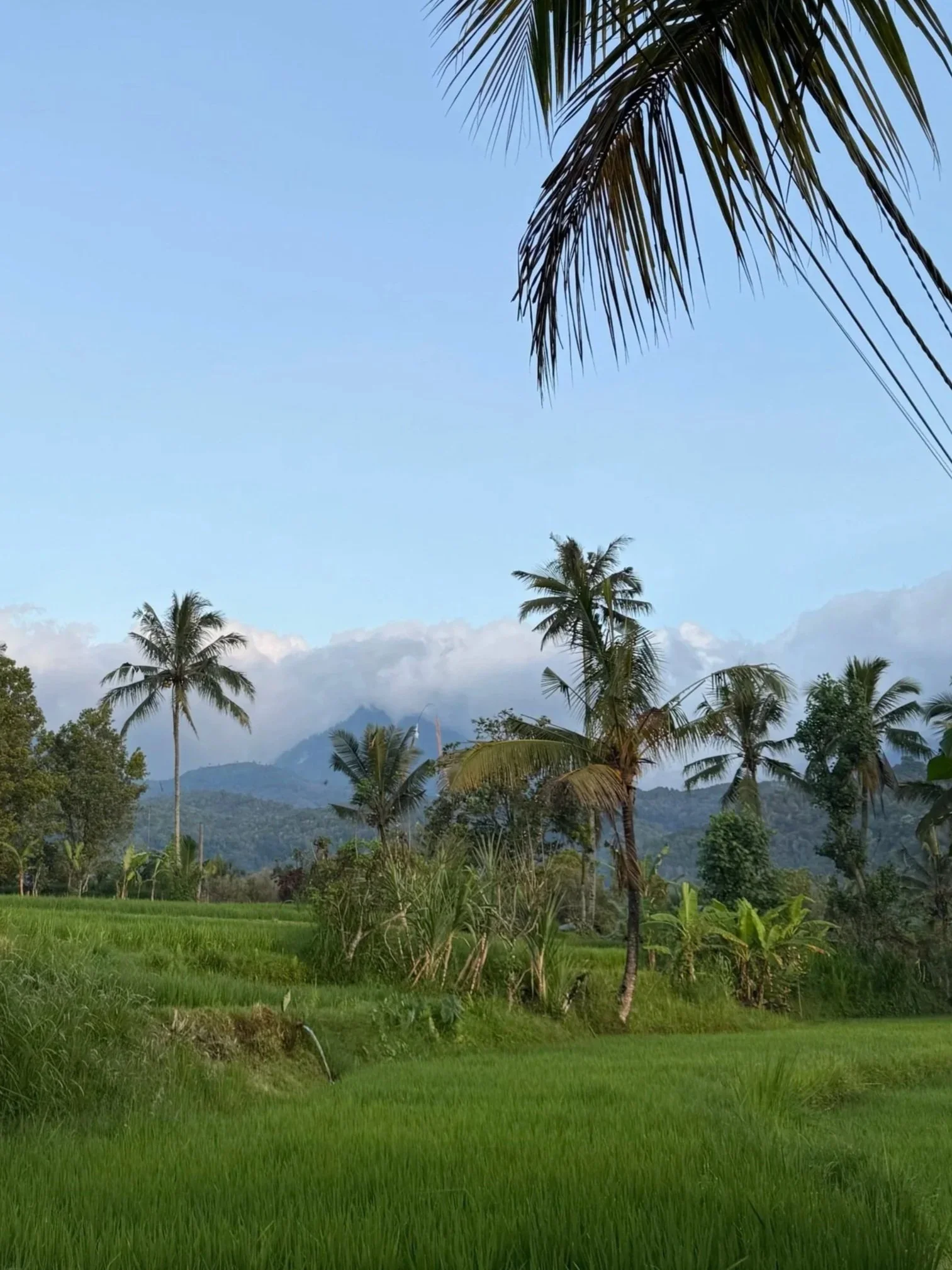
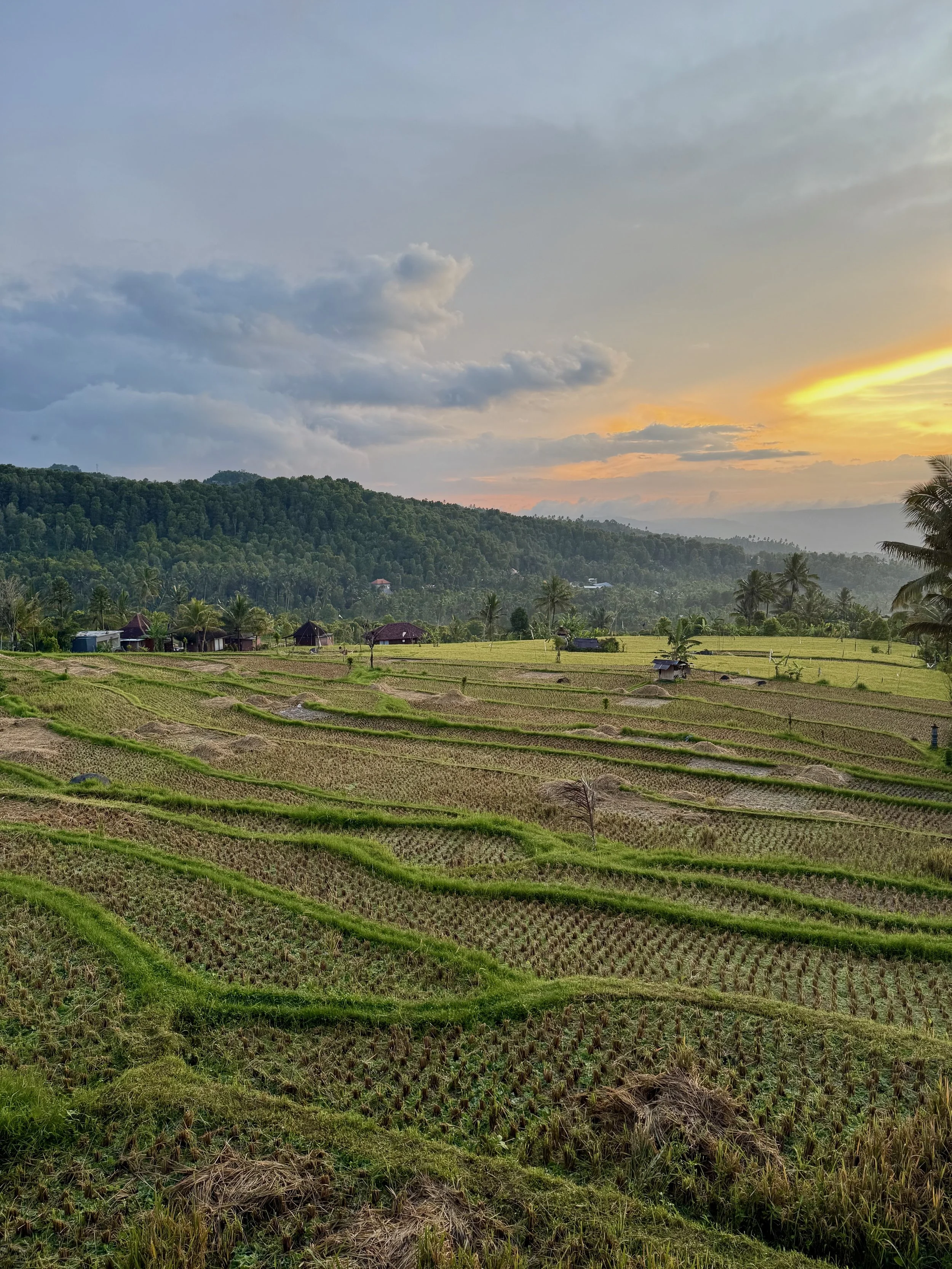
A family-run spot perched above Munduk's layered rice fields, Sande Coffee Break is a beautiful place to watch the sunset. It reminded me of Maui in 2019, surrounded by palm trees and tall grass swaying in the breeze, low-sitting clouds over moody mountains tops, feeling calm, quiet and completely immersed in nature.
Eat At Arumkayu
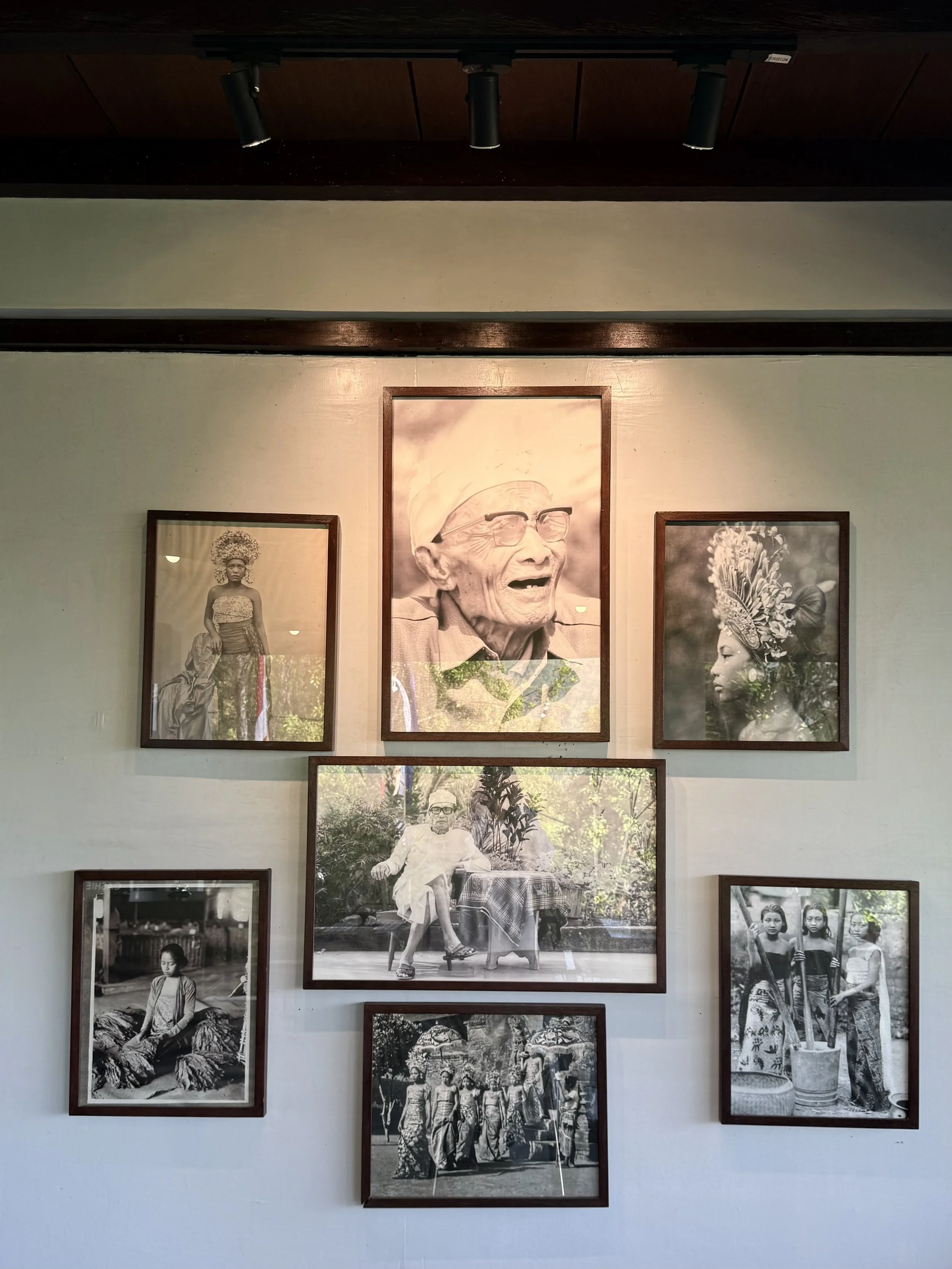
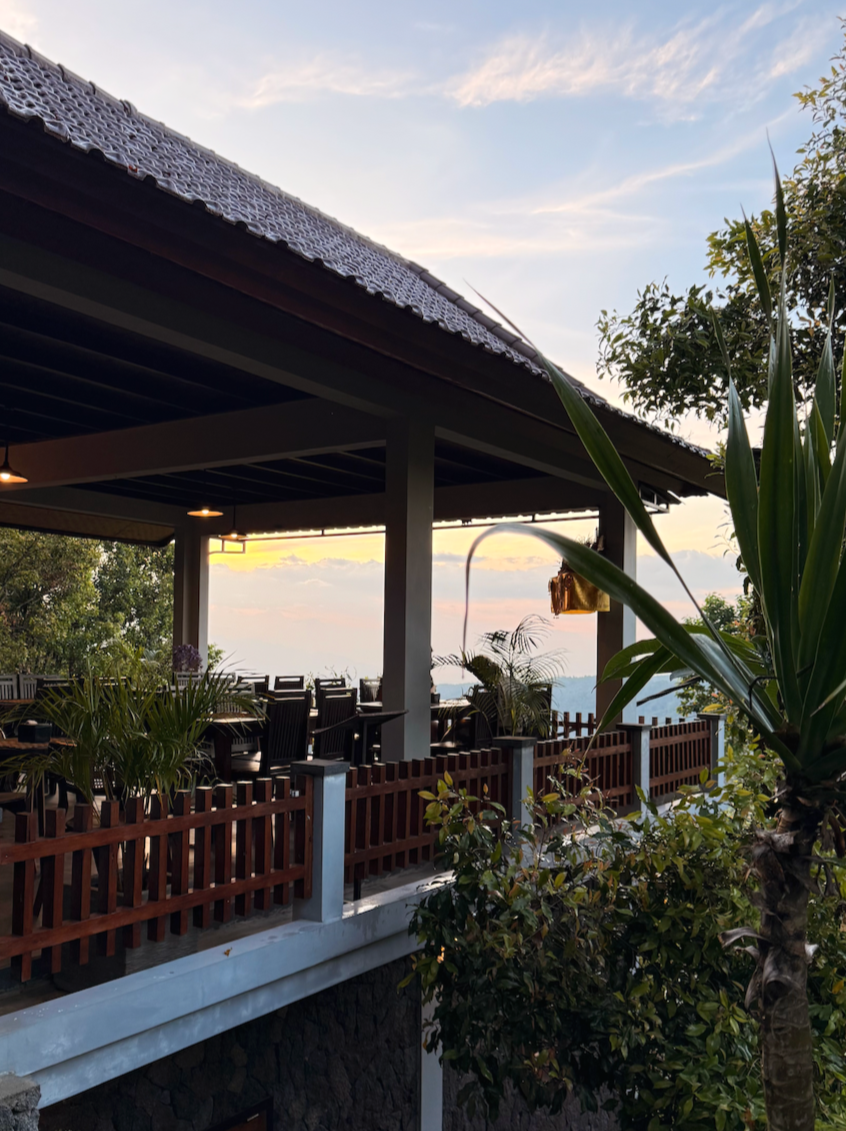
A local gem serving Indonesian dishes packed with flavour, Arumkayu sits above the valley and makes for a perfect sunset dinner spot. As the light drops behind the hills, the view opens wide across the landscape. The open-air layout gives you a front-row seat to the valley, with little else around but the mountains and sky.
THE CEREMONIAL FINISH
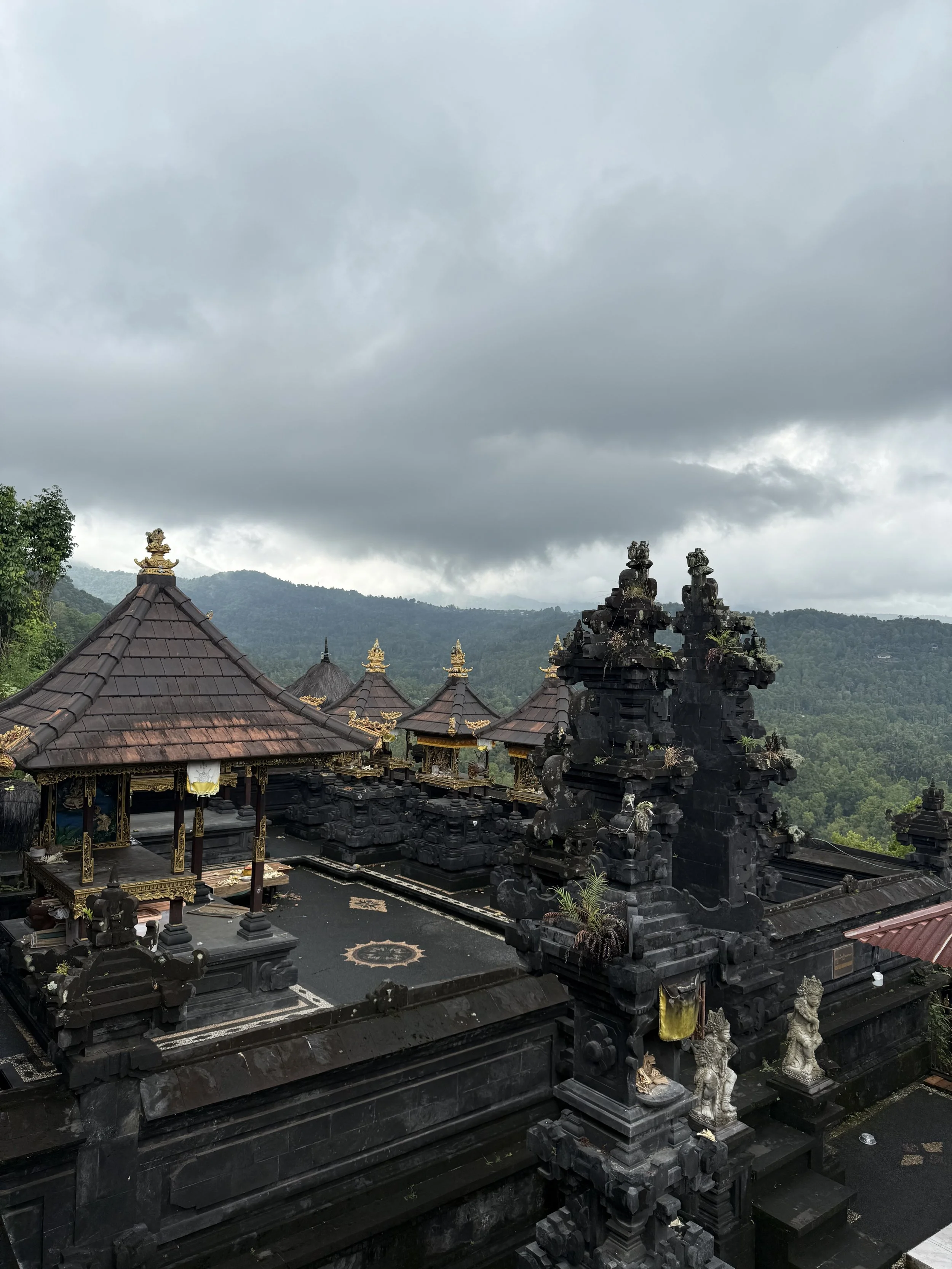
To close my time in Munduk, Ketut took me to the banjar in Gobleg. By chance, the weekend that I was visiting fell during a ceremony that takes place every two years, when four surrounding villages gather to offer gratitude, pray for prosperity, and spend several days together in community.
We arrived in the rain and were welcomed with holy water that was blessed, sipped and poured. Prayers were offered quietly, each of us holding an intention. Inside the banjar under the open pavilion, men of the village sat cross-legged playing traditional instruments: bronze gongs, bells, and metallophones. This is a Balinese gamelan — music learned through repetition and memory, often played by the same group of men for decades during ceremonial gatherings. The rhythm felt devotional, soft and deeply embedded in village life.
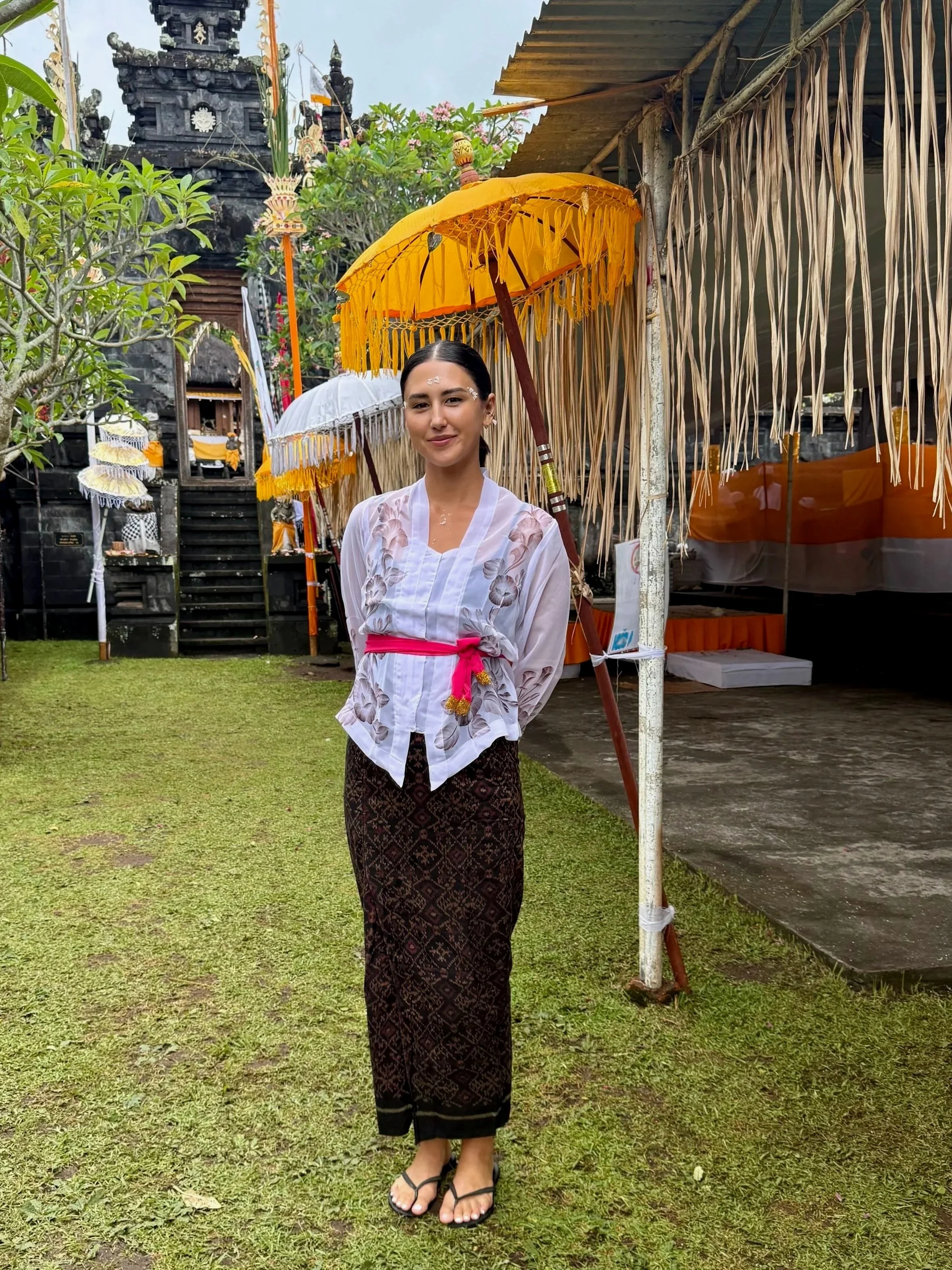
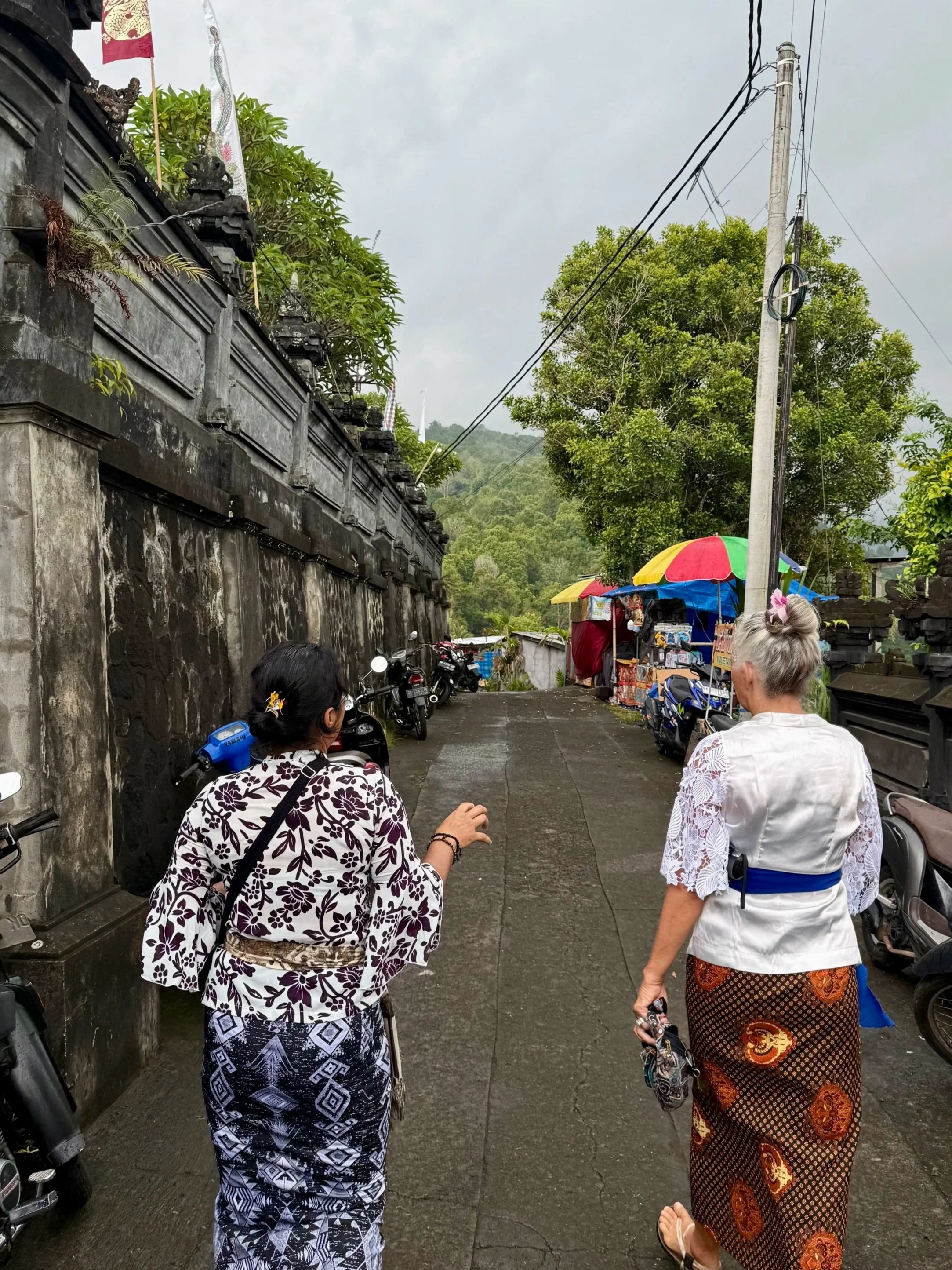
Ketut dressed me in traditional clothing — a kebaya top, sarong, and sash, worn for temple ceremonies. It was my first time wearing Balinese ceremonial dress, and doing so on such a important weekend for the community felt incredibly meaningful and serendipitous — as if the island had gently invited me to experience a deeper connection to its culture and land.
FINAL THOUGHTS & WHY MUNDUK FEELS DIFFERENT
Munduk reveals its beauty through everyday living. The mountains offer a quiet grounding, while the abundance of nature becomes a playground to wander through slowly — how green the village is, the generosity of its waterfalls, and the warmth of people who are genuinely happy to see you exploring and will welcome you into their culture and Balinese way of life without hesitation. I felt so lucky to be invited to dress up and visit the temple with them. Those moments aren't in any guidebook.
Travel isn't always about the destination. Sometimes it's about the people you meet, the stories you listen to, and the moments where you step slightly off the path.
P.S.
I later caught up with Kadek and his wife Aya in Jimbaran. They took me to Nusa Dua and introduced me to local dishes I hadn't tried before. I feel incredibly lucky to have met them — these are the kinds of connections that go deeper than travel. I truly believe that good energy attracts good energy, and this is why I keep travelling, meeting people around the world, and sharing these stories. To show that moments like these are rare, but also everywhere — if you stay open to them.