MELUKAT IN BALI: MY WATER PURIFICATION CEREMONY AT BEJI GRIYA WATERFALL & SELF-GUIDED RETREAT
MELUKAT IN BALI: MY WATER PURIFICATION CEREMONY AT BEJI GRIYA WATERFALL & SELF GUIDED RETREAT
Some places hold a certain energy, and Bali is the most sacred island I’ve experienced. I arrived in Ubud searching for grounding and unknowingly began to curate my own self-guided Eat, Pray, Love. It all started with a conversation with a stranger — one that led me to a water purification ritual that felt exactly like what my soul had been calling for.
I didn’t arrive in Ubud with a plan — only the quiet feeling that I needed to reset. In the days that followed, I unknowingly began curating my own self-guided Eat, Pray, Love. It started with a conversation with a stranger, one that led me to a water purification ritual that felt exactly like what my soul had been calling for.
WHAT IS MELUKAT?
Melukat — meaning to clear or to let go — is an ancient Balinese Hindu tradition that uses sacred spring water to cleanse negative energy from the body and soul and invite spiritual renewal. In Balinese belief, water bridges the visible world (sekala) and the invisible spiritual realm (niskala).
It can be performed at any time — or aligned with life transitions, full and new moons, illness, or weddings. There's no wrong moment. It simply meets you where you are.
A LITTLE CONTEXT
Duration: 1 hour
Best Time to Visit: early morning for fewer people
Cost: ~350,000 IDR
What’s Included: personal guide, sarong, offerings and herbal tea
Booking: ticket purchase through GetYourGuide
MY SELF-GUIDED RETREAT
After three weeks in Uluwatu, I felt a pull towards stillness. I came to Ubud in search of softness and to release lingering energy that I was carrying. What I didn’t know was that this would mark the start of four months living in Bali.
I looked at retreats, and nothing felt right, so I curated my own. Loose, intuitive, and shaped around grounding experiences that I was craving.
That week looked like:
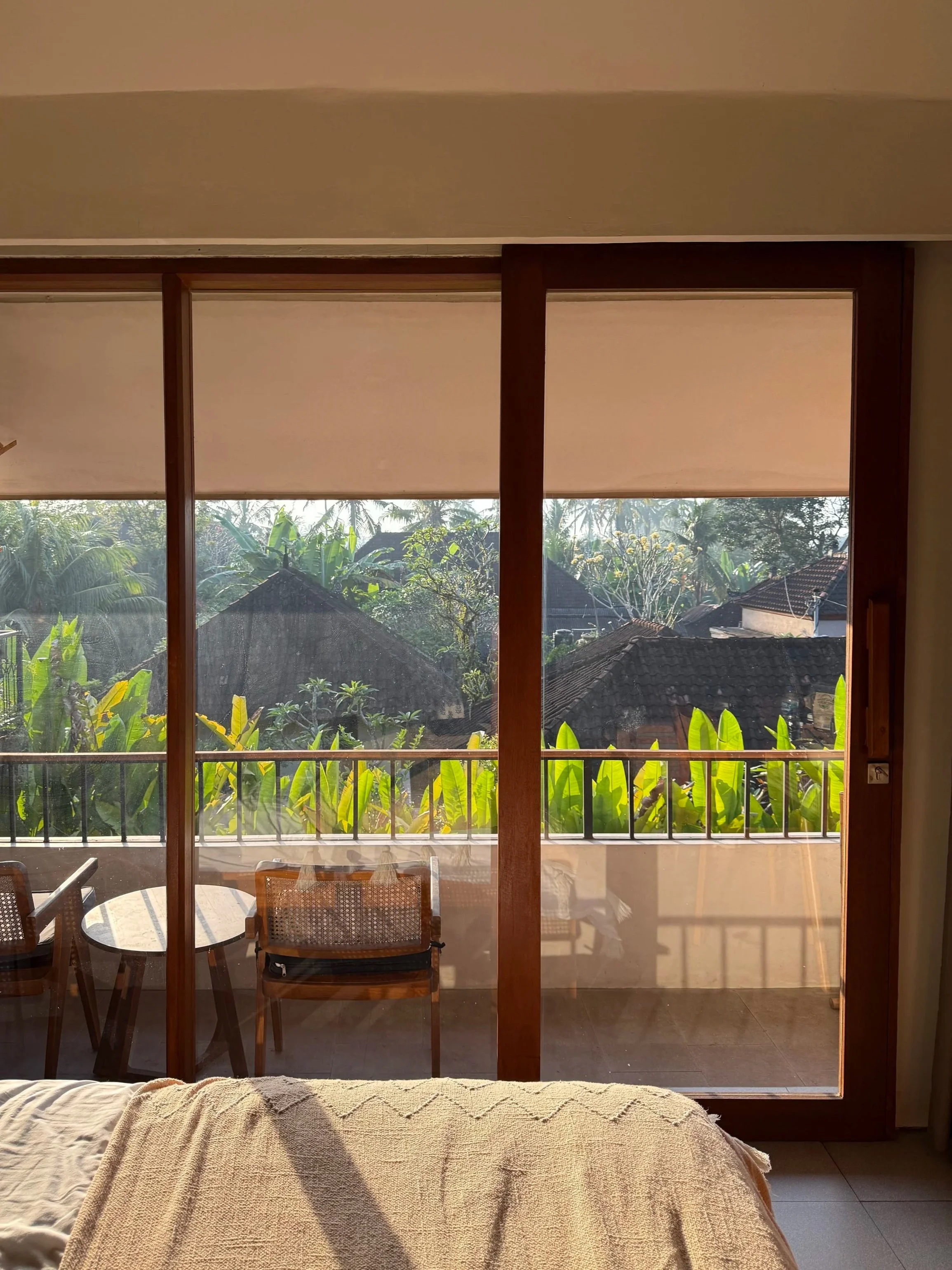
Staying at a beautiful Airbnb on the edge of Ubud that felt like home away from home
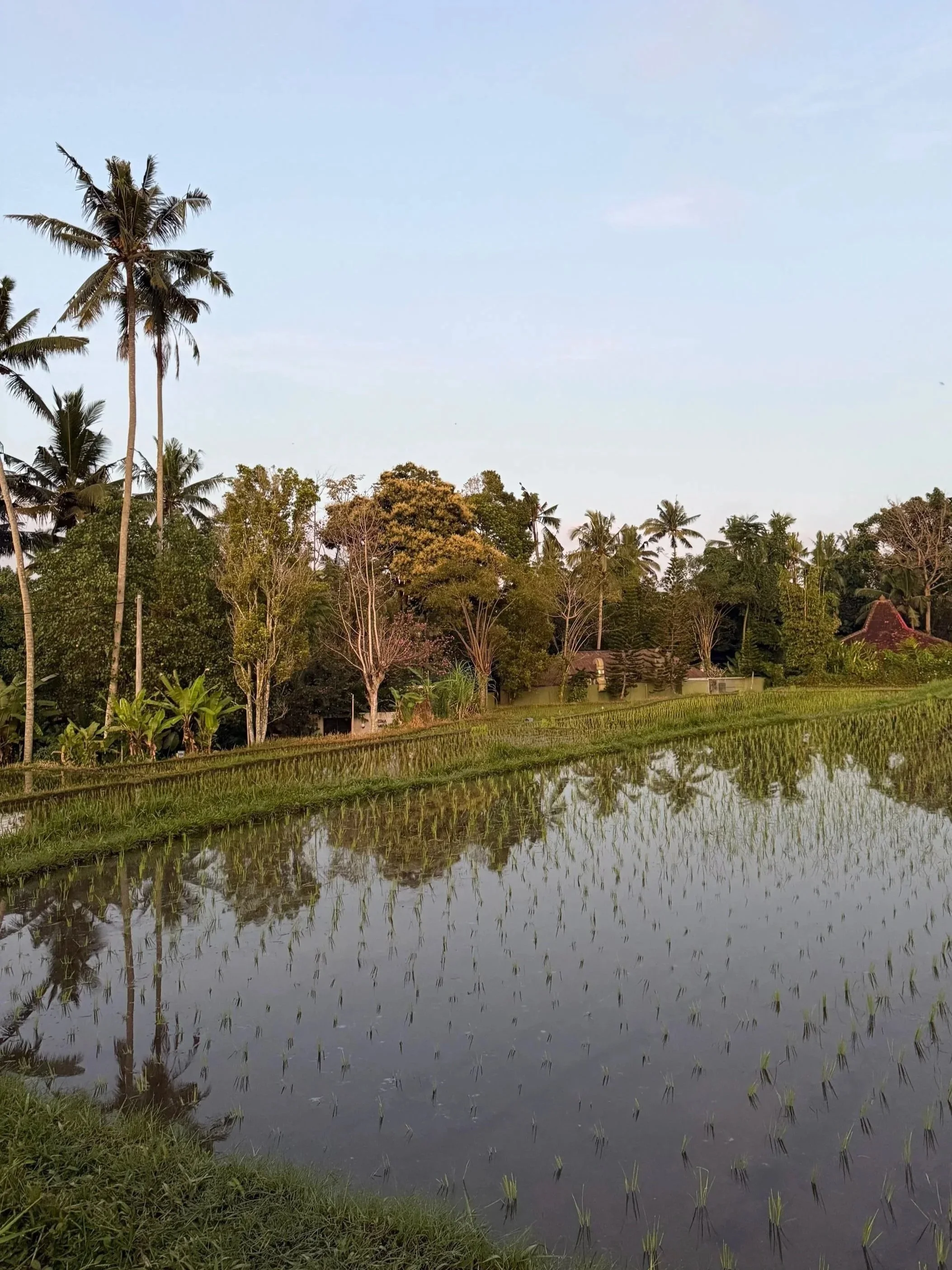
Mornings anchored by journalling, coffee and walking through the ricefields
Rented a scooter — something about riding a scooter brings me back to my island girl self, the one that feels alive and free — and safe by always wearing a helmet
A full moon yin yoga workshop with ceremonial cacao in a beautiful yoga studio — it felt intimate and somewhere I could completely surrender to
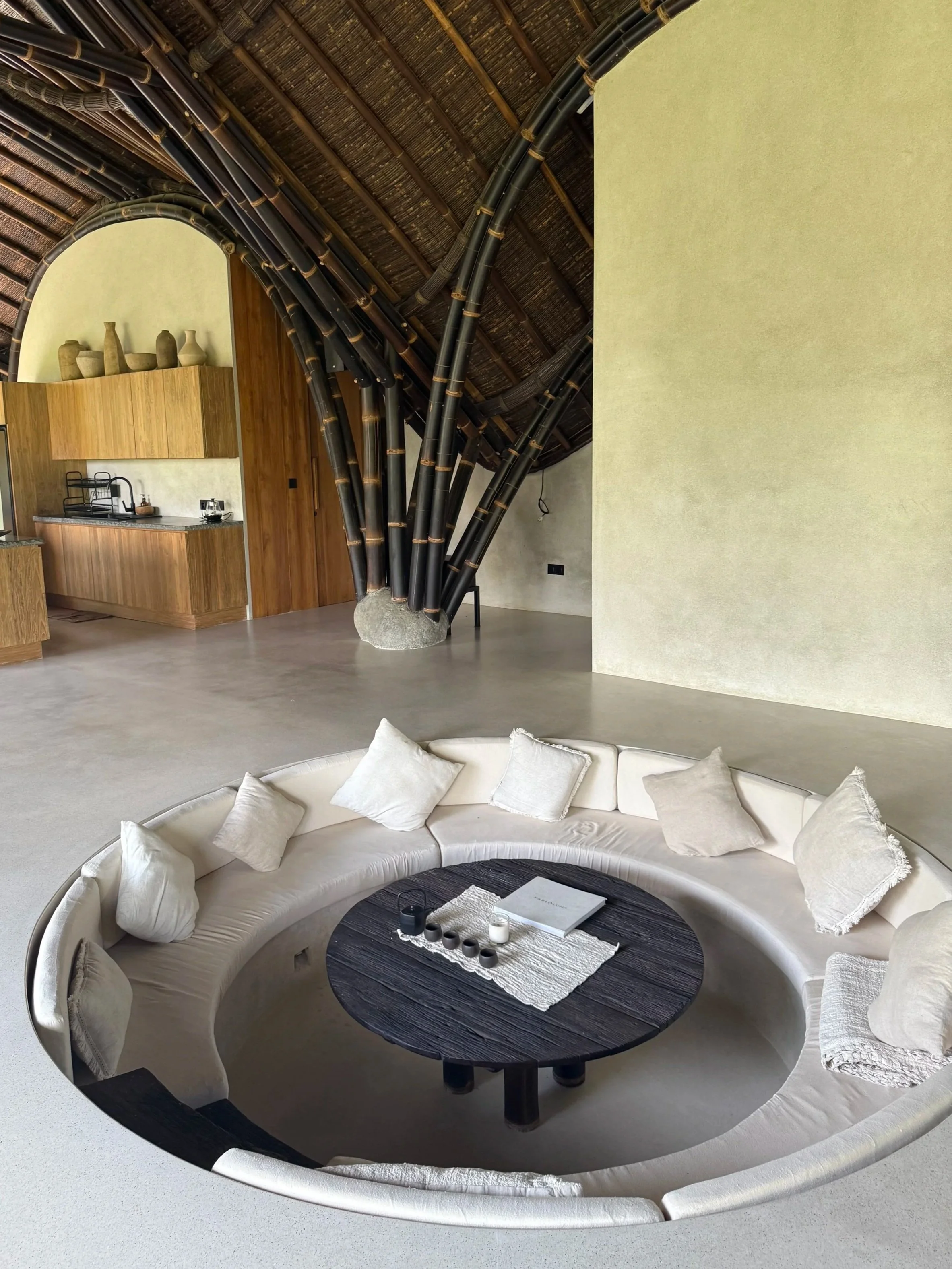
A studio tour of Pablo Lunar, a bamboo architectural firm. I left feeling so inspired by their work, philosophy and stunning design studio. Highly recommend if you’re in Ubud on a Friday afternoon
Sweated and flowed at Yoga Barn — one of my favourite places to visit in Ubud
A haircut at Rasa Gaya — hair holds energy, and I always leave their salon feeling renewed
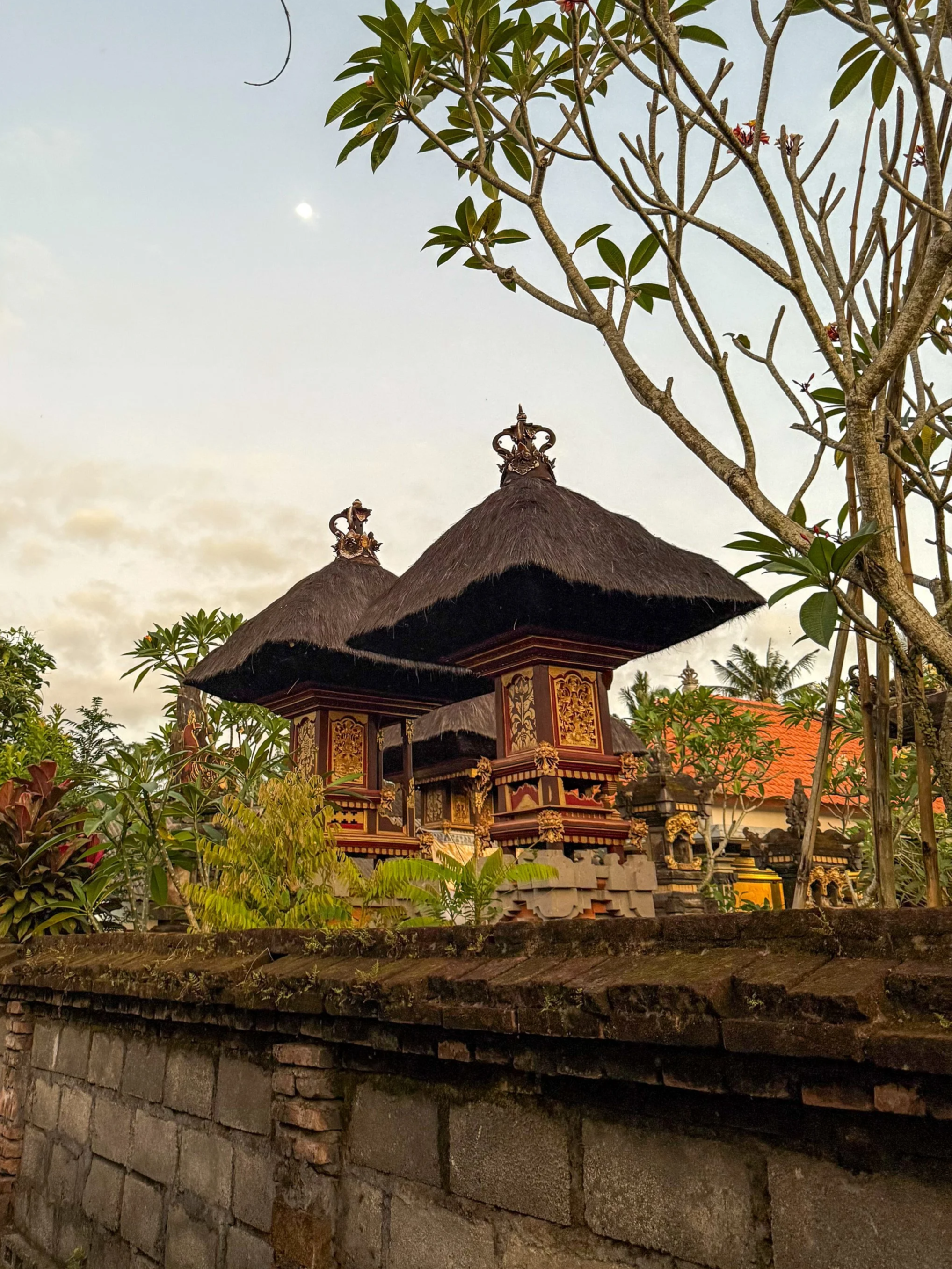
Watching Balinese Kecak dance performed by my Airbnb host, who I think of as my Indonesian dad, and his community on the full moon
Exploring beautiful interiors, cafes and rooftop bars (alcohol-free during this chapter)
Eating whole foods, and nourishing my body from the inside out
And at the centre of it was the Melukat water purification ceremony.
DIVINE TIMING AT A WARUNG
On my second night in Ubud, I put my name down at a well-known warung (local restaurant) and waited for a table. Twenty minutes later, I was called up and taken to a four-seater table. I let the waitress know that it would just be me if she wanted to give this table to another group that was waiting. She took me to the wooden bench that ran along the windowsill — the unofficial table for solo diners. A seat in the corner, pressed between the wall and a stranger, which felt slightly claustrophobic — the waitress disappeared before I could say anything.
I sat there looking over the menu when the guy beside me slid the wifi password across the table without a word. I thanked him and asked what he’d ordered. That small exchange led to a forty-minute dinner with a new friend. I noticed he was wearing a string on his wrist — red, black and white — the same one I'd spotted lying on the ground outside the restaurant on my way in. He received it at a water purification ceremony at Beji Griya Waterfall which he’d done on his birthday a few days earlier.
The kind of perfect alignment that finds you. I hadn't been looking for a sign, but I also wasn't going to ignore one when it showed up.
THE EXPERIENCE
Arrival
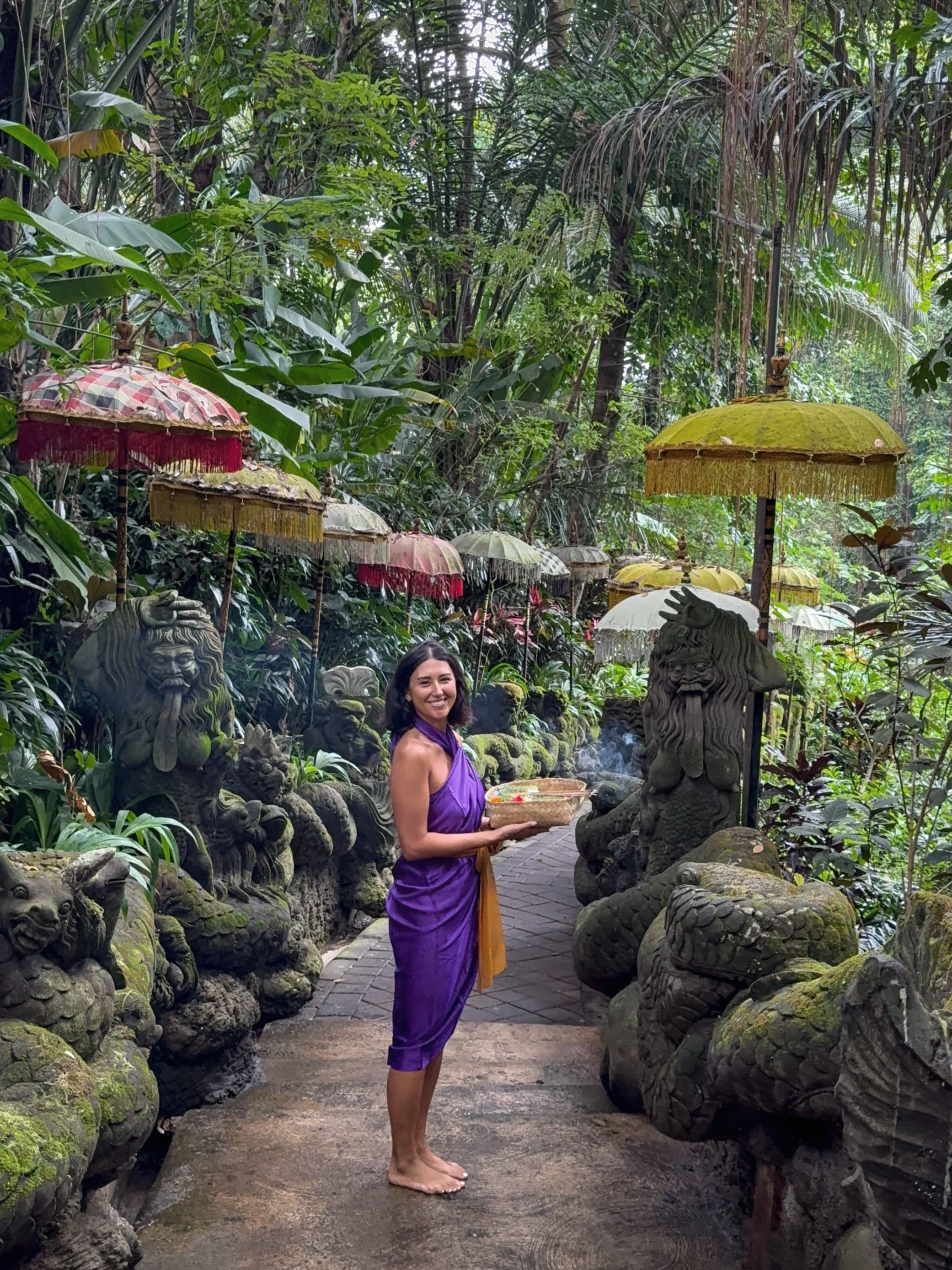
I was welcomed by the reception team and taken to choose a sarong and sash colour. It sounds simple but this first step felt intentional about how you choose to show up in the ritual.
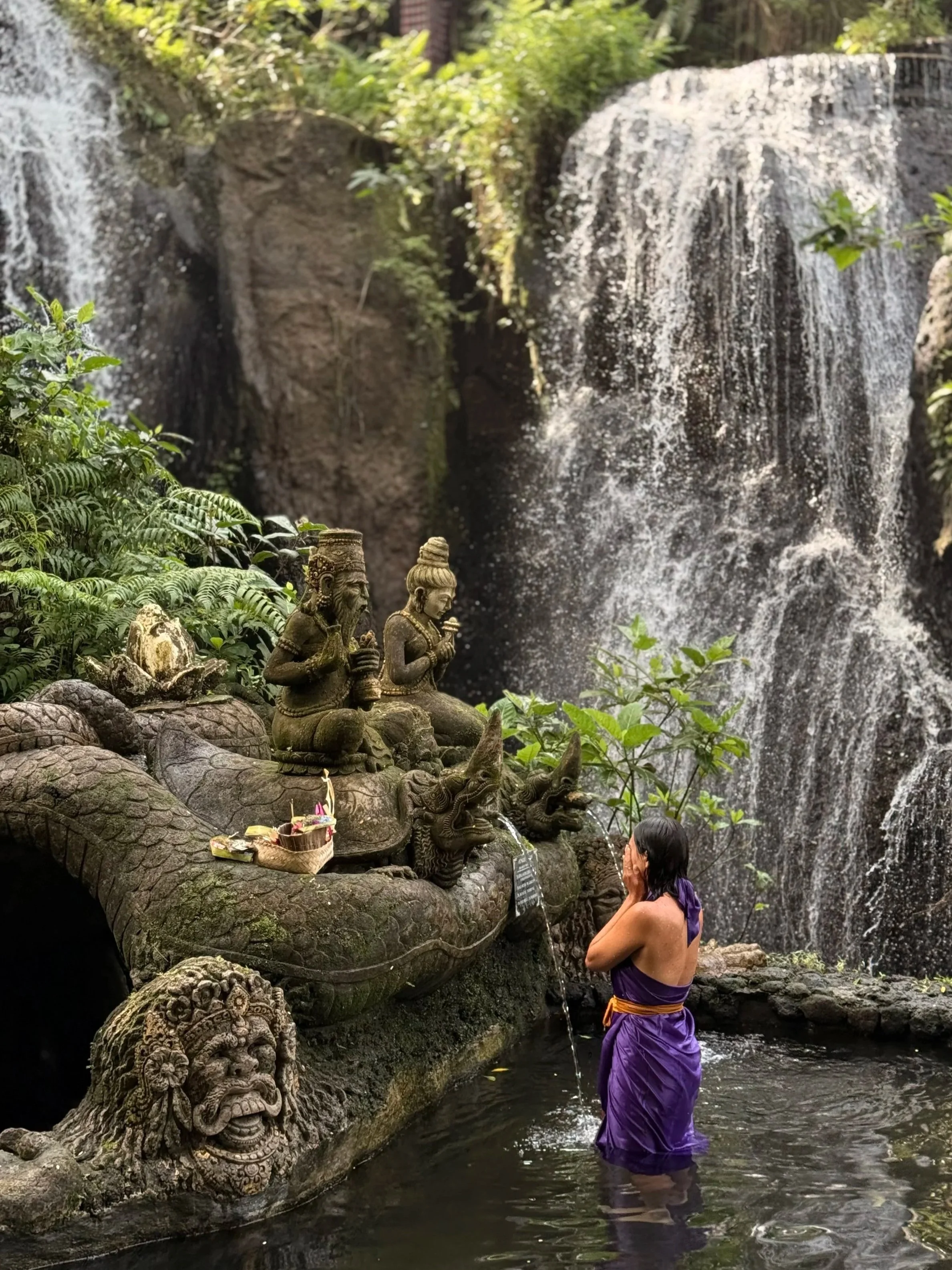
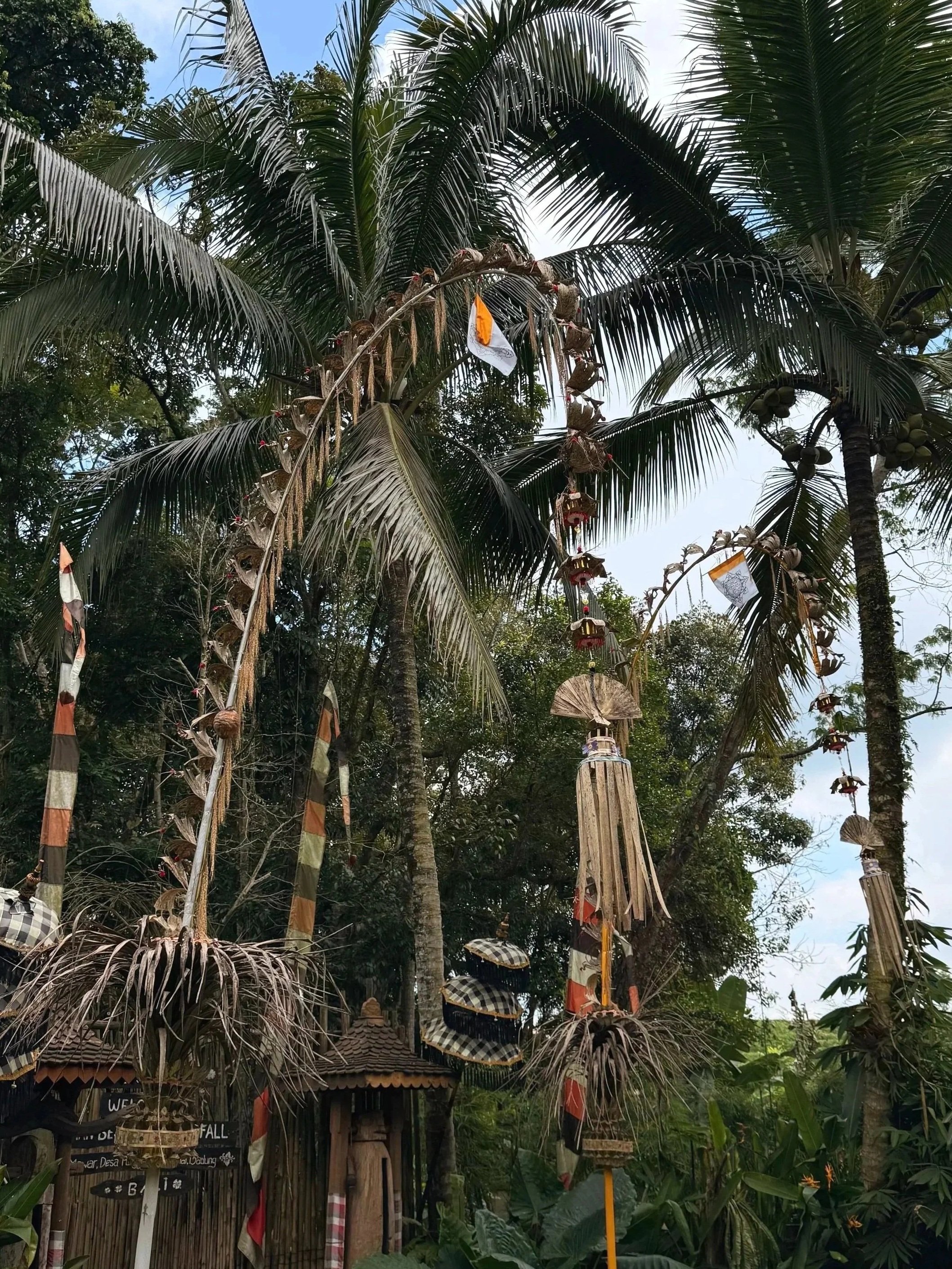
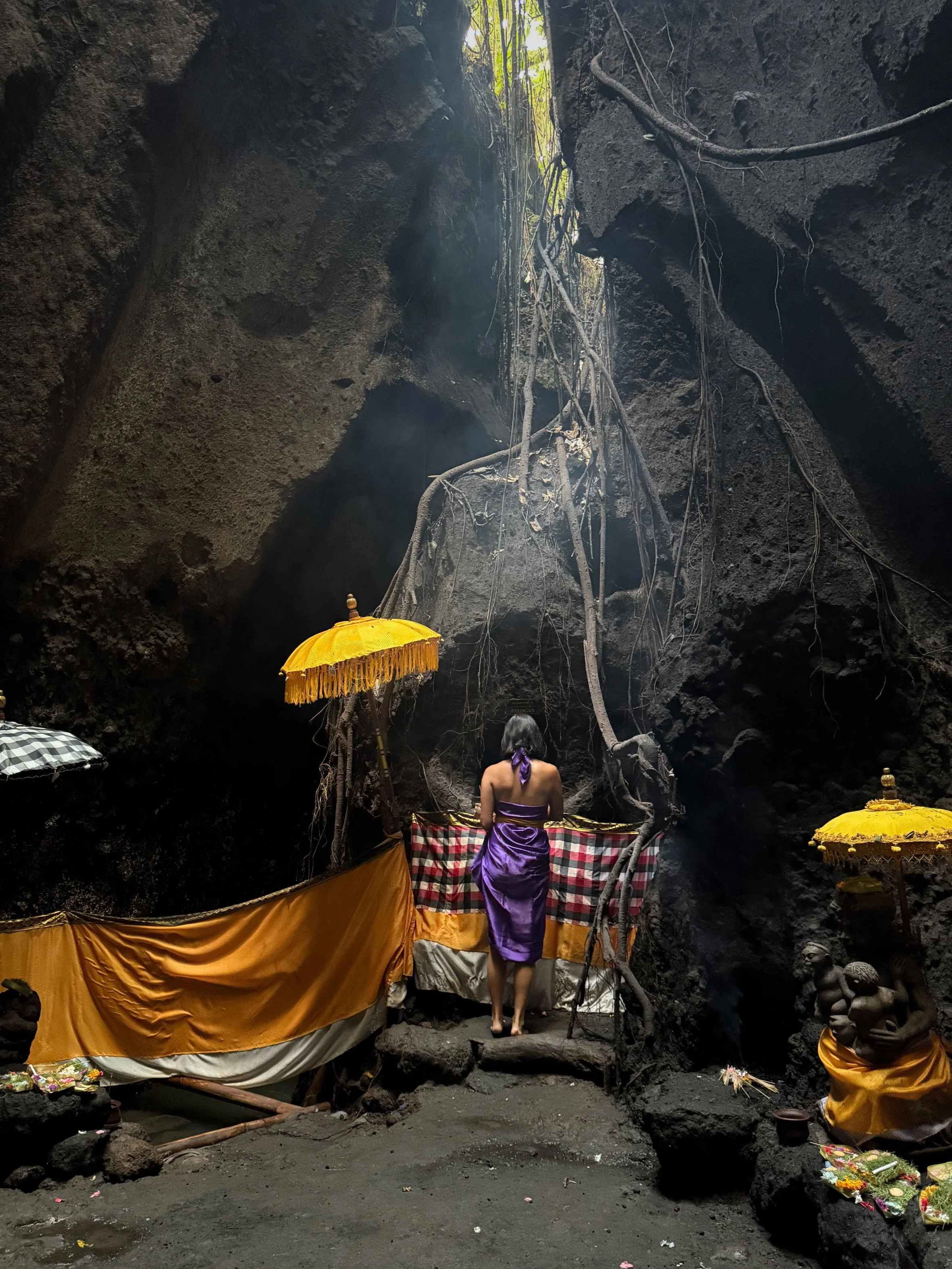
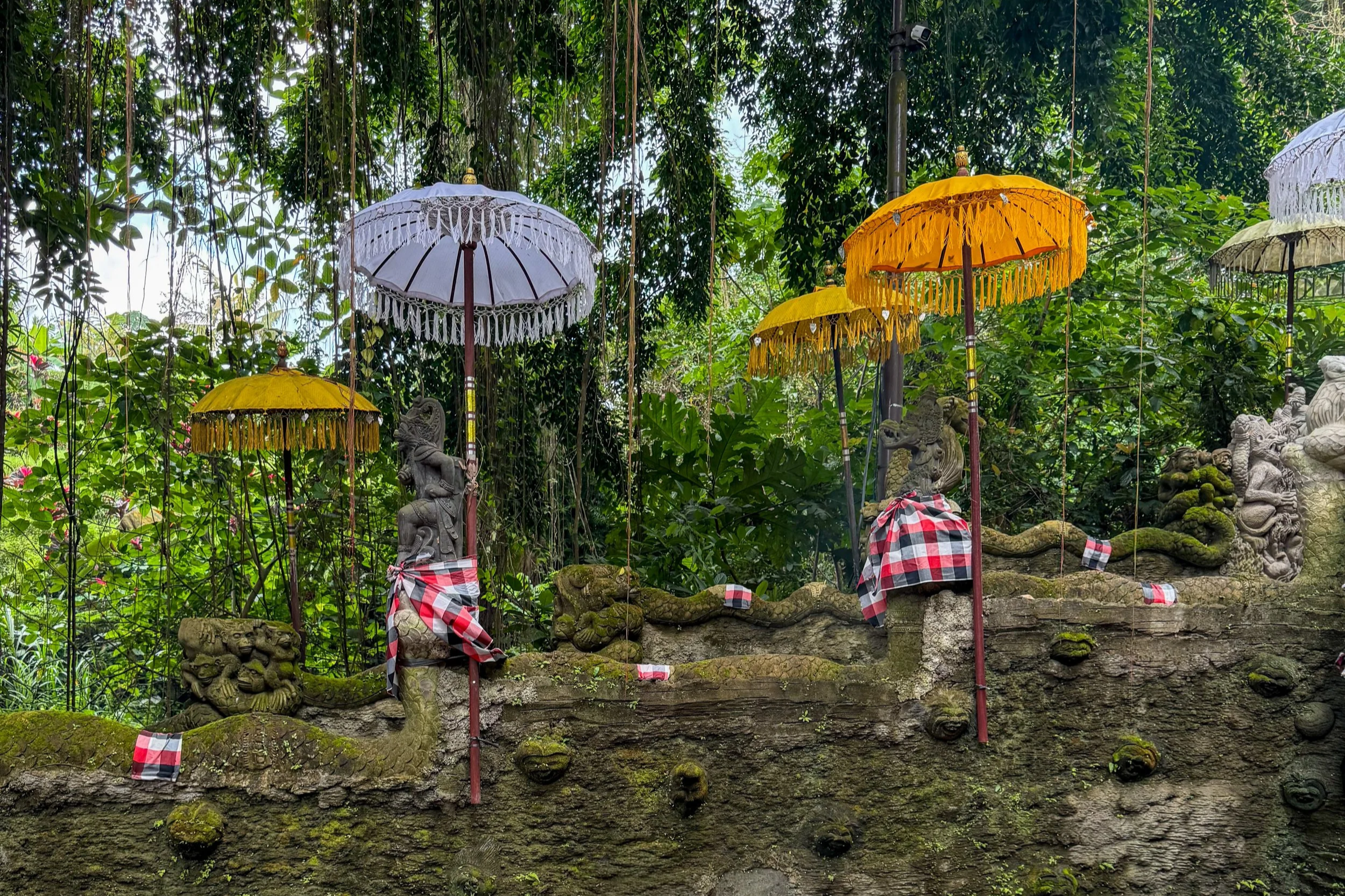
From there, my guide Kuzna led me down a stone staircase lined with carved deities. He explained each one as we passed — who they represent, what aspect of life they protect. The walk itself felt ceremonial, met by the sound of falling water.
Prayers + Offerings
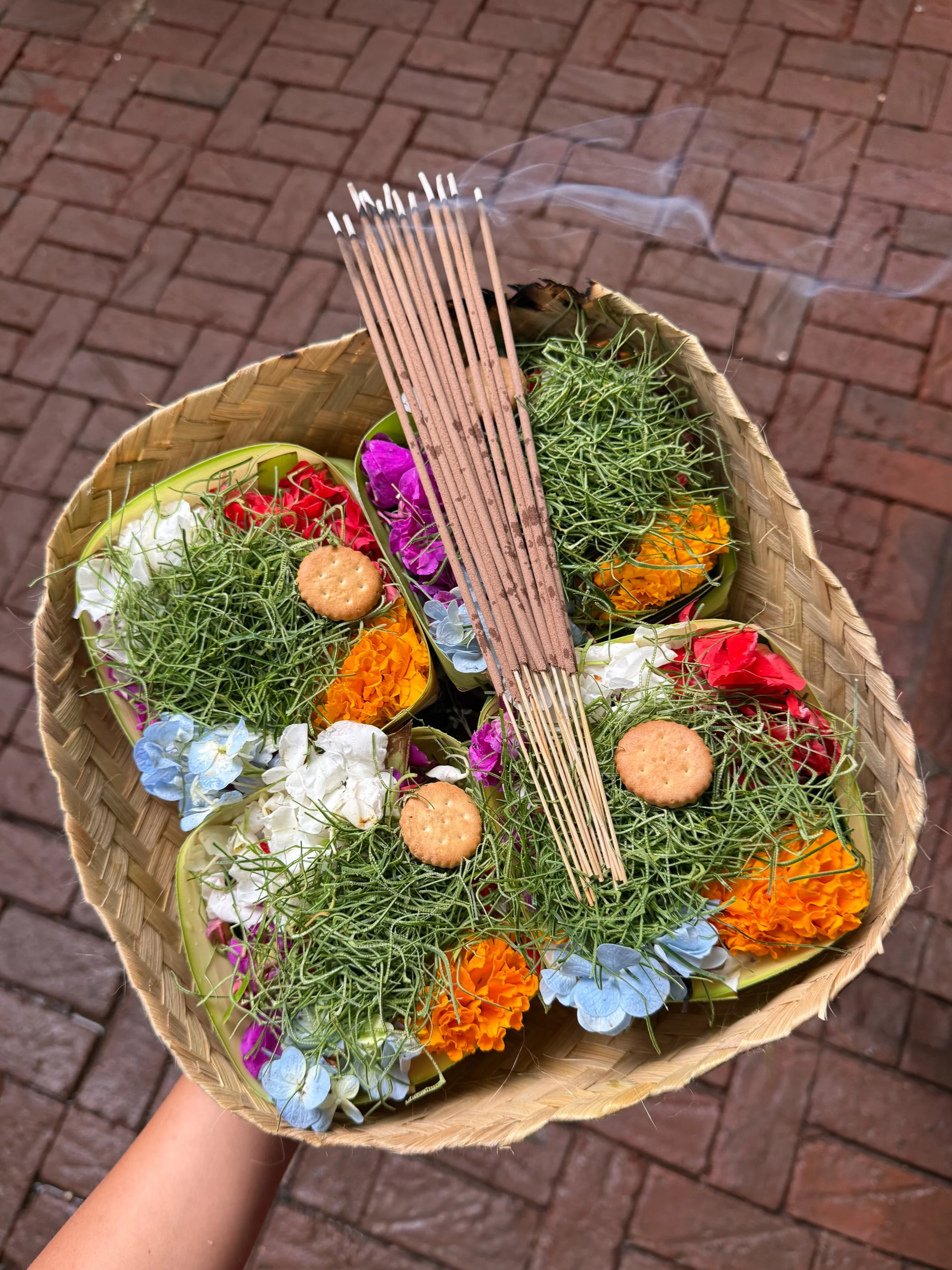
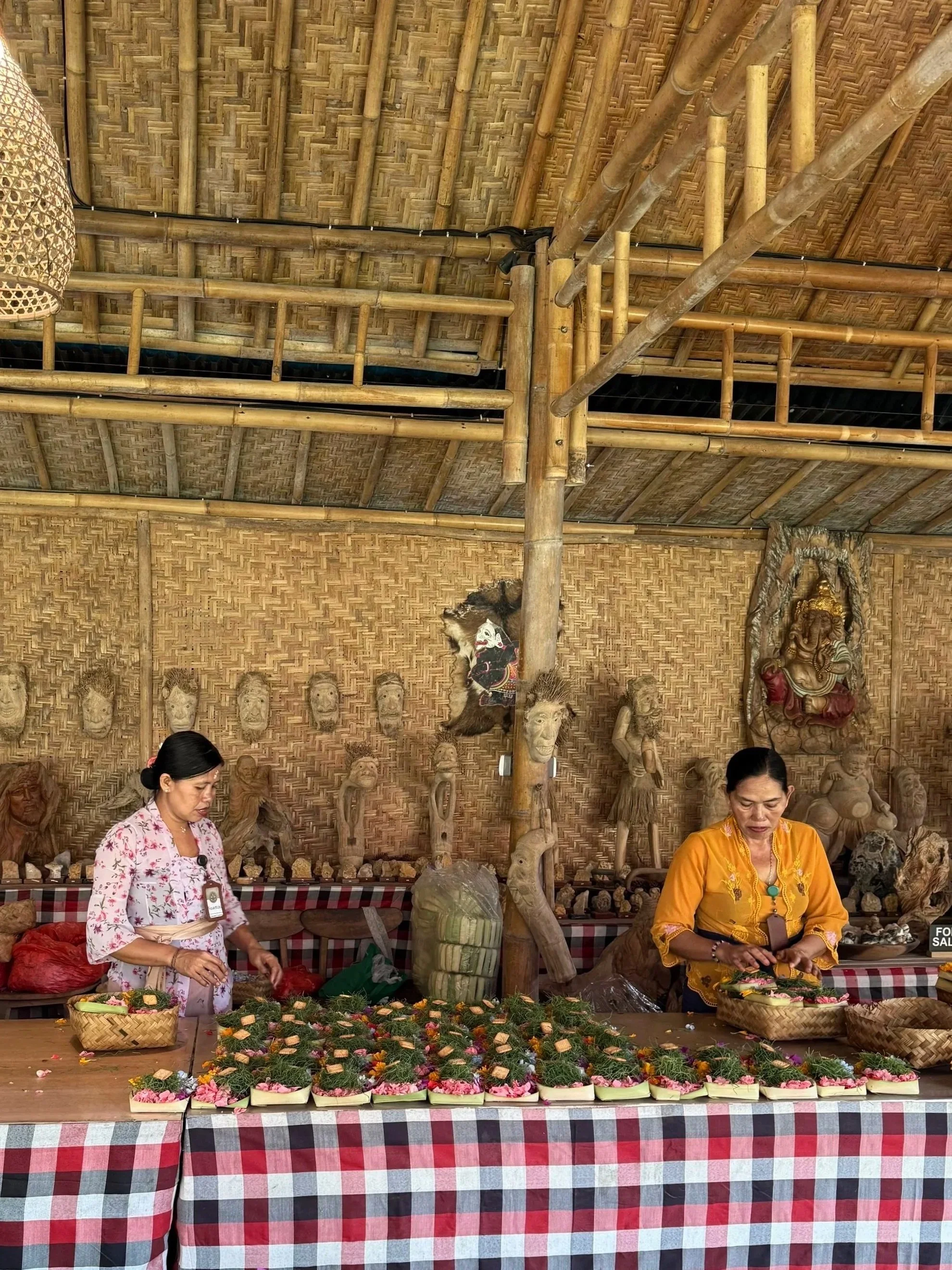
At each deity, I was invited to present a canang sari (a small floral offering) and pray with intention — for the river, for the Earth, Mama Bali, for health, prosperity, family, and the sacred banyan tree.
There were moments where we lingered a little longer. Not rushed. Just savouring the stillness. I found myself breathing in slowly and exhaling what I hadn't consciously realised I'd been holding — the accumulation of two years of travel, feeling grateful but not quite rooted in a place to feel at home.
At one point, Kuzna invited me to pray for my future husband and children. And that one caught me off guard — I hadn’t thought to pray outward like that before. It felt like something quietly expanding as a new thought pattern and a subtle manifestation.
The Water Purification
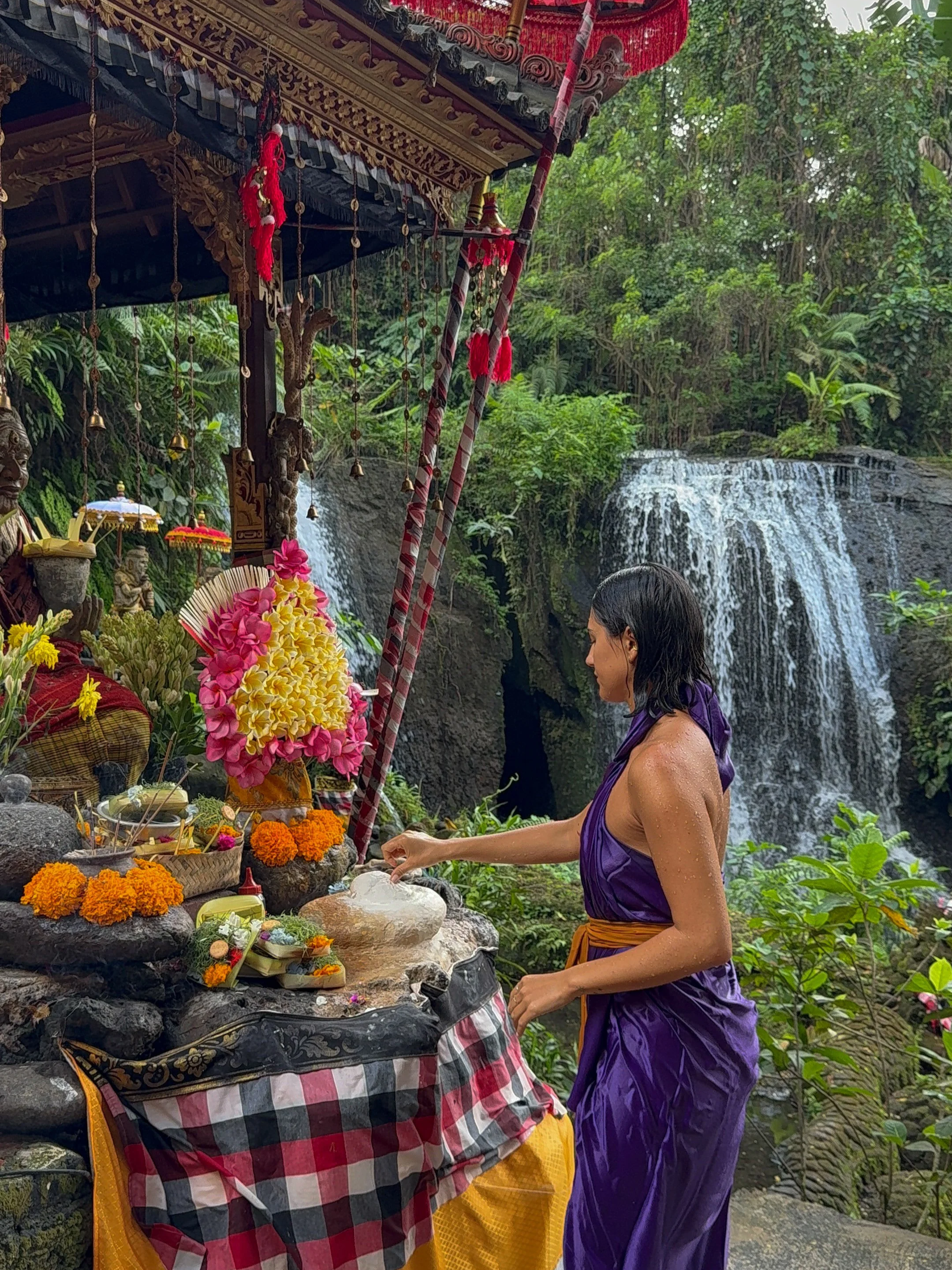
Under sacred spring water flowing from carved stone, the ritual is deeply symbolic, moving through the practice —
Washing your hair and allowing the water to run down the back of your neck
Drink holy water — three times, then seven, then three again
Washing your face three times
Gargle, then drink once more
At one waterfall, you scream three times — a powerful release of stress and stored emotions. It felt odd the first time. By the third, I was giving everything I had. At the next waterfall, you laugh — with intention, to invite joy and positive energy back in.
The Final Blessing
A woman closed the ritual by pouring holy water over my head and coconut water into the cupped palms of my hands to drink. I pressed clay onto my third eye, followed uncooked wet rice grains, symbolising blessings received, prosperity and anchoring back into the physical world.
HOW IT FELT AFTERWARDS
I cried — the good kind.
I left softer and cleaner, and spent the rest of the day soaking it all in — away from technology and from the busy streets of Ubud. That intentional slowness afterwards felt just as important as the ceremony itself.
SHOULD YOU DO IT?
If you're moving through a transition, feeling energetically heavy, or simply curious about Balinese spiritual tradition — yes, wholeheartedly.
Beji Griya sits slightly outside of Ubud's centre, which means it doesn't carry the same tourist energy as better-known sites. Going early made it feel deliberate and sacred. Move slowly through each station. Set intentions gently. Allow whatever comes up, to come up.
Melukat doesn't hand you answers, it creates space for them.
After that week in Ubud, I took myself on a five-day solo road trip to Bali’s east. It was my first time exploring Bangli and Amed, two places that felt worlds away from the busier corners of the island. The days unfolded slowly — winding roads through quiet villages, mornings by the ocean, and small moments that reminded me how much beauty exists when you travel just a little further. If you’re looking to experience a different side of Bali, both offer a chance to slow down, support smaller communities, and discover landscapes and rhythms that feel wonderfully grounding.