INSIDE SA PA: AN INTIMATE JOURNEY WITH THE HMONG PEOPLE OF NORTHERN VIETNAM
INSIDE SA PA: AN INTIMATE JOURNEY WITH THE HMONG PEOPLE OF THE NORTH
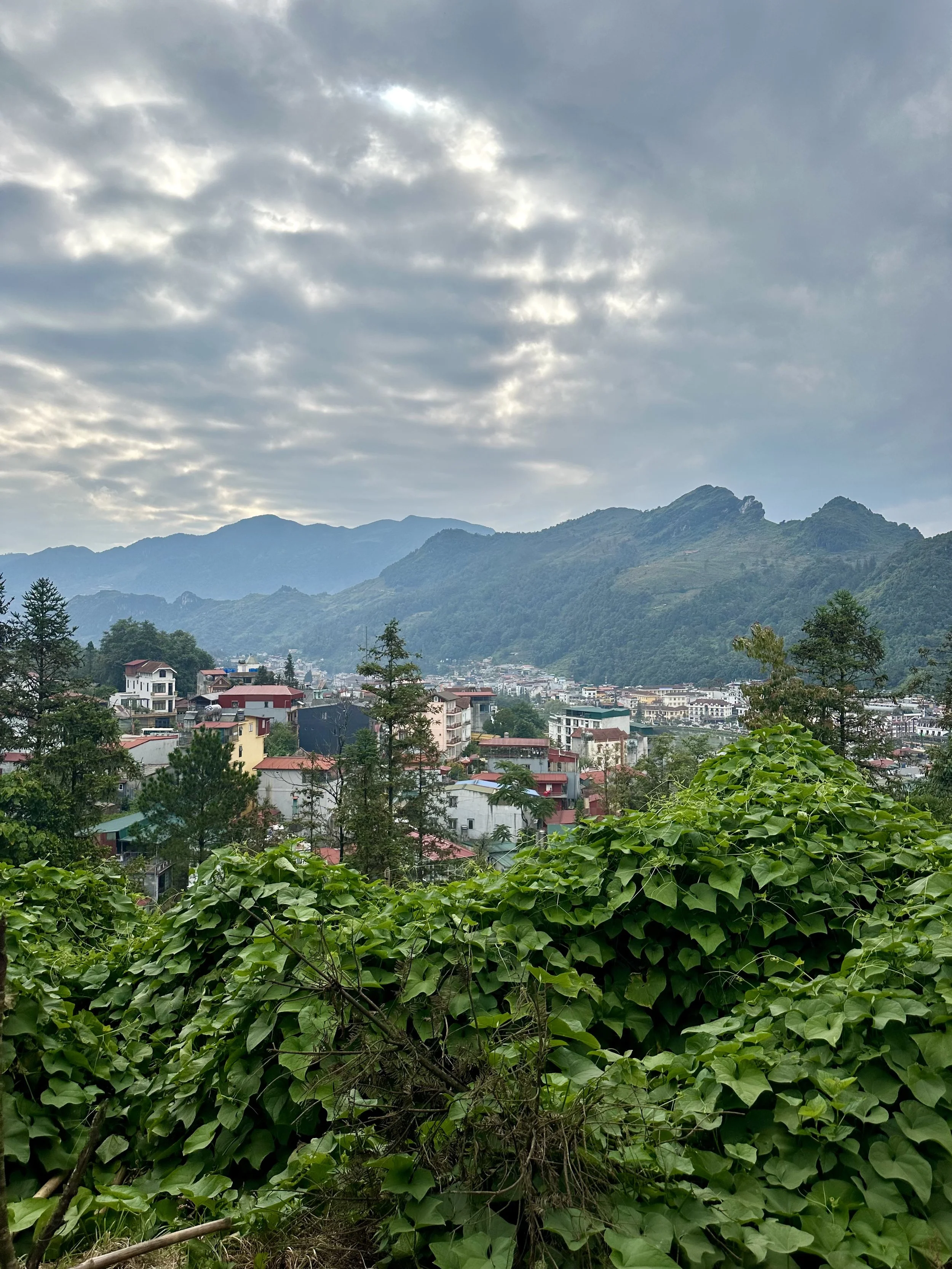
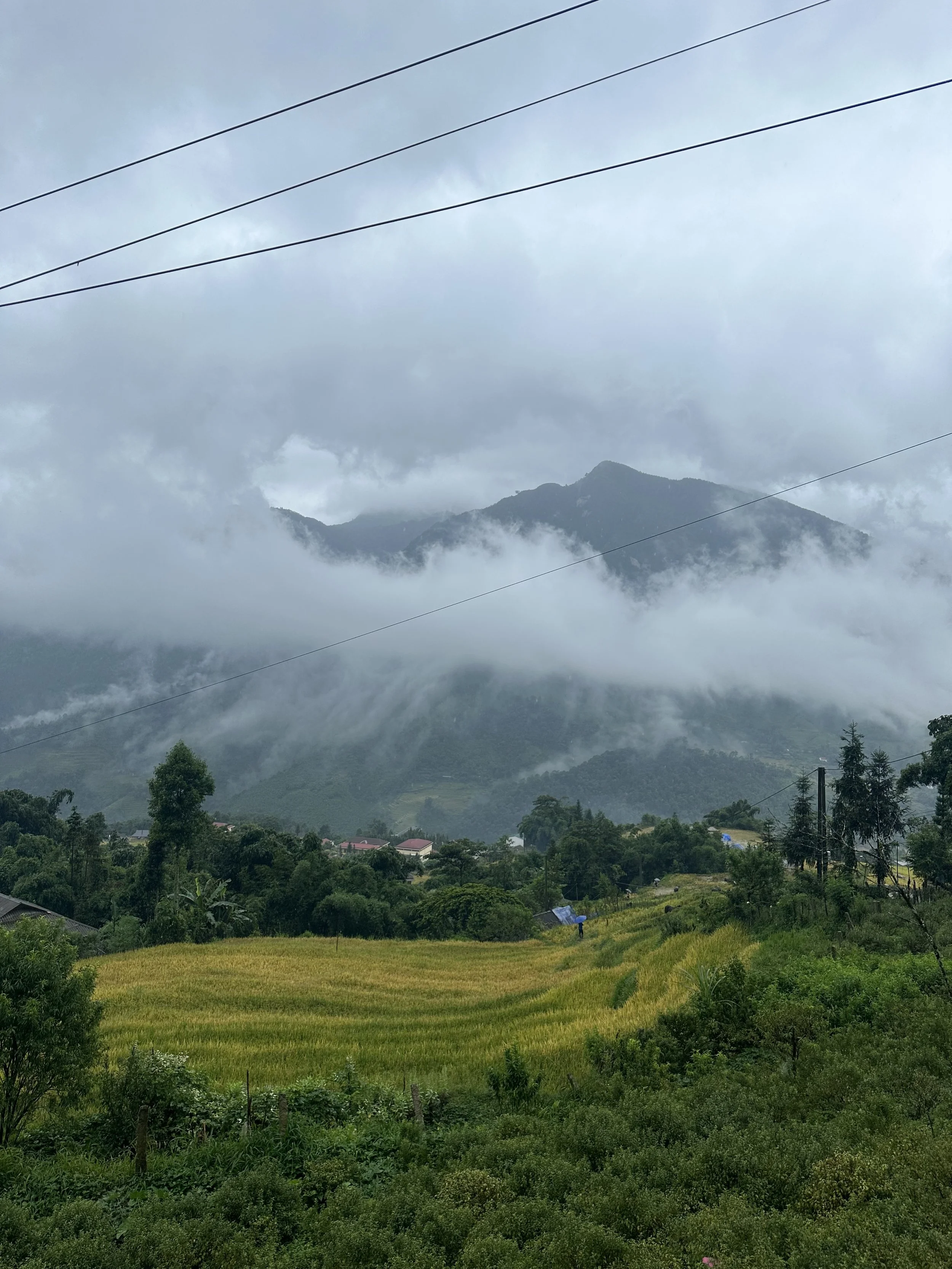
The misty mountains of northern Vietnam carry a different kind of energy — quieter, slower, and deeply rooted in culture. Sa Pa is defined by lush green rice terraces cascading down steep hillsides, met by clouds that roll in and out as if the land itself is breathing. But beyond its cinematic beauty, what makes Sa Pa unforgettable isn't just what you see — it's the culture of the people who call this place home.
What followed were three days experiencing Sa Pa through the perspective of the Hmong community, an intimate insight into an ethnic minority and a way of life that felt far removed from anything I had encountered before.
A LANDSCAPE SHAPED BY CULTURE
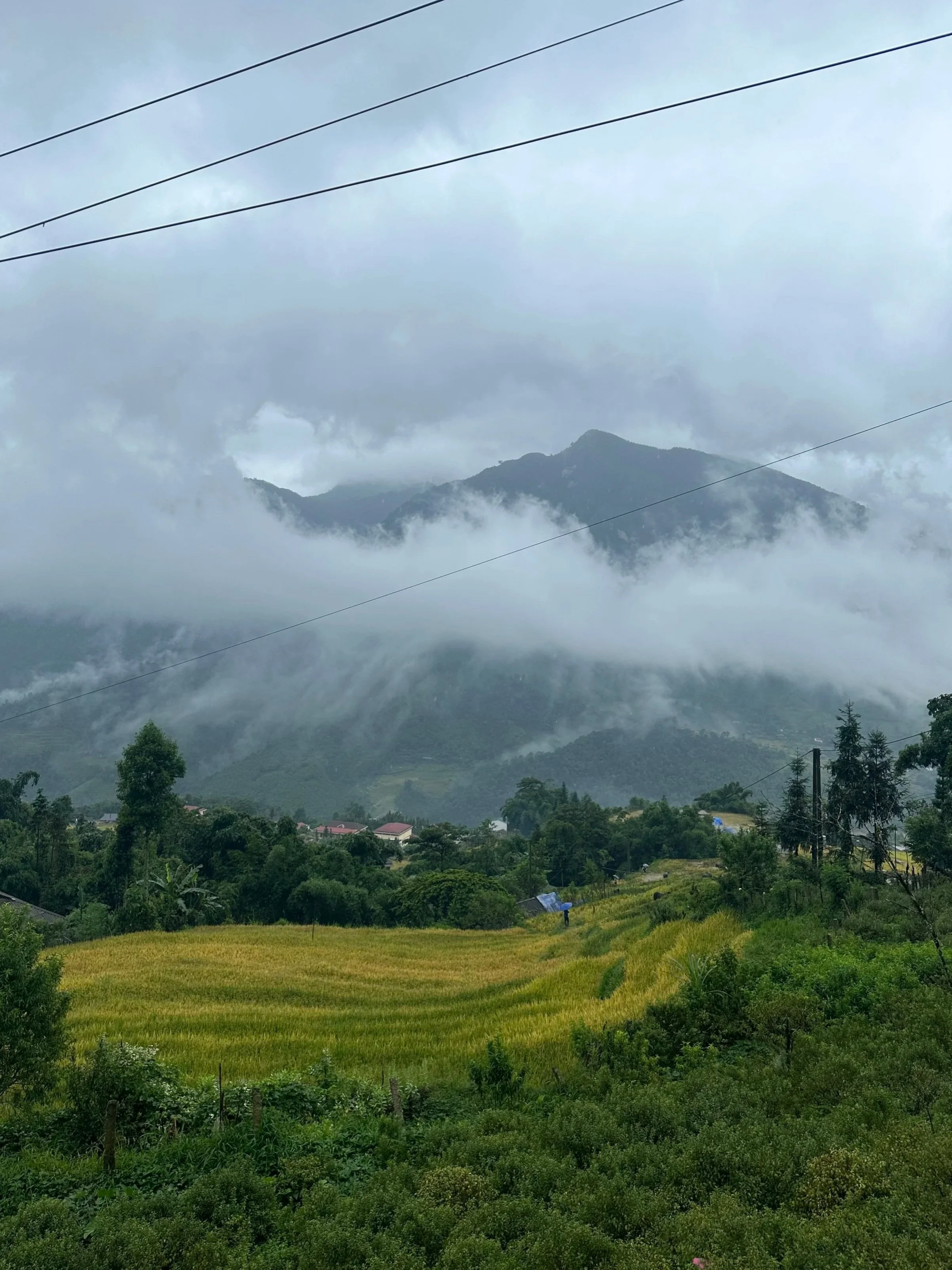
Located close to the border of China, Sa Pa sits at a high altitude, with a cool alpine climate and mist-covered valleys that give it an almost mythical quality. If you've ever watched Spirited Away, you’ll recognise that same dream-like, quiet magic here — the kind where time seems to dissolve between day and night.
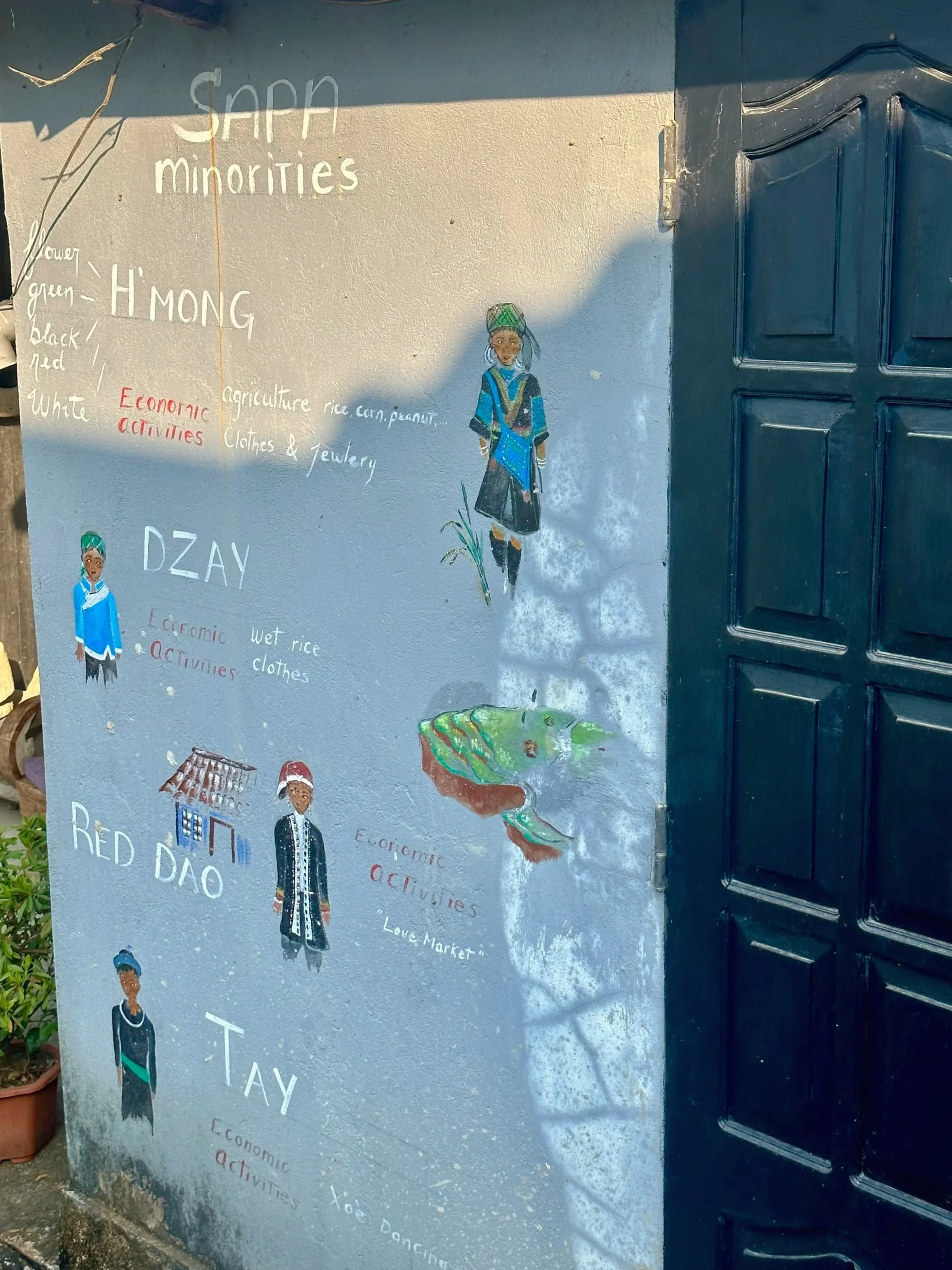
But the story here runs deeper than its landscape. Sa Pa is home to several ethnic minority groups — the Hmong, Dao, Tay, and Giay — communities that have shaped and sustained this land for generations. The region remained relatively isolated until the early 1900s, when the French were drawn to its cool mountain air and sweeping scenery, eventually establishing it as a hill station.
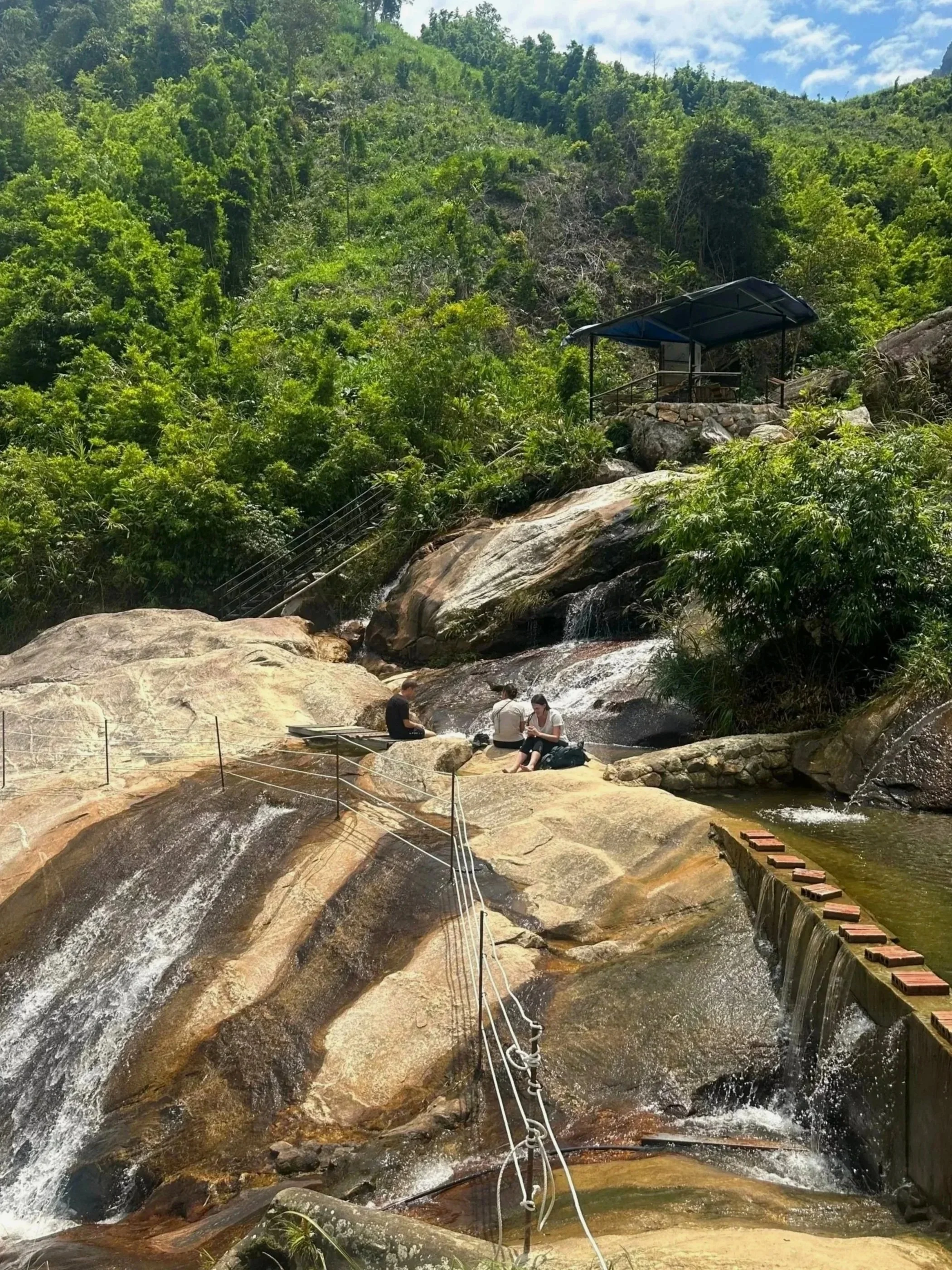
THE HMONG COMMUNITY: A CULTURE ROOTED IN THE LAND
Originally from southern China, the Hmong migrated centuries ago across Southeast Asia. They travelled through Laos, Thailand, and Vietnam, carrying with them a strong cultural identity shaped by language, tradition, and a deep connection to the land.
In Vietnam, they are the largest ethnic minority group, divided into subgroups by clothing, customs, and dialect — the White Hmong, Black Hmong, Green Hmong, and Flower Hmong. In Sa Pa, you'll encounter the Black Hmong, recognised by their indigo-dyed garments and intricate hand embroidery made using hemp-weaving techniques, passed down through generations.
Their culture is deeply spiritual, weaving together elements of Confucianism, Taoism, Buddhism, and animist belief. This is integrated not just in ritual, but also in the way homes are built, crops are planted, and the seasons are quietly observed. Life here is also deeply self-sufficient and resourceful. They grow their own produce, build their own homes, and craft their own clothing from hemp dyed with indigo drawn from local plants. These aren't traditions preserved for display — they are lived, daily practices that continue to define Hmong life in the mountains of northern Vietnam.
THE SAPA SISTERS
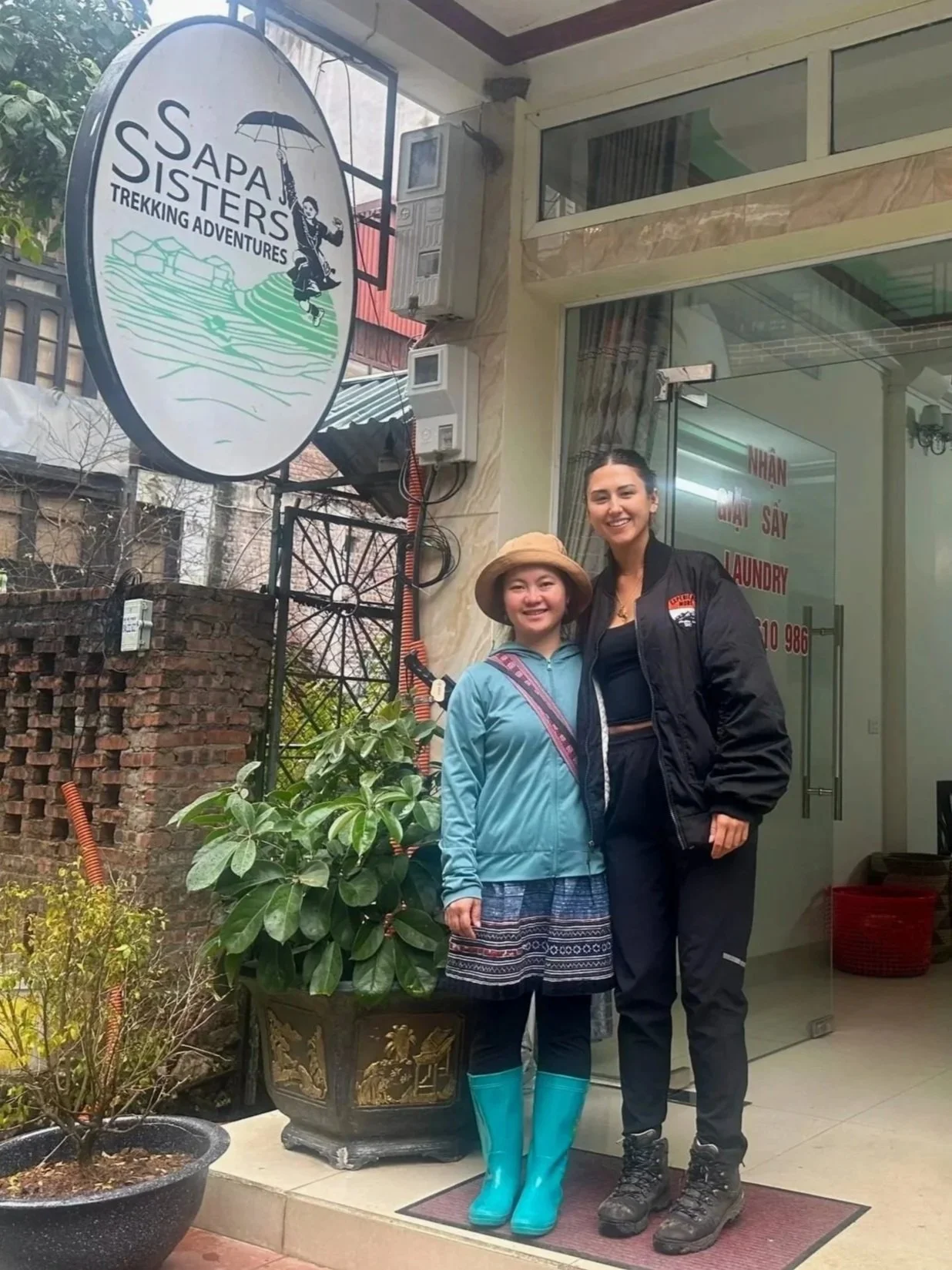
I first heard about the Sapa Sisters from a family I met trekking the Hang En Cave — an initiative that connects travellers with local Hmong women who lead treks through the surrounding villages, speaking fluent English and supporting their families through tourism. There’s a quiet strength to them — they are the breadwinners, the navigators, the historians of this landscape.
I met my guide, a small but incredibly strong woman I towered over. She was two years younger than me — aged 28, a mother of two with her eldest son, 11 and the youngest, 2 years old. She had spent her entire life walking these trails in every weather condition and moved through the terrain with an ease that was almost humbling. You know those videos of mountain goats that scale vertically up a rock face and wonder how that’s even possible? Yeah, that was her.
My guide had only left Sa Pa once, to visit Hanoi. She had no desire to go further or see anywhere else in the world, telling me that hearing stories from the travellers she guides is enough for her to understand life beyond Sa Pa. As travellers, we spend so much of our lives chasing the next place — and here was someone who already had everything she needed, right where she stood. It's something I've thought about since. I’ve never felt that kind of stillness in myself, and I’m not sure I’ve ever wanted to — but standing there with her, I understood it.
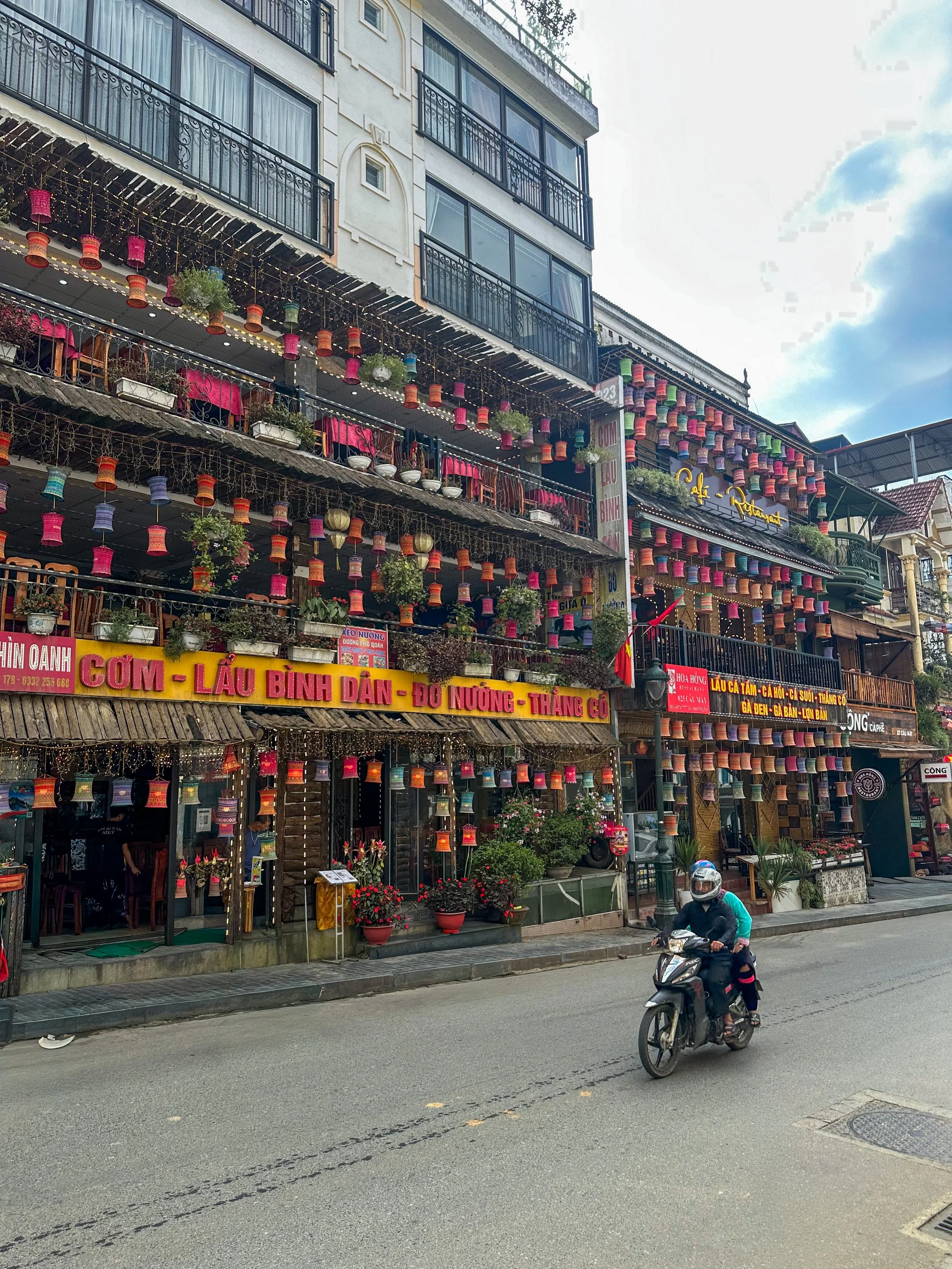
THE VILLAGES OF SOUTH SAPA: LAO CHAI + TA VAN
The trek began in Sa Pa town and moved outward through the rice fields toward Lao Chai and Ta Van, where the rhythm of life looks much as it has for centuries. We skipped Cat Cat Village, a main tourist town that draws in crowds. It looked beautiful from a distance, and is something I would make time for.
The landscape shifted as we walked with open valleys giving way to narrow paths through dense bamboo forest. Small homes along the way sell handcrafted hemp clothing, where you could stop and watch the process and watch fabric slowly taking shape, pulled from a loom and threaded into fabric.
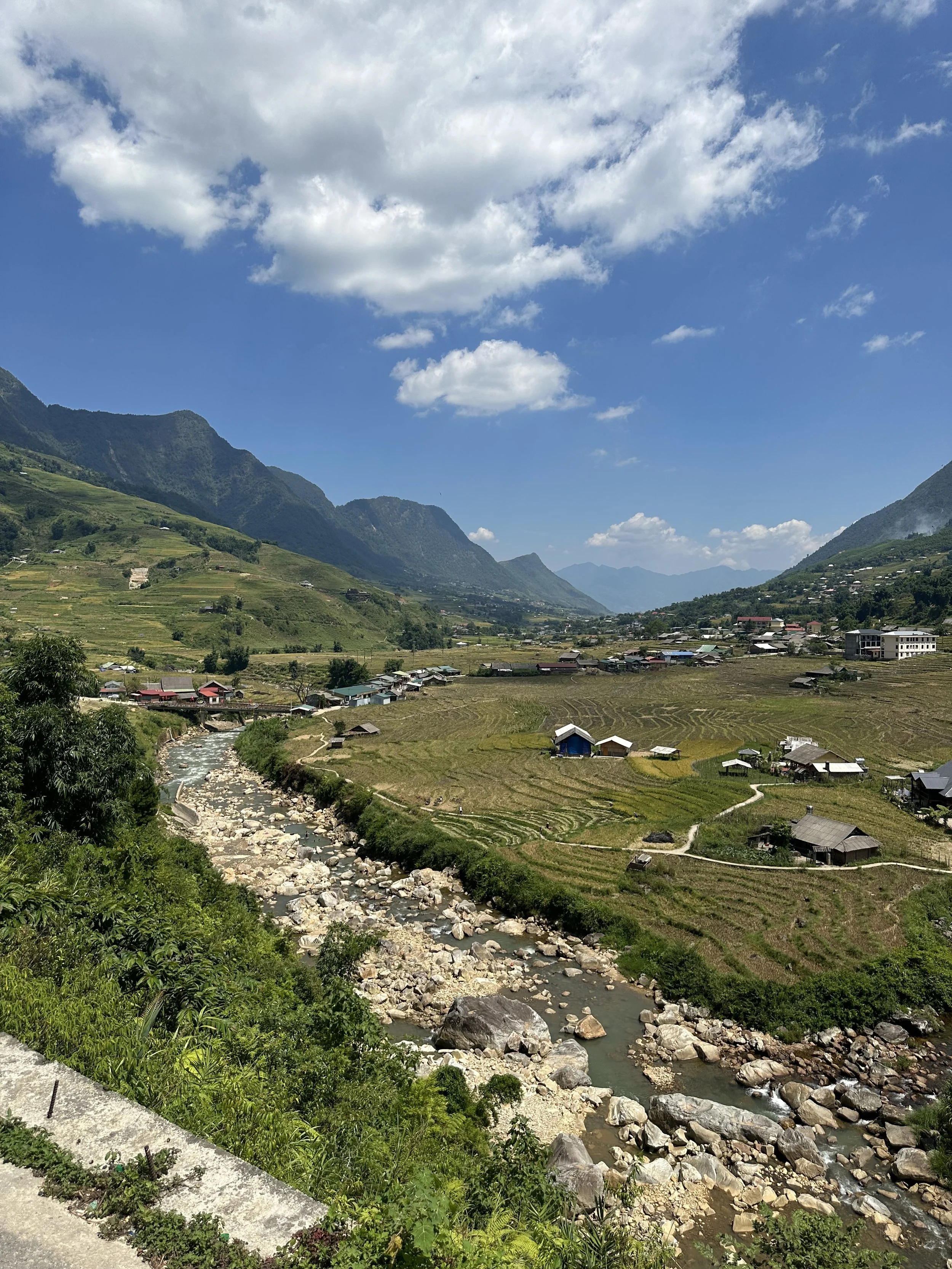
Lao Chai Village
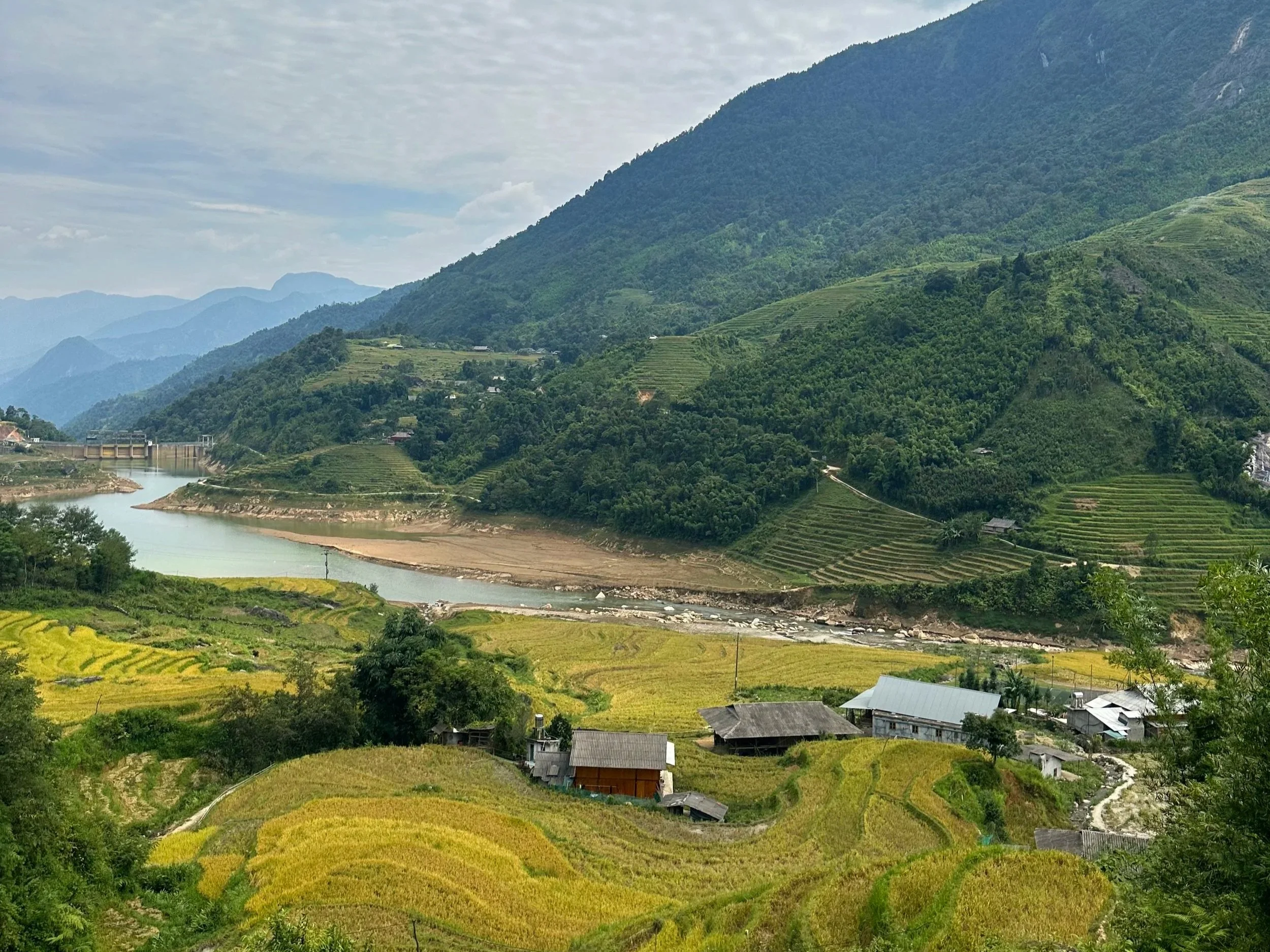
Lao Chai sits around 7km from Sa Pa town and can be reached by car or along hiking trails that wind through bamboo forests and narrow paths running parallel to the Hoang Lien Mountains, before opening into the valley below. Small hamlets are scattered across the landscape here, and this area is known for having some of the widest stretches of terraced rice fields in the entire region.
The scale of it stops you in your tracks. Tier after tier of green descending into the valley floor, framed by mist and mountain — it's the kind of view that photographs don't fully prepare you for.
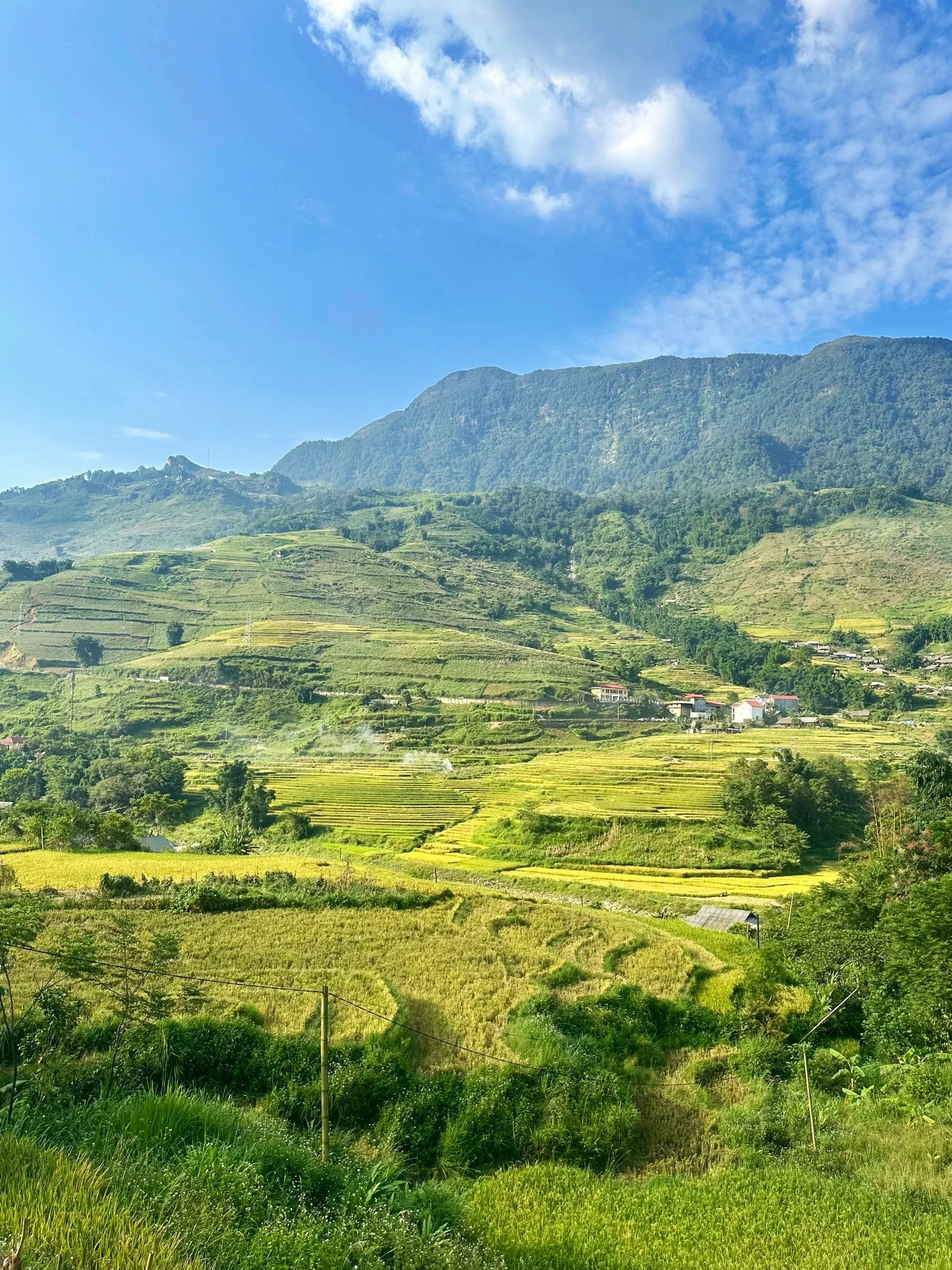
Ta Van Village
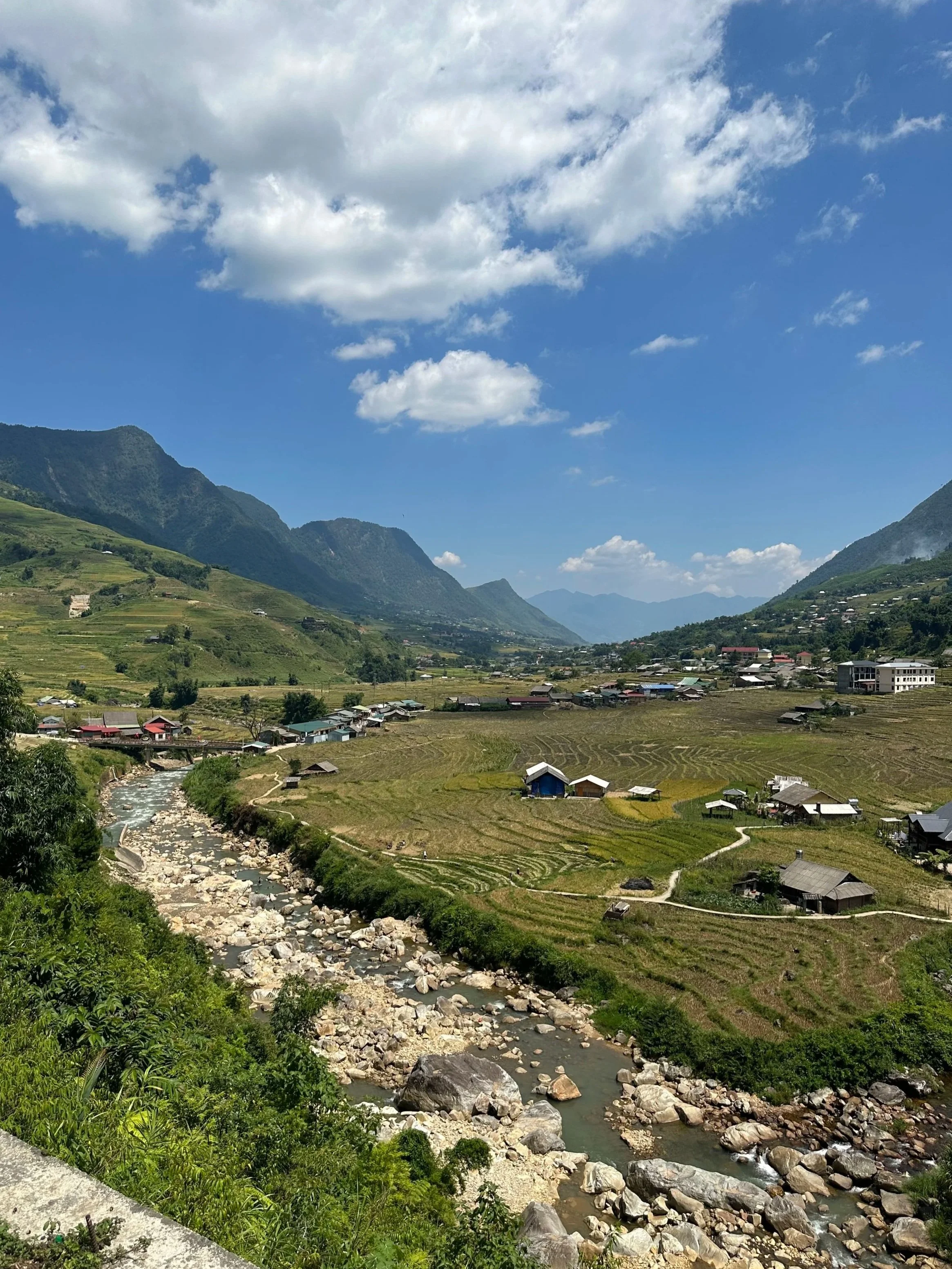
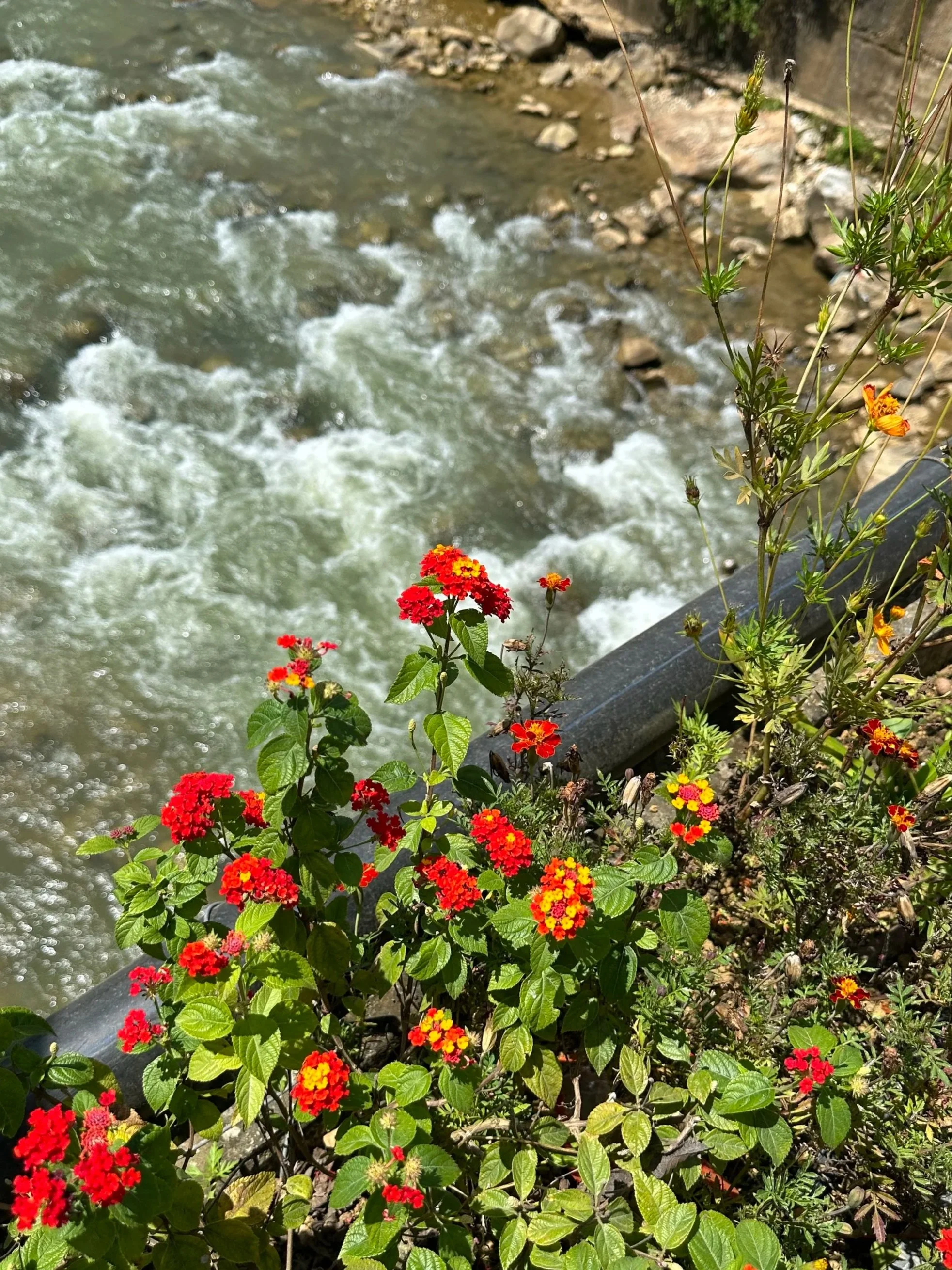
Ta Van village sits along a winding mountain road and shares the Muong Hoa Valley with Lao Chai. Around 10km from Sa Pa town, Ta Van is a village that feels like the kind of place you could easily lose a few days in. In the Hmong language, Ta Van means "big arc" — and the name suits it. Set against the backdrop of the Hoang Lien Son mountain range, with the Muong Hoa stream running below, Ta Van has the feel of a village that has quietly resisted the pull of the outside world.
Rustic cottages line small dirt roads strewn with wildflowers. The pace is slow and unhurried, with an easy romanticism to it that isn't performed for visitors — it's simply the way life moves here. It reminded me of Pai in northern Thailand: a place with a creative, contemplative spirit. It is a popular base for homestays, and for good reason. Staying here rather than in Sa Pa town puts you closer to the rhythm of village life — and further from the noise.
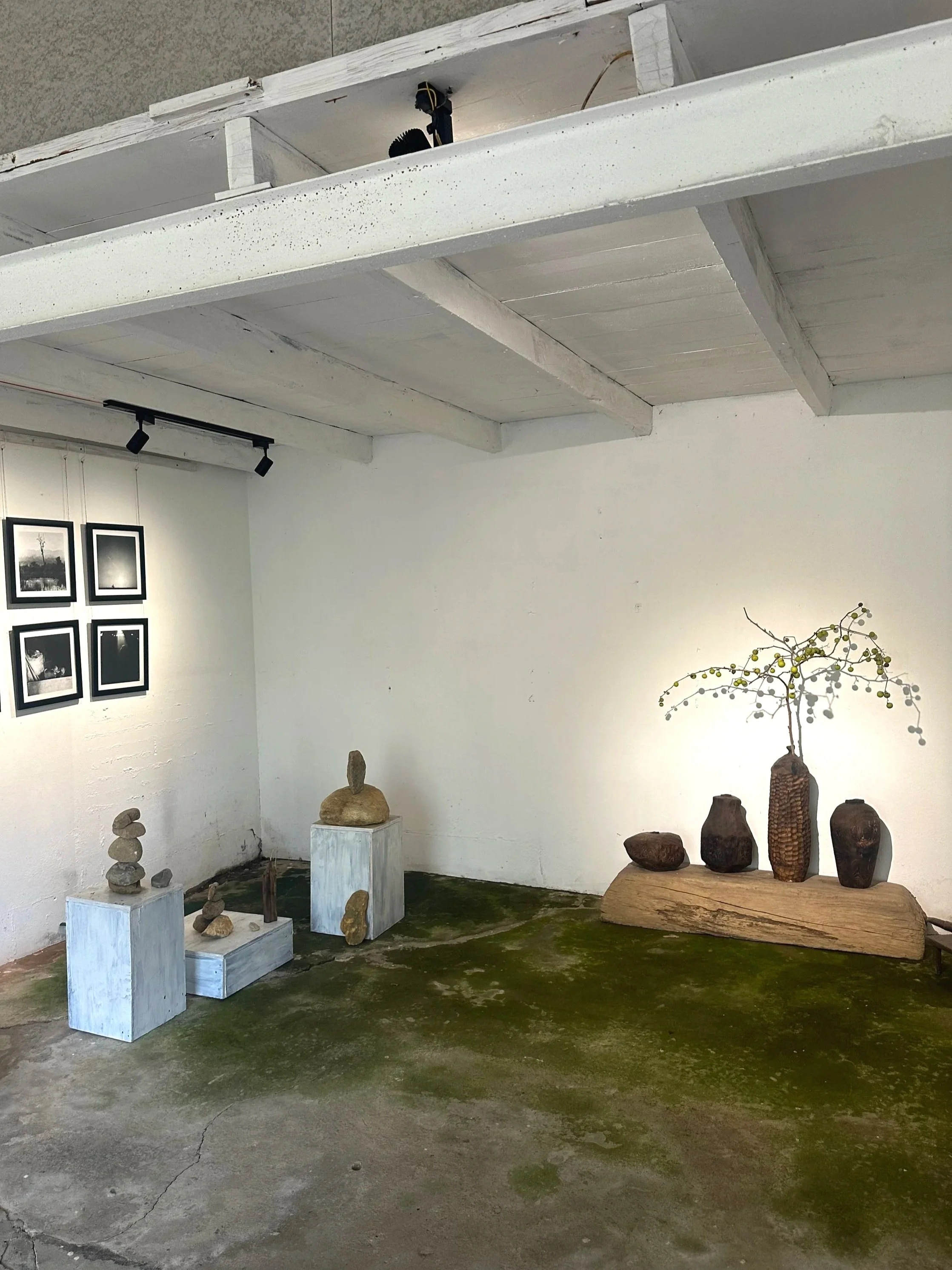
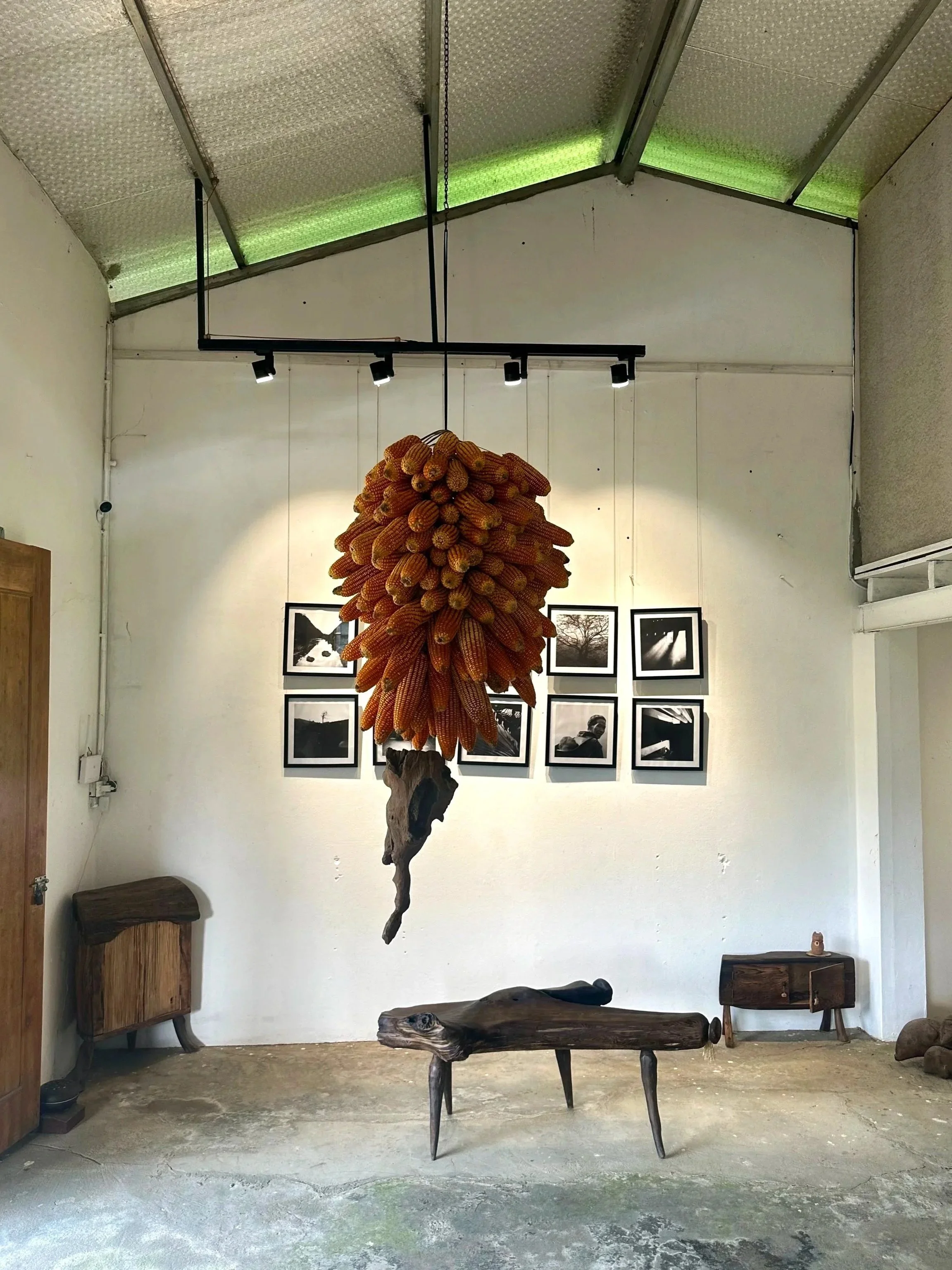
While passing through, I wandered into a small gallery called Black & White — a minimal white studio with high ceilings, architectural details, lined with handmade ceramics and an old upright piano in the corner, and a record player. Local art on the walls. The light coming through was clean and still. It was the kind of curation that feels lived in, the kind that takes genuine thought and care, and feels natural to its context and setting.
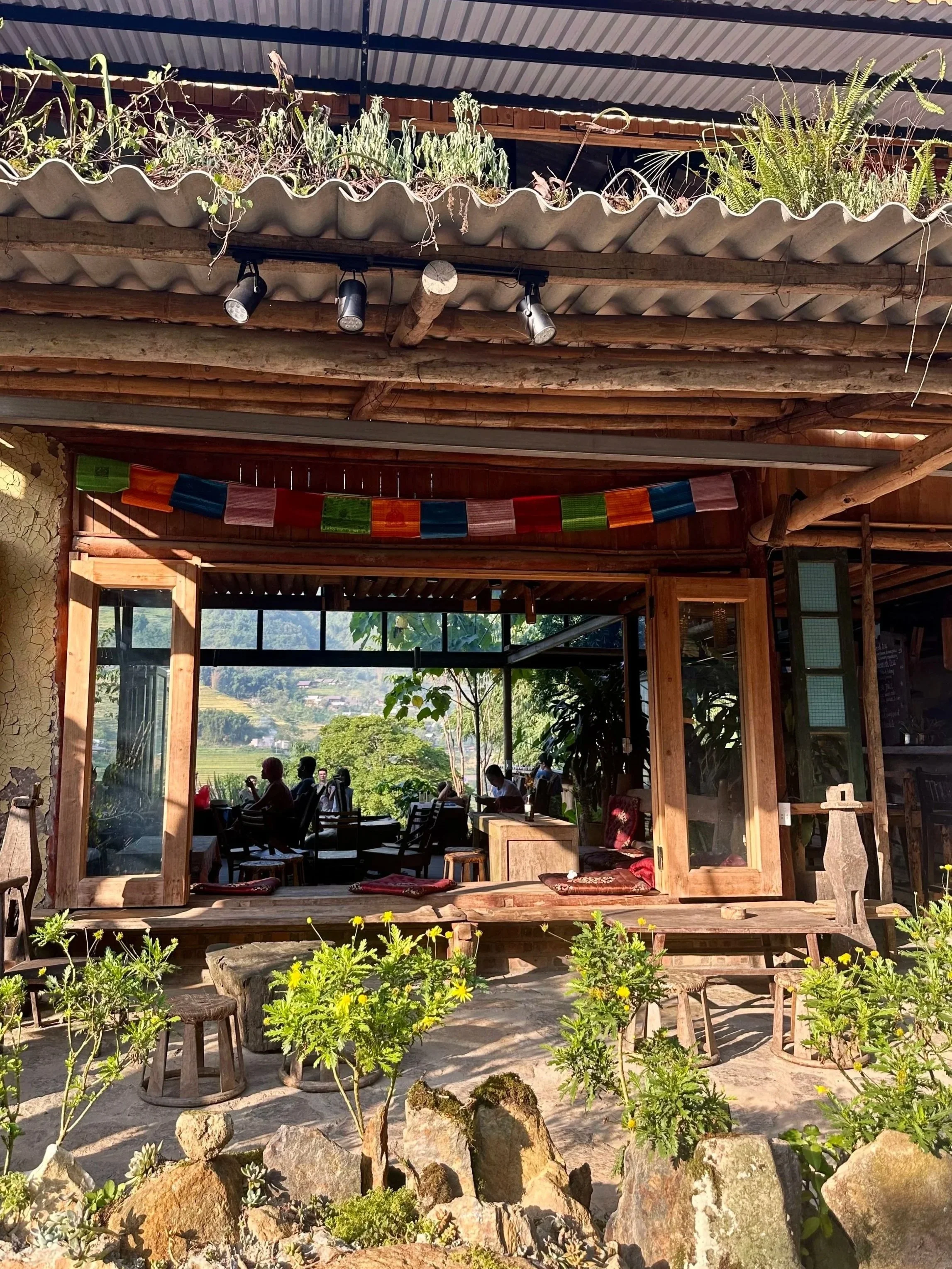
Nearby, cafes with unbroken views over the terraces. Red clay baths built for soaking after a day on the trails. It had the feeling of a place still figuring out how to be discovered, which is usually the best time to be there.
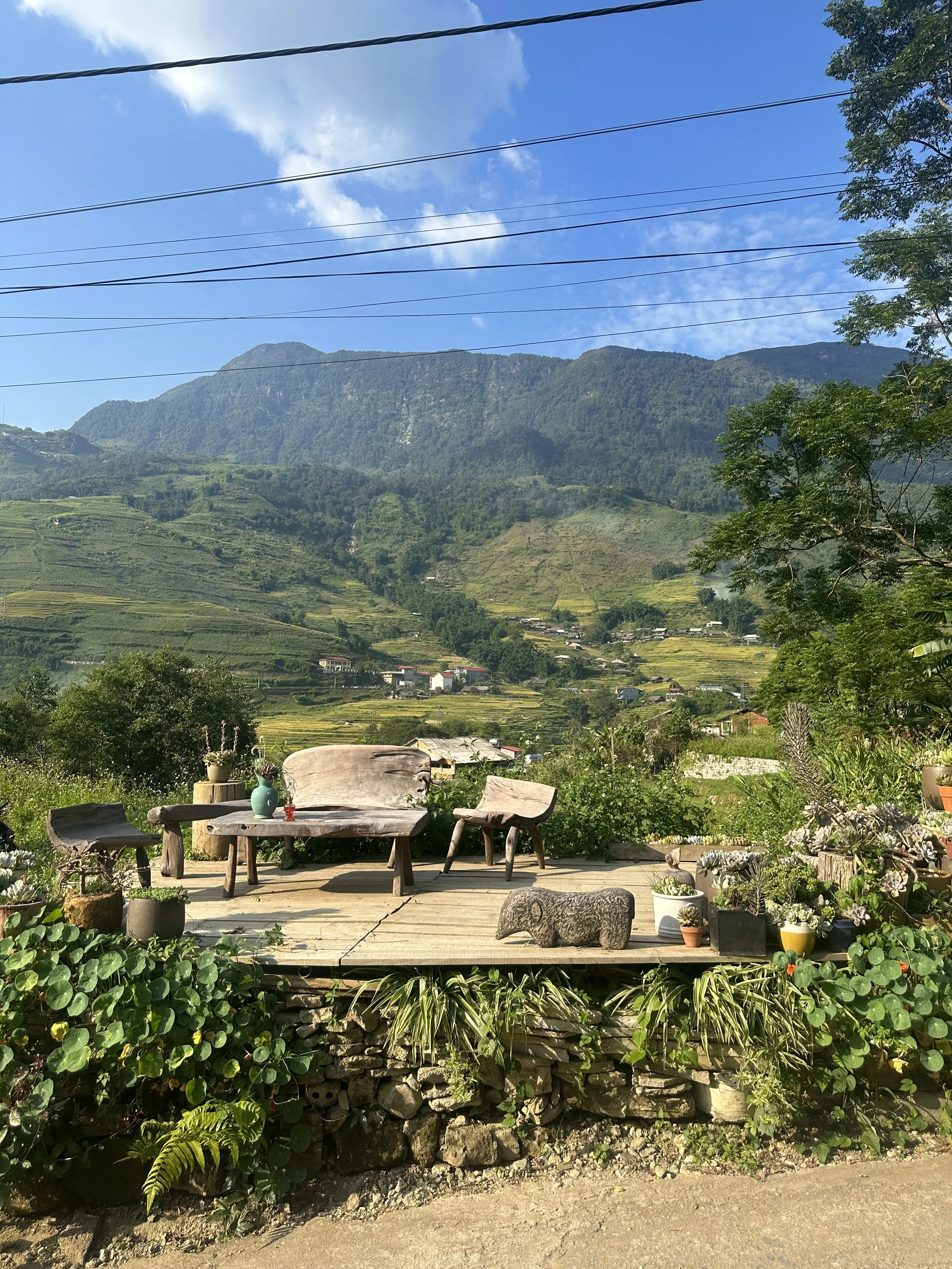
THE HOMESTAY EXPERIENCE
Traditional Hmong homes are built low into the land — modest structures with timber frames, concrete or packed dirt floors, and corrugated iron roofs that have largely replaced the older thatch. They are designed around function with a central living space that is with an adjacent kitchen and sleeping quarters partitioned simply to one side, and a family altar tucked against the back wall, reflecting the importance of family and spirituality within the home.
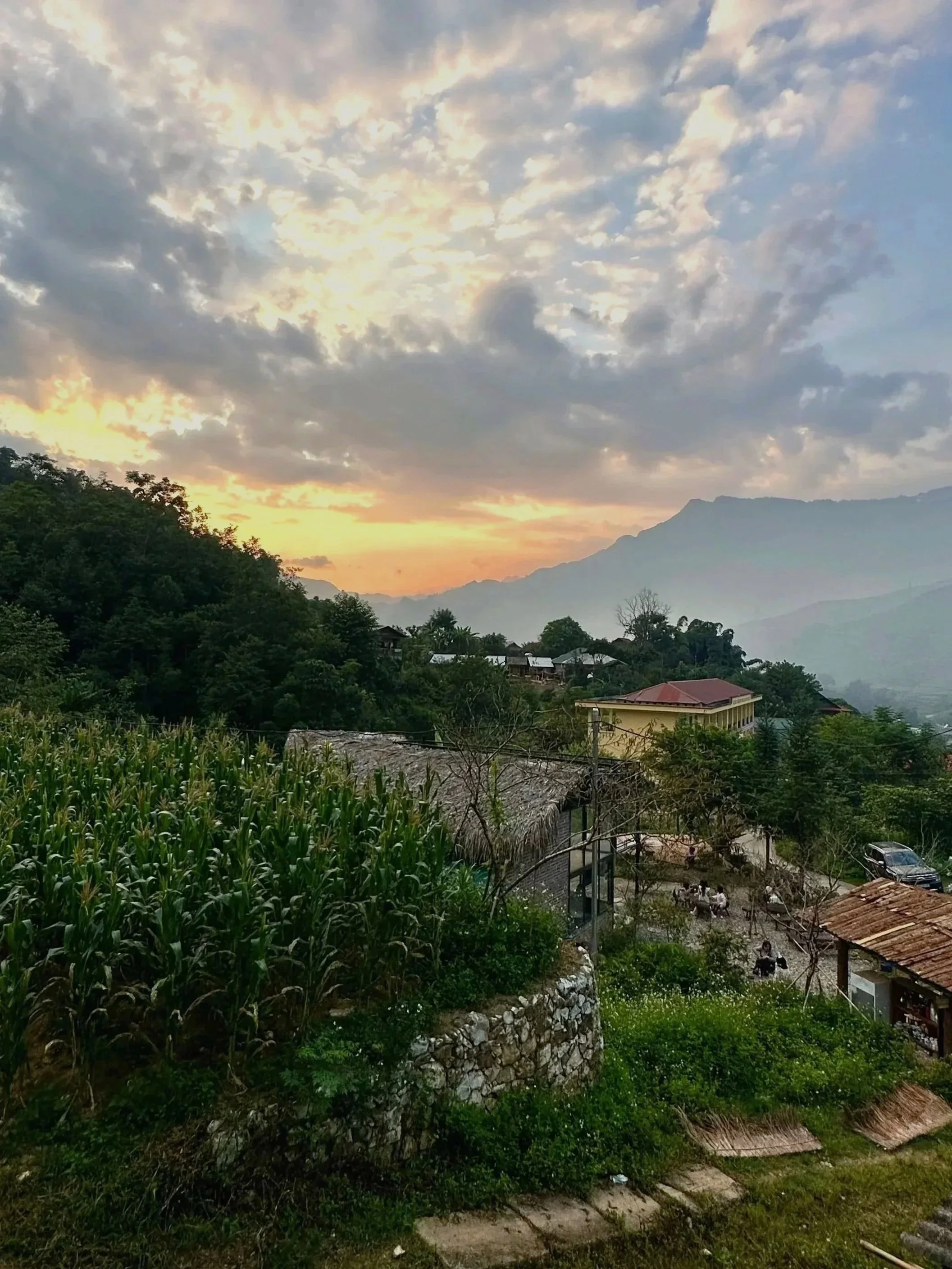
My first night was in Ta Van village, in the home of an elderly woman. I shared the evening with a Singaporean family of four and their guide, who helped translate between us and our host. I fell asleep in the mountains with the clouds close, and woke before anyone else to watch the sunrise move across the rice fields.
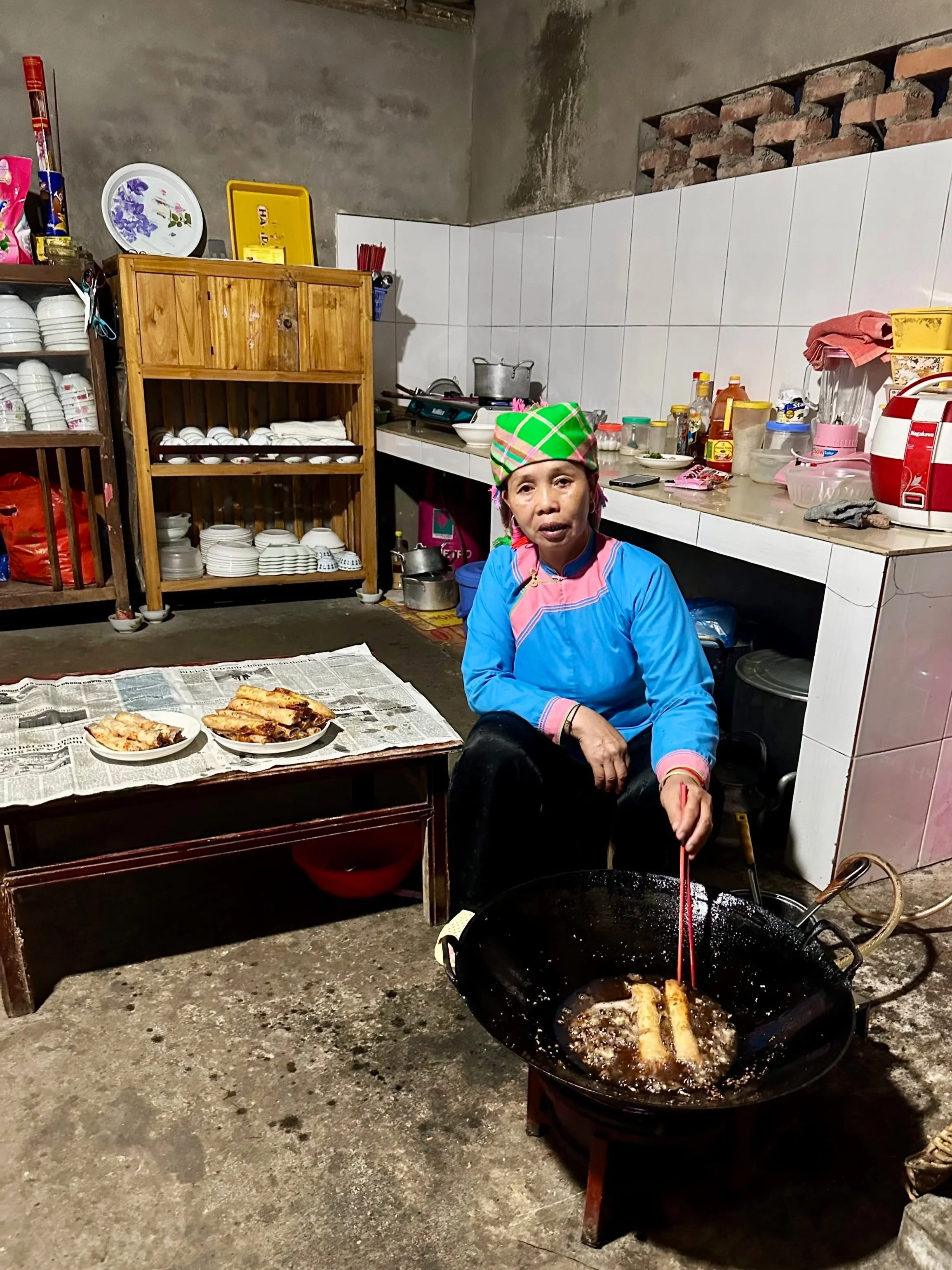
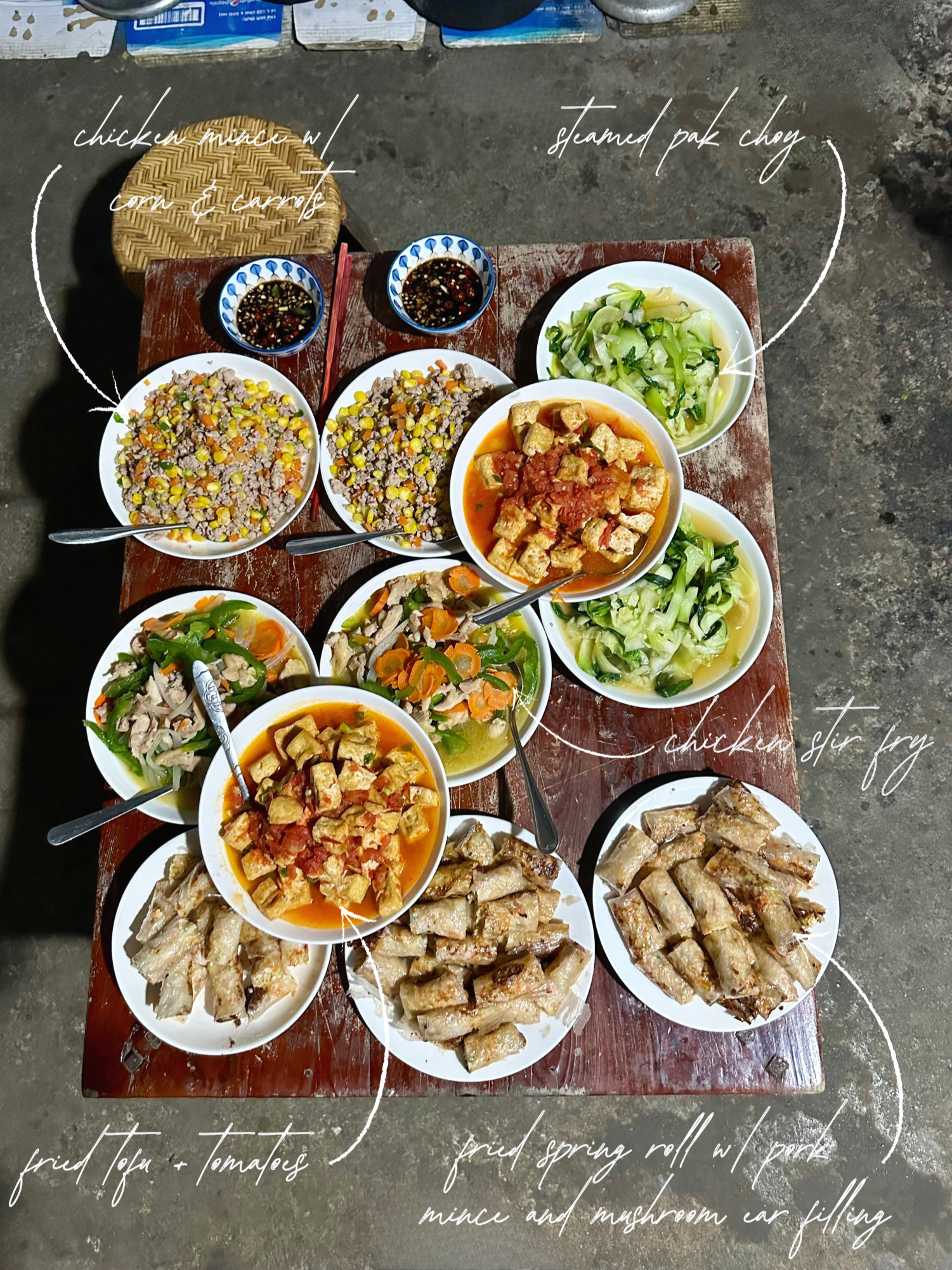
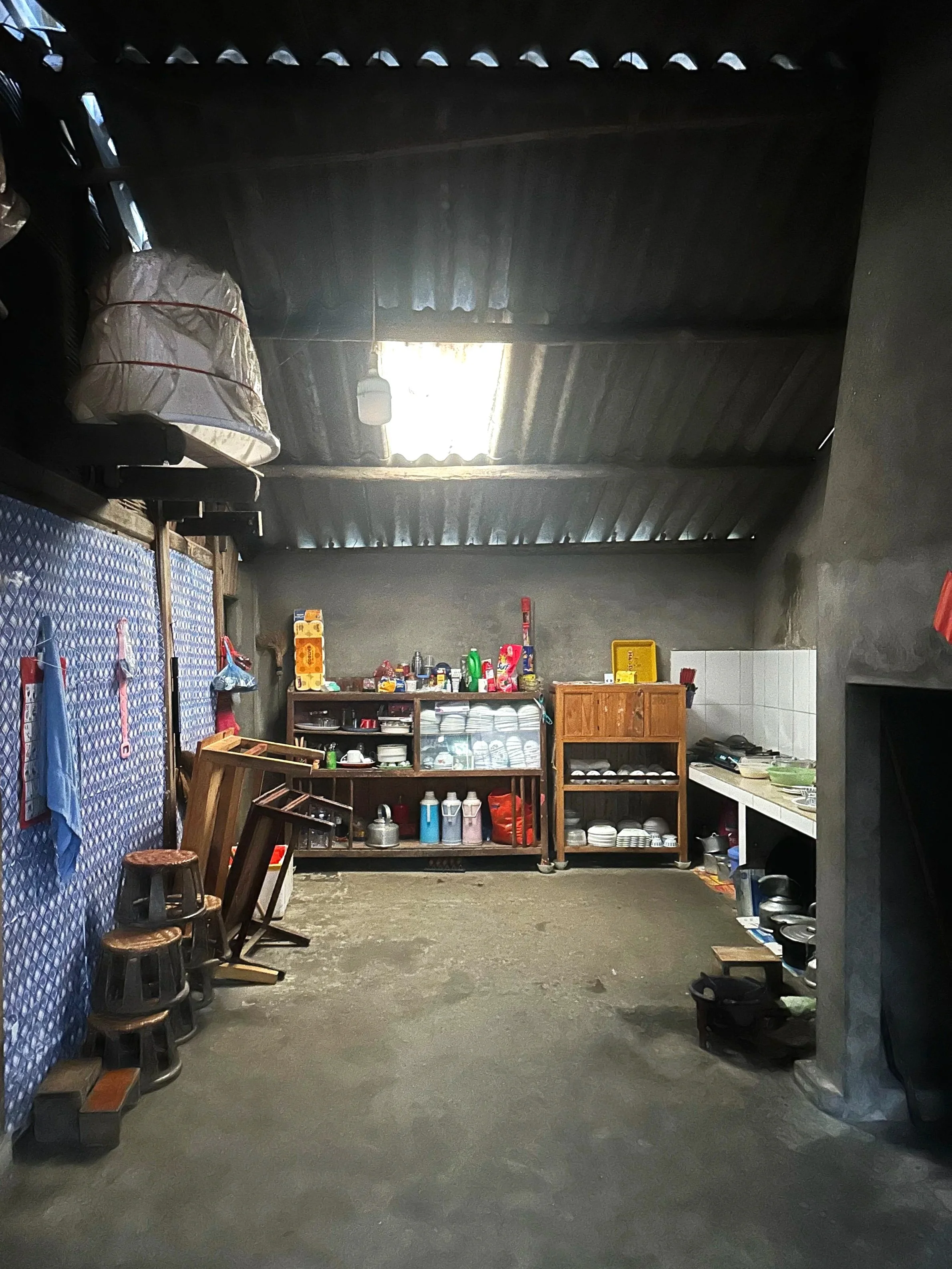
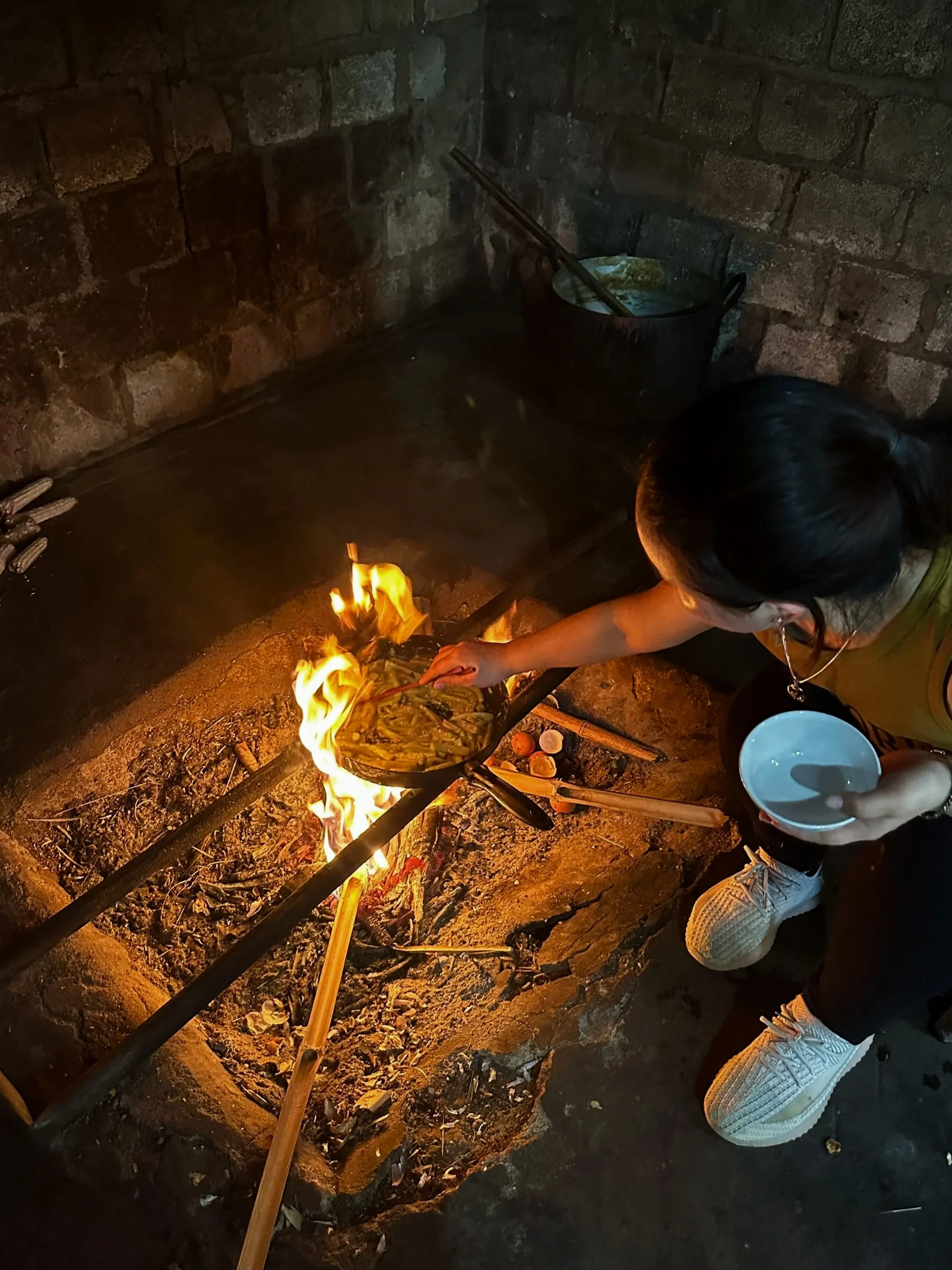
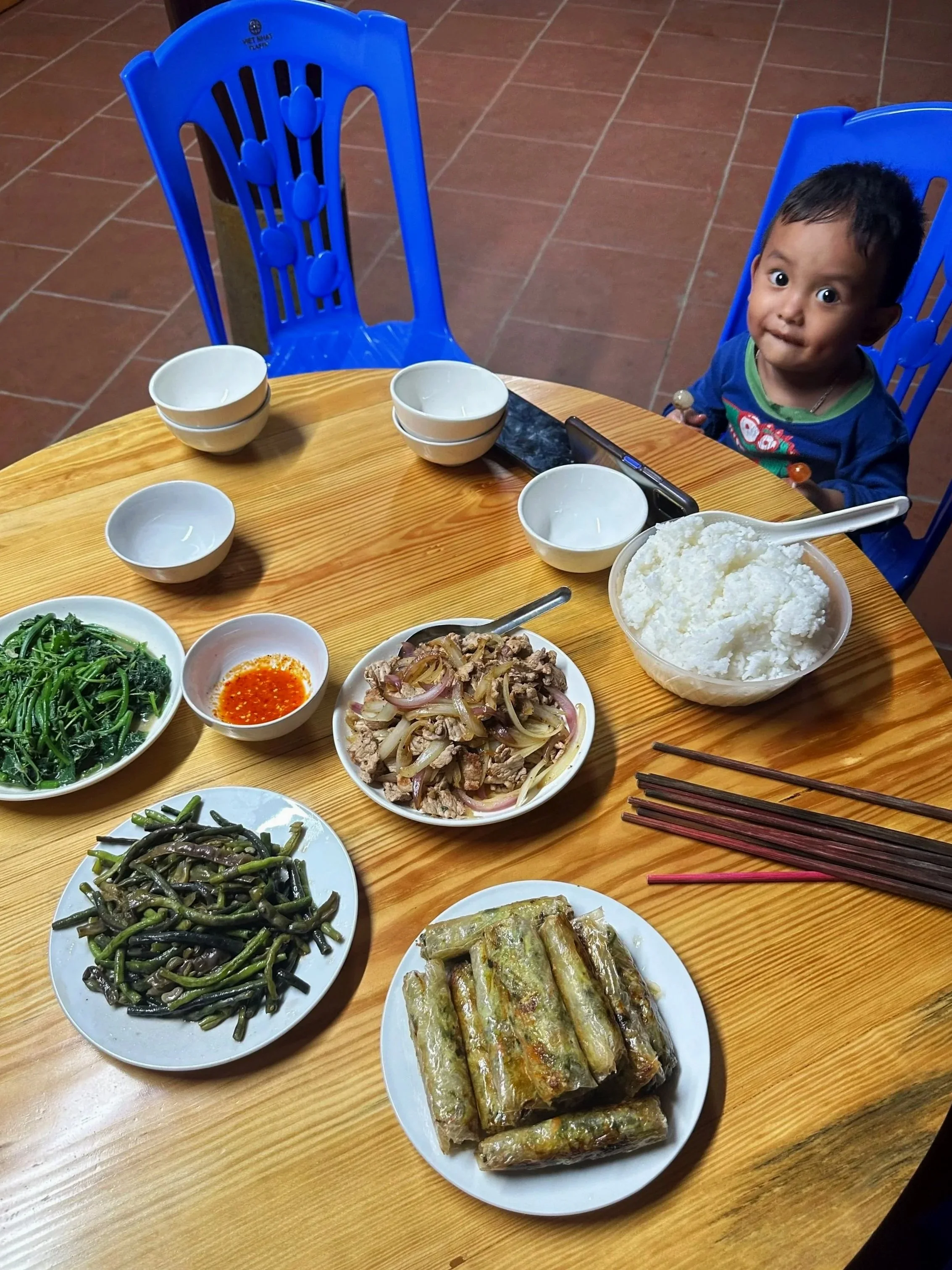
The second night was at my guide's home, deeper in the mountains. Together we prepared and cooked dinner — she picked vegetables from her garden. In both homes, there were no fridges. Here, all meals are cooked fresh and shared as a family, made only in the amount that will be eaten — nothing is stored or wasted.
Dishes are laid in the centre and shared between everyone at the table, and celebrated with little ceremony and a great deal of warmth with happy water. Happy water is the Hmong name for their homemade rice wine — clear, potent, and poured generously. Distilled locally, often by the family themselves, it carries a gentle burn that softens as the evening does. To drink it is to participate in something. Before each glass, the table comes alive with the Vietnamese toast — một, hai, ba, dô — one, two, three, drink — called out in unison, glasses raised, the words ringing across the room. It is impossible not to smile and to feel, in that moment, entirely welcome.
FINAL THOUGHTS
Today, Sa Pa has become one of Vietnam's most recognisable destinations, but its identity is still shaped by the communities who have quietly tended this land for generations. I think about my guide often — the way she moved through the mountains as though the terrain were an extension of herself, unhurried and entirely at home. She didn't need to travel far to live fully. There was something in that I couldn't quite name at the time, but I've carried it with me since. Some places teach you things about the world. The best ones teach you something about yourself.